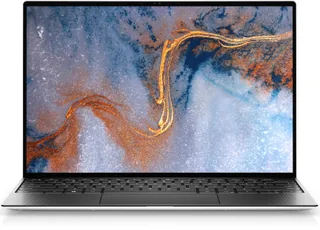
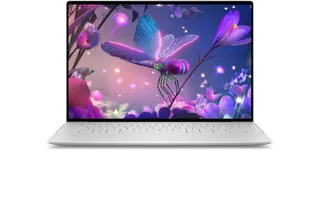
Dell XPS 13 9310 vs Dell XPS 13 Plus 9320 (2022)
Better figure, where one is clearly better
| DellXPS 13 9310 | DellXPS 13 Plus 9320 (2022) | |
|---|---|---|
| Overview | ||
| Released | October 2020 | 2022 |
| Display | ||
| Screen size | 13.4″ | 13.4″ |
| Resolution | 1920 × 1200, 3840 × 2400 or 3456 × 2160 (better) | 1920 × 1200 or 3456 × 2160 |
| Panel | OLED | OLED |
| Refresh rate | 60 Hz | 60 Hz |
| Brightness | 500 nits or 400 nits | 500 nits or 400 nits |
| Touchscreen | No or Yes | No or Yes |
| Display type | Original 13.4-inch WVA LCD options are FHD+ 1920 × 1200 with or without touch, or UHD+ 3840 × 2400 touch; all 60 Hz and 500 nits. Later 2021 option is 3.5K 3456 × 2160 OLED touch, 400 nits, 60 Hz (Tom’s Hardware for the OLED refresh rate) | 13.4-inch display; FHD+ 1920 × 1200 LCD with or without touch, UHD+ 3840 × 2400 LCD touch, or 3.5K 3456 × 2160 OLED touch. All four options are 60 Hz; Dell describes the LCD panels as WVA without identifying IPS explicitly |
| Pixel density | 169.3 ppi (FHD+); 338.67 ppi (UHD+), as published in Dell's setup guide | Dell publishes 169.3 ppi FHD+, 338.67 ppi UHD+ and 304 ppi OLED |
| Colour range | LCD 100% sRGB; UHD+ 90% DCI-P3 typical | FHD+ 100% sRGB; UHD+ 90% DCI-P3; OLED 100% DCI-P3, as specified by Dell |
| Screen finish | Dell's current setup guide lists anti-reflective for all three LCD options; its original launch fact sheet reproduced by GamingOnLinux lists anti-glare for non-touch FHD+ | Non-touch FHD+ is anti-glare; touch FHD+, UHD+ and OLED are anti-reflective |
| Display features | Current setup guide lists 1200:1 typical LCD contrast; the original launch fact sheet gives 1800:1 FHD+ and 1500:1 UHD+. These specifications differ by source revision | LCD typical brightness 500 nits; OLED 400 nits. Typical contrast 2000:1 FHD+, 1650:1 UHD+, 1,000,000:1 OLED. Eyesafe low-blue-light technology |
| Performance | ||
| Processor | Intel Core i5-1135G7, Intel Core i7-1165G7 or Intel Core i7-1195G7 | Intel Core i5-1240P or Intel Core i7-1280P |
| CPU cores | 4 | 12 or 14 |
| CPU threads | 8 | 16 or 20 |
| Graphics | Intel Iris Xe Graphics | Intel Iris Xe Graphics |
| Memory | 8 GB or 16 GB | 8 GB or 16 GB |
| Storage | 512 GB to 1 TB (better) | 512 GB |
| CPU | Original setup guide lists Core i3-1115G4, i5-1135G7 and i7-1165G7. Later i7-1185G7 availability is reported by Tom’s Hardware; Dell's later exact Chinese OLED SKU uses i7-1195G7, up to 5 GHz. The latter is not an initial-launch configuration | This record covers the original 2022 12th-generation 28 W P-series version. Dell lists i5-1240P, i7-1260P, i5-1250P vPro, i7-1270P vPro and i7-1280P vPro; the later 2023 13th-generation refresh reused the 9320 identifier and is excluded here |
| GPU | Intel UHD Graphics with Core i3; Intel Iris Xe Graphics with Core i5/i7; no discrete graphics | Integrated Intel Iris Xe Graphics; no discrete GPU option |
| Memory type | Soldered dual-channel LPDDR4x-4267; 8, 16 or 32 GB, with no memory slots | Original 12th-generation models use soldered dual-channel LPDDR5-5200, in 8, 16 or 32 GB. The current manual separately lists LPDDR5-6000 for the later 13th-generation revision |
| Storage type | One replaceable M.2 2230/2280 PCIe Gen 3 x4 NVMe SSD; up to 256 GB for 2230, up to 2 TB for 2280. First two configurations are exact UK retail combinations documented by TechAdvisor; the OLED i7-1195G7/16 GB/512 GB configuration is Dell China SKU XPS 13-9310-D5708TS | One replaceable M.2 2230 or 2280 NVMe SSD; current manual lists 256 GB Gen 3/Gen 4, 512 GB self-encrypting Gen 3/Gen 4 and ordinary Gen 4 2280 SSDs up to 2 TB. Configurations shown are the exact original base and tested combinations documented by Tom’s Hardware |
| Battery and size | ||
| Battery capacity | 52 Wh | 55 Wh (better) |
| Weight | 1.2 kg (better) | 1.23 kg |
| Thickness | 14.8 mm (better) | 15.28 mm |
| Width × depth | 295.7 × 198.7 mm | 295.3 × 199.04 mm |
| Battery life detail | 52 Wh four-cell lithium-ion; actual runtime depends on configuration and workload | 55 Wh three-cell lithium-ion; Dell does not publish a fixed runtime in the setup guide |
| Charger | 45 W USB-C adapter | 60 W USB-C adapter |
| Fast charging | Approximately two hours with Express charging or three hours with standard charging, with the computer switched off | Maker launch announcement claims about 80% charge in less than one hour with Express Charge 2.0; current setup guide lists approximately three hours charging with the computer switched off |
| Materials | Machined aluminium; black carbon-fibre or Arctic White woven-glass-fibre palm rest | Aluminium body with glass palm rest; stated weight 1.23 kg for FHD+/UHD+ and 1.26 kg for OLED, subject to configuration and manufacturing variation |
| Colours | Platinum Silver with black interior, or Frost with Arctic White interior | Platinum or Graphite |
| Connections | ||
| Ports | 2 × Thunderbolt 4, microSD slot, headphone jack | 2 × Thunderbolt 4 |
| Wi-Fi | Wi-Fi 6 | Wi-Fi 6E |
| Bluetooth | 5.1 | 5.3 |
| Webcam | Optional 720p at 30 fps, with IR | 720p at 30 fps, with separate IR camera |
| Operating system | Windows | Windows |
| Port detail | Two Thunderbolt 4 USB-C ports with DisplayPort and Power Delivery; microSD card reader and headset jack. Dell's manual contains a stray reference to four USB-C ports; its explicit port table and views confirm two | Two Thunderbolt 4 USB-C ports with Power Delivery and display output; charging occupies one. No integrated analogue audio jack or media-card reader. Current manual lists Intel AX211 Wi-Fi 6E and Bluetooth 5.3; the original Tom’s Hardware test specifies Bluetooth 5.2 |
| Keyboard | Standard backlit QWERTY keyboard; 80 keys for the UK layout | Backlit zero-lattice keyboard; UK layout has 65 keys. Capacitive top row switches between media controls and function keys |
| Trackpad | 112.30 × 64.15 mm touchpad | Haptic touchpad concealed beneath glass, 112.30 × 64.15 mm; no visible boundary |
| Speakers | Two speakers, 2 W average and 2.5 W peak each; no subwoofer | Two tweeters and two woofers, 2 W average and 2.5 W peak each |
| Microphones | Digital-array microphones; availability depends on configuration | Dual digital-array microphones |
| Biometrics | Fingerprint reader in the power button; IR camera for Windows Hello where fitted | Fingerprint reader in the power button; separate infrared camera for Windows Hello |
| In the box | Original launch fact sheet lists a USB-C to USB-A v3.0 adapter | Original review units included USB-C to USB-A and USB-C to 3.5 mm audio adapters; the current manual describes the audio adapter as sold separately, so bundles vary |
More comparisons
- Dell XPS 13 9310 vs Dell XPS 13 DX13260
- Dell XPS 13 DX13260 vs Dell XPS 13 Plus 9320 (2022)
- Dell XPS 13 Plus 9320 (2022) vs Dell XPS 14 DA14260
- Dell XPS 13 9310 vs Dell XPS 14 DA14260
- Dell XPS 13 Plus 9320 (2022) vs Dell XPS 16 DA16260
- Dell XPS 13 9310 vs Dell XPS 16 DA16260
- Dell XPS 13 9310 vs Lenovo ThinkPad X13 Gen 6 (AMD)
- Dell XPS 13 9310 vs Lenovo ThinkPad X13 Gen 6 (Intel)
- Dell XPS 13 9350 vs Dell XPS 13 Plus 9320 (2022)
- Dell XPS 13 9310 vs Dell XPS 13 9350
- Dell XPS 13 Plus 9320 (2022) vs Dell XPS 14 9440
- Dell XPS 13 9310 vs Dell XPS 14 9440
- Dell XPS 13 Plus 9320 (2022) vs Dell XPS 16 9640
- Dell XPS 13 9310 vs Dell XPS 16 9640
- Dell XPS 13 Plus 9320 (2022) vs Lenovo ThinkPad X390
- Dell XPS 13 Plus 9320 (2022) vs Sony VAIO Z (VGN-Z11WN/B)