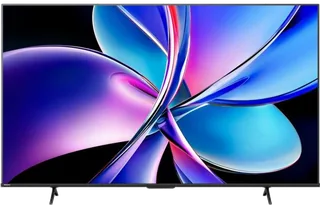
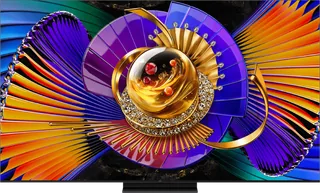
Hisense E7Q PRO vs TCL C7L
Better figure, where one is clearly better
| HisenseE7Q PRO | TCLC7L | |
|---|---|---|
| Overview | ||
| Released | 2025 | May 2026 |
| Display | ||
| Panel | LED LCD | Mini-LED |
| Panel detail | Hi-QLED (quantum dot) LCD with a direct LED backlight; no local dimming | SQD-Mini LED (Super Quantum Dot) on a CSOT HVA 2.0 Pro panel; dimming zones 800 (55″), 1,152 (65″), 1,352 (75″), 1,624 (85″), 2,176 (98″) |
| Resolution | 3840 × 2160 (4K) | 3840 × 2160 (4K) |
| Refresh rate | 144 Hz | 144 Hz |
| HDR formats | Dolby Vision, HDR10, HDR10+, HLG | Dolby Vision, HDR10, HDR10+, HLG |
| HDR extras | Dolby Vision, HDR10+ Adaptive | Dolby Vision IQ, HDR10+, IMAX Enhanced |
| Screen finish | – | 0.5% low-reflection film |
| Peak brightness | – | Up to 2,700 nits (55″) and 3,000 nits (65″ to 98″) (TCL) |
| Colour range | Quantum Dot Colour; wide colour gamut | Up to 100% BT.2020 (area ratio, TCL lab figure) |
| Picture processing | Hi-View AI Engine, 4K upscaling, MEMC, MPEG and mosquito noise reduction, light sensor | AI ClarityMaster, AI ContrastMaster, AI ColourMaster, AI MotionMaster; 26-bit dynamic dimming; Super Condensed Micro Lens and Micro-OD backlight |
| Picture modes | Filmmaker Mode; 144Hz Game Mode PRO; eye-care mode | – |
| Motion handling | AI Smooth Motion (MEMC); panel response time 6 ms (43″, 50″, 55″, 85″, 100″) or 8 ms (65″, 75″) (Hisense) | – |
| Viewing angle | 178° | – |
| Sizes | ||
| Sizes | 43, 50, 55, 65, 75, 85, 100″ | 55, 65, 75, 85, 98″ |
| Largest size | 100″ (better) | 98″ |
| Gaming | ||
| HDMI ports | 4 (2 HDMI 2.1 at 4K 120 Hz+) | 4 (2 HDMI 2.1 at 4K 120 Hz+) |
| Variable refresh rate | HDMI VRR, FreeSync Premium | HDMI VRR, FreeSync Premium Pro |
| Auto low latency mode | Yes | Yes |
| HDMI detail | 65″ to 100″ 4 × HDMI 2.1 with ALLM, HDMI 3 (eARC) and HDMI 4 4K 144Hz with VRR; 43″ to 55″ 3 × HDMI 2.1 with ALLM, HDMI 2 (eARC) and HDMI 3 4K 144Hz with VRR | HDMI 2.1 bandwidth on HDMI 1 and 2 (the 288 Hz Game Accelerator works on these ports); HDMI 1.4/2.0/2.1 and HDCP 1.4/2.2; eARC/ARC; HDMI CEC |
| Variable refresh range | Up to 144 Hz | 48–288 Hz (288 Hz via the Game Accelerator at lower resolutions, HDMI 1 and 2) |
| Input lag | ≤ 7 ms with a 4K 120 Hz input (Hisense) | – |
| Game features | AMD FreeSync Premium, Game Bar, Dolby Vision Gaming, HDR10+ Gaming | Game Master, Gamebar, 288 Hz VRR Game Accelerator, Dolby Vision gaming |
| Smart TV and sound | ||
| Smart TV platform | VIDAA | Google TV |
| Processor | Hi-View AI Engine | TSR AiPQ Processor |
| Speakers | 2.0 channels | 2.1 channels |
| Dolby Atmos | Yes | Yes |
| DTS:X | – | Yes |
| eARC | Yes | Yes |
| Wi-Fi | Wi-Fi 5 (802.11ac, 2.4/5 GHz) | Wi-Fi 5 |
| Bluetooth | Yes | 5.4 |
| Speaker detail | 2 × 10 W, 2.0 ch (43″ to 65″); 2 × 15 W, 2.0 ch (75″, 85″); 2 × 15 W plus a 20 W subwoofer, 2.1 ch (100″) | Audio by Bang & Olufsen, 2.1-channel surround design with Hi-END speakers; TCL lists no power figure |
| Audio features | Dolby Atmos, DTS Virtual:X; Hi-Concerto, EzPlay, TV mode; WiSA SoundSend; user equaliser | Beosonic sound tuning by Bang & Olufsen |
| Voice assistants | Voice control via the remote (hands-free voice control on the 100″) | Google Assistant built in; hands-free voice control |
| Casting | AirPlay 2; screen sharing; DMP/DMR content sharing | Google Cast (Chromecast), AirPlay 2, Miracast |
| Software updates | Software and firmware updates for at least 8 years (Hisense) | Software and firmware updates for at least 8 years after the model leaves the market (TCL product information sheet) |
| TV tuners | 2 × RF; DVB-T2/T/C/S2/S; CI+ 2.0; Freely | – |
| USB | 1 × USB 2.0, 1 × USB 3.0 | – |
| Ethernet | 1 × RJ45 | – |
| Optical audio out | 1 × S/PDIF; composite AV input and audio L/R input; headphone output on 65″ to 100″ | – |
| Design and power | ||
| Size | Without stand, 43″ 963 × 560 × 74 mm; 50″ 1119 × 654 × 80 mm; 55″ 1234 × 717 × 80 mm; 65″ 1453 × 840 × 76 mm; 75″ 1676 × 965 × 87 mm; 85″ 1892 × 1091 × 101 mm; 100″ 2229 × 1284 × 95 mm | Without stand, 55″ 1226 × 710 × 55.9 mm; 65″ 1444 × 832 × 56 mm; 75″ 1666 × 960 × 56.7 mm; 85″ 1888 × 1084 × 57.9 mm; 98″ 2180 × 1247 × 61 mm |
| Stand | Two feet, up to 758 mm apart (43″), 911 mm (50″), 973 mm (55″), 994 mm (65″), 1318 mm (75″, adjustable to 536 mm), 1571 mm (85″); metal feet 1734 mm apart on the 100″ | Stand footprint (W × D), 55″ 315 × 270 mm; 65″ 386 × 369 mm; 75″ 386 × 367 mm; 85″ 408 × 379 mm; 98″ 1709 × 420 mm |
| VESA pattern | 43″ 200 × 300 mm; 50″ and 55″ 200 × 400 mm; 65″ and 75″ 400 × 300 mm; 85″ 600 × 400 mm; 100″ 800 × 400 mm | 300 × 300 mm (55″ to 75″); 600 × 400 mm (85″, 98″) |
| Power use | Maximum 110 W (43″), 130 W (50″, 55″), 200 W (65″, 75″), 330 W (85″), 450 W (100″); 0.5 W standby | SDR/HDR on mode, 55″ 64/250 W; 65″ 85/300 W; 75″ 107/370 W; 85″ 103/396 W; 98″ 124/520 W; 0.5 W standby, 2.0 W networked standby |
| Energy class | SDR: F (43″), E (50″ to 100″); HDR: G | SDR: E (55″ to 75″), D (85″, 98″); HDR: G |
| Colours | Black (100″ black/dark grey) | – |
| Warranty | 2 years (UK) | 2 years (UK); TCL UK's registration offer adds 3 years for purchases made by 30 June 2027 |
More comparisons
- TCL C7L vs TCL X11L
- Hisense E7S PRO vs TCL C7L
- TCL C735K vs TCL C7L
- TCL C745K vs TCL C7L
- TCL C7L vs TCL C8L
- Samsung Neo QLED QN80H vs TCL C7L
- TCL C7L vs TCL C805K
- Sony BRAVIA 3 II vs TCL C7L
- Hisense E7Q PRO vs Sony BRAVIA 9 II
- Samsung Neo QLED QN90D vs TCL C7L
- Hisense E7Q PRO vs TCL C8L
- Hisense E7Q PRO vs Samsung Neo QLED QN80H
- Hisense E7Q PRO vs Sony BRAVIA 3 II
- Hisense E7Q PRO vs Samsung Neo QLED QN80F
- Hisense E7Q PRO vs TCL C6K
- Hisense E7Q PRO vs Samsung Neo QLED QN90D