Nikon AF-S DX NIKKOR 35mm f/1.8G vs Nikon AF-S NIKKOR 50mm f/1.8G
Better figure, where one is clearly better
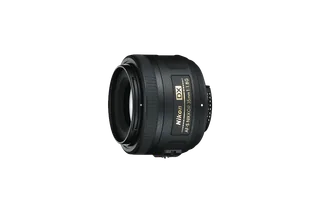
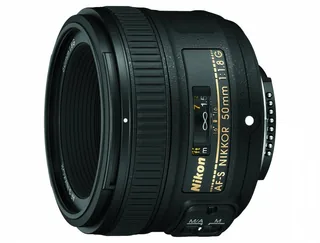
| NikonAF-S DX NIKKOR 35mm f/1.8G | NikonAF-S NIKKOR 50mm f/1.8G | |
|---|---|---|
| Overview | ||
| Released | March 2009 | June 2011 |
| Optics | ||
| Lens type | Prime | Prime |
| Focal length | 35 mm | 50 mm |
| Maximum aperture | f/1.8 | f/1.8 |
| Minimum aperture | f/22 | f/16 |
| Optical construction | Eight elements in six groups | Seven elements in six groups |
| Special elements | One aspherical element | One aspherical element |
| Coatings | Super Integrated Coating | Super Integrated Coating |
| Aperture detail | f/1.8–22; no aperture ring. Digital Camera World confirms aperture control by a mechanical lever in the host camera | f/1.8–16; no aperture ring |
| Diaphragm | Seven rounded blades | Seven rounded blades |
| Angle of view | DX 44° | FX 47°; DX 31°30′ |
| Mount and compatibility | ||
| Mounts | Nikon F mount | Nikon F mount |
| Image circle | APS-C | Full frame |
| Compatibility | Nikon F mount with a DX/APS-C image circle. Full-frame cameras require a DX crop; full-frame capture produces heavy corner shading according to Photography Blog | Nikon F mount; full-frame/FX coverage, also usable on DX cameras. Built-in autofocus motor supports Nikon DSLRs without an in-body focus motor, as Photography Blog confirms |
| Image circle detail | Physical 35 mm focal length; standard angle of view on DX cameras, approximately equivalent to 52.5 mm on full-frame | – |
| Focus and stabilisation | ||
| Autofocus | Yes | Yes |
| Minimum focus distance | 0.3 m | 0.45 m |
| Maximum magnification | 0.16× | 0.15× |
| Optical stabilisation | No | No |
| Autofocus detail | Silent Wave Motor with manual override in M/A mode; works on Nikon DX DSLRs without an in-body focus motor | Silent Wave Motor with manual focus override |
| Focus distance detail | Minimum 0.3 m; Digital Camera World confirms internal focusing and a front element that does not rotate | Minimum 0.45 m; Photography Blog confirms the outer barrel's length stays unchanged and the filter thread does not rotate during focusing, while noting this is not a true internal-focus lens |
| Magnification detail | Maximum 0.16×; not a life-size macro lens | Maximum 0.15×; not a life-size macro lens |
| Stabilisation detail | No lens optical VR | No lens optical VR |
| Design | ||
| Filter diameter | 52 mm | 58 mm |
| Maximum diameter | 70 mm | 72 mm |
| Length | 52.5 mm | 52.5 mm |
| Weight | 200 g | 185 g (better) |
| Controls | Manual focus ring and M/A–M switch; no distance scale or depth-of-field markings, as both reviews note | Manual focus ring, M/A–M switch and focus-distance window; Photography Blog notes depth-of-field markings for f/16 only and no focus limiter |
| Filter detail | 52 mm screw-in filters | 58 mm screw-in filters |
| Weather resistance | – | Both reviews confirm a rubber seal at the metal mount. Broader barrel sealing is not established, so no general weather-resistance rating is assigned |
| Dimensions detail | Approximately 70 mm maximum diameter × 52.5 mm length | Approximately 72 mm maximum diameter × 52.5 mm length |
| Weight detail | Approximately 200 g | Approximately 185 g according to Nikon; Photography Blog reports 187 g, which is not substituted for the maker figure |
| Lens hood | HB-46 included | HB-47 included |
| In the box | LC-52 front cap, LF-1 rear cap, HB-46 bayonet hood and CL-0913 pouch | LC-58 front cap, LF-4 rear cap, HB-47 bayonet hood and CL-1013 pouch |
| Release detail | Nikon USA's February 2009 announcement states March availability; earliest exact global and first UK day unconfirmed, so month precision retained. This is the DX lens, distinct from the later full-frame 35mm f/1.8G ED; Digital Camera World's Full-frame Yes table cell contradicts its own DX description and the maker, and is not copied | Nikon USA's April 2011 announcement states 16 June availability. Earliest exact global and first UK day unconfirmed, so June precision retained. Photography Blog's URL includes DX and its image captions refer to 24mm, but the actual review tests this FX 50mm f/1.8G |
More comparisons
- Nikon AF-S NIKKOR 50mm f/1.8G vs Nikon NIKKOR Z 70–200mm f/2.8 VR S II
- Nikon AF-S DX NIKKOR 35mm f/1.8G vs Nikon NIKKOR Z 70–200mm f/2.8 VR S II
- Nikon AF-S NIKKOR 50mm f/1.8G vs Nikon NIKKOR Z 24–105mm f/4–7.1
- Nikon AF-S DX NIKKOR 35mm f/1.8G vs Nikon NIKKOR Z 24–105mm f/4–7.1
- Nikon AF-S NIKKOR 50mm f/1.8G vs Nikon NIKKOR Z DX 16–50mm f/2.8 VR
- Nikon AF-S NIKKOR 50mm f/1.8G vs Nikon NIKKOR Z DX MC 35mm f/1.7
- Nikon AF-S DX NIKKOR 35mm f/1.8G vs Nikon NIKKOR Z DX 16–50mm f/2.8 VR
- Nikon AF-S DX NIKKOR 35mm f/1.8G vs Nikon NIKKOR Z DX MC 35mm f/1.7
- Nikon AF-S NIKKOR 50mm f/1.8G vs Nikon NIKKOR Z 24-70mm f/2.8 S II
- Nikon AF-S DX NIKKOR 35mm f/1.8G vs Nikon NIKKOR Z 24-70mm f/2.8 S II
- Nikon AF-S NIKKOR 50mm f/1.8G vs Nikon NIKKOR Z 28-135mm f/4 PZ
- Nikon AF-S DX NIKKOR 35mm f/1.8G vs Nikon NIKKOR Z 28-135mm f/4 PZ
- Nikon AF-S NIKKOR 50mm f/1.8G vs Nikon NIKKOR Z 35mm f/1.2 S
- Nikon AF-S DX NIKKOR 35mm f/1.8G vs Nikon NIKKOR Z 35mm f/1.2 S
- Nikon AF-S NIKKOR 50mm f/1.8G vs Nikon NIKKOR Z 50mm f/1.4
- Nikon AF-S DX NIKKOR 35mm f/1.8G vs Nikon NIKKOR Z 50mm f/1.4