Nikon NIKKOR Z 24mm f/1.8 S vs Nikon NIKKOR Z 50mm f/1.4
Better figure, where one is clearly better
| NikonNIKKOR Z 24mm f/1.8 S | NikonNIKKOR Z 50mm f/1.4 | |
|---|---|---|
| Overview | ||
| Released | October 2019 | September 2024 |
| Optics | ||
| Lens type | Prime | Prime |
| Focal length | 24 mm | 50 mm |
| Maximum aperture | f/1.8 | f/1.4 |
| Minimum aperture | f/16 | f/16 |
| Optical construction | Twelve elements in ten groups | 10 elements in seven groups; internal focusing |
| Special elements | One ED and four aspherical elements | One aspherical element |
| Coatings | Nano Crystal Coat | – |
| Aperture detail | f/1.8 maximum; f/16 minimum | f/1.4–16 |
| Diaphragm | Nine rounded blades | Nine rounded blades |
| Angle of view | FX 84°; DX 61° | FX 47°; DX 31°30′ |
| Mount and compatibility | ||
| Mounts | Nikon Z mount | Nikon Z mount |
| Image circle | Full frame | Full frame |
| Compatibility | Nikon Z mount; full-frame FX and DX cameras | Native Nikon Z mount; FX/full-frame image circle, also usable on DX cameras |
| Focus and stabilisation | ||
| Autofocus | Yes | Yes |
| Minimum focus distance | 0.25 m | 0.37 m |
| Maximum magnification | 0.15× | 0.17× |
| Optical stabilisation | No | No |
| Autofocus detail | Multi-focusing system using two AF drives in tandem; near-silent stepping motors, according to Nikon's launch announcement | Multi-focusing system; stepping motors; automatic or manual focusing |
| Focus distance detail | Rear focusing system according to Nikon UK; minimum 0.25 m from focal plane; no mechanical end stops on the focus ring, as Photography Blog notes | Minimum 0.37 m from focal plane; no separate AF/manual distance published |
| Magnification detail | Maximum reproduction ratio approximately 0.15× | Maximum 0.17× |
| Stabilisation detail | No lens optical VR, as Digital Camera World confirms; compatible cameras provide in-body stabilisation. Nikon's launch release identifies in-camera five-axis VR and electronic VR | No optical VR, as confirmed by Amateur Photographer; camera-body stabilisation depends on the body |
| Video features | Nikon describes reduced focus breathing, near-silent AF and silent aperture control through the control ring | Suppressed focus breathing, quiet focusing and clickless control ring |
| Design | ||
| Dust and moisture resistant | Yes | Yes |
| Filter diameter | 72 mm | 62 mm |
| Maximum diameter | 78 mm | 74.5 mm |
| Length | 96.5 mm | 86.5 mm |
| Weight | 450 g | 420 g (better) |
| Controls | Programmable focus/control ring and A/M switch; ring can control aperture or exposure compensation; no focus-distance scale | Separate manual focus and customisable control rings; no physical AF/manual switch or function buttons, as confirmed by Amateur Photographer |
| Zoom design | – | Internal focusing keeps lens length unchanged |
| Filter detail | 72 mm screw-in filters, 0.75 mm pitch | 62 mm screw-in filters, 0.75 mm pitch |
| Weather resistance | Nikon states sealing of moving barrel parts against dust and water droplets; not a waterproof guarantee | Designed for dust and moisture resistance; resistance is not guaranteed under every condition |
| Dimensions detail | Approximately 78 mm maximum diameter × 96.5 mm from the camera lens mount flange | Approximately 74.5 mm maximum diameter × 86.5 mm from mount flange |
| Weight detail | Approximately 450 g | Approximately 420 g |
| Lens hood | HB-88 included | HB-115 included |
| In the box | LC-72B front cap, LF-N1 rear cap, HB-88 hood and CL-C1 case | LC-62B front cap, LF-N1 rear cap and HB-115 hood |
| Release detail | Nikon Canada's September 2019 announcement specifies October 2019 availability; a confirmed first retail day was not found | Nikon USA states late September 2024 availability; earliest exact retail day and first UK day unconfirmed, so month precision retained. The co-marketed f/1.8 S is not treated as its predecessor |

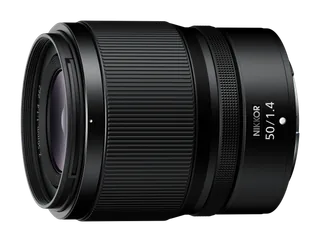
More comparisons
- Nikon NIKKOR Z 50mm f/1.4 vs Nikon NIKKOR Z 70–200mm f/2.8 VR S II
- Nikon NIKKOR Z 24mm f/1.8 S vs Nikon NIKKOR Z 70–200mm f/2.8 VR S II
- Nikon NIKKOR Z 24–105mm f/4–7.1 vs Nikon NIKKOR Z 50mm f/1.4
- Nikon NIKKOR Z 24–105mm f/4–7.1 vs Nikon NIKKOR Z 24mm f/1.8 S
- Nikon NIKKOR Z 50mm f/1.4 vs Nikon NIKKOR Z DX MC 35mm f/1.7
- Nikon NIKKOR Z 50mm f/1.4 vs Nikon NIKKOR Z DX 16–50mm f/2.8 VR
- Nikon NIKKOR Z 24mm f/1.8 S vs Nikon NIKKOR Z DX 16–50mm f/2.8 VR
- Nikon NIKKOR Z 24mm f/1.8 S vs Nikon NIKKOR Z DX MC 35mm f/1.7
- Nikon NIKKOR Z 24-70mm f/2.8 S II vs Nikon NIKKOR Z 50mm f/1.4
- Nikon NIKKOR Z 24-70mm f/2.8 S II vs Nikon NIKKOR Z 24mm f/1.8 S
- Nikon NIKKOR Z 28-135mm f/4 PZ vs Nikon NIKKOR Z 50mm f/1.4
- Nikon NIKKOR Z 24mm f/1.8 S vs Nikon NIKKOR Z 28-135mm f/4 PZ
- Nikon NIKKOR Z 35mm f/1.2 S vs Nikon NIKKOR Z 50mm f/1.4
- Nikon NIKKOR Z 24mm f/1.8 S vs Nikon NIKKOR Z 35mm f/1.2 S
- Nikon NIKKOR Z 50mm f/1.4 vs Nikon NIKKOR Z 58mm f/0.95 S Noct
- Nikon AF-S NIKKOR 50mm f/1.4G vs Nikon NIKKOR Z 50mm f/1.4