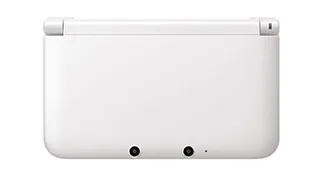
Nintendo 3DS XL vs Sony PlayStation Vita
Better figure, where one is clearly better
| Nintendo3DS XL | SonyPlayStation Vita | |
|---|---|---|
| Overview | ||
| Released | July 2012 | December 2011 |
| Performance | ||
| Type | Handheld | Handheld |
| CPU | – | ARM Cortex-A9, 4 cores |
| GPU | – | PowerVR SGX543MP4+ |
| Memory | – | 640 MB |
| Disc drive | No | No |
| CPU | – | ARM Cortex-A9 core (4 core) |
| GPU | – | SGX543MP4+ |
| Memory detail | – | 512 MB main memory and 128 MB VRAM (Sony's PCH-1000 specifications) |
| Storage detail | – | No built-in storage on the PCH-1000; games on PlayStation Vita cards or downloaded |
| Storage expansion | SD cards up to 2 GB and SDHC cards from 4 to 32 GB; SDHC card included (UK manual; capacity stated on the box) | PS Vita memory card slot (Sony's own format) |
| Display and video | ||
| Built-in screen | 4.88″ LCD, 800 × 240 | 5″ OLED, 960 × 544 |
| Built-in screen | Upper 4.88-inch 3D LCD, 800 × 240 with 400 pixels per eye in 3D; lower 4.18-inch touch LCD, 320 × 240; both display 16.7 million colours. Five brightness levels and power-saving mode (UK manual) | 5 inches (16:9), 960 × 544, approx. 16 million colours, OLED; capacitive multi-touch screen and rear multi-touch pad |
| Audio | Stereo speakers with pseudo-surround and headphone output | Built-in stereo speakers and microphone; headset jack |
| Design and power | ||
| Battery life (maker's claim) | Up to 6.5 hours | Up to 5 hours |
| Weight | 336 g | 260 g (better) |
| Battery life detail | SPR-003 replaceable 6.5 Wh lithium-ion pack; approximately 3.5–6.5 hours with 3DS software or 6–10 hours with DS software. Runtime depends on brightness, software, wireless use and temperature; cameras may shorten it further. Charge approximately 3.5 hours when off | 2210 mAh built-in battery; about 3–5 hours of games, 5 hours of video and 9 hours of music (Sony) |
| Size | 156 × 93 × 22 mm when closed (width × height × thickness); 336 g includes battery, stylus and SD card | – |
| Connections | ||
| Ports | Game card and SD card slots, charging cradle contacts, AC adapter connector and stereo audio jack | PS Vita card slot, memory card slot, multi-use port (USB, DC IN, audio), headset jack, accessory port; SIM card slot on the 3G/Wi-Fi model |
| Wi-Fi and Bluetooth | Wi-Fi IEEE 802.11b/g, 2.4 GHz; infrared. Amiibo requires the separate NFC Reader/Writer (Nintendo UK); the retained Japanese page's NFC line conflicts with this accessory requirement | Wi-Fi IEEE 802.11b/g/n (1x1), Bluetooth 2.1+EDR; 3G and GPS on the 3G/Wi-Fi model |
| Controller | One Circle Pad, D-pad, A/B/X/Y, L/R, Start, Select and Home; motion and gyro sensors. One inner and two outer fixed-focus 0.3-megapixel CMOS cameras (Nintendo Japan) | Built-in D-pad, two analogue sticks, four face buttons, two shoulder buttons; six-axis motion sensing and three-axis electronic compass; front and rear cameras (up to 640 × 480) |
| Backward compatibility | Nintendo 3DS, DS, DSi and DSi-enhanced game cards; 3DS and DSi software must match the system's region (UK manual) | Supported downloadable PSP games and PS one Classics (PlayStation) |
More comparisons
- Sony PlayStation 5 Pro vs Sony PlayStation Vita
- Sony PlayStation Portal vs Sony PlayStation Vita
- Sony PlayStation 5 Slim vs Sony PlayStation Vita
- Sony PlayStation 5 vs Sony PlayStation Vita
- Nintendo 3DS XL vs Nintendo Switch Lite
- Nintendo 3DS XL vs Nintendo New 2DS XL
- Nintendo New 2DS XL vs Sony PlayStation Vita
- Sony PlayStation 4 Pro vs Sony PlayStation Vita
- Sony PlayStation 4 Slim vs Sony PlayStation Vita
- Sony PlayStation 4 (CUH-1200) vs Sony PlayStation Vita
- Nintendo 3DS XL vs Nintendo New 3DS XL
- Nintendo 3DS XL vs Nintendo New 3DS
- Nintendo New 3DS vs Sony PlayStation Vita
- Sony PlayStation 4 vs Sony PlayStation Vita
- Nintendo 2DS vs Nintendo 3DS XL
- Nintendo 2DS vs Sony PlayStation Vita