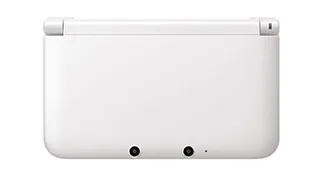
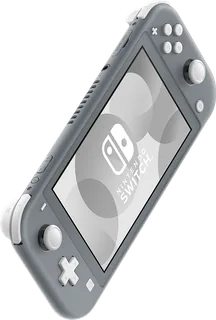
Nintendo 3DS XL vs Nintendo Switch Lite
Better figure, where one is clearly better
| Nintendo3DS XL | NintendoSwitch Lite | |
|---|---|---|
| Overview | ||
| Released | July 2012 | September 2019 |
| Performance | ||
| Type | Handheld | Handheld |
| CPU | – | NVIDIA customised Tegra processor |
| GPU | – | NVIDIA customised Tegra processor (integrated GPU) |
| Memory | – | 4 GB |
| Storage | – | 32 GB |
| Disc drive | No | No |
| CPU | – | NVIDIA customised Tegra processor (Tegra X1-based ODNX10-A1, according to iFixit) |
| Memory detail | – | 4 GB LPDDR4X in two 16 Gb Samsung chips (iFixit; not published by Nintendo) |
| Storage detail | – | 32 GB; about 6.2 GB is reserved for the system |
| Storage expansion | SD cards up to 2 GB and SDHC cards from 4 to 32 GB; SDHC card included (UK manual; capacity stated on the box) | microSD, microSDHC and microSDXC cards |
| Display and video | ||
| Built-in screen | 4.88″ LCD, 800 × 240 | 5.5″ LCD, 1280 × 720 |
| Built-in screen | Upper 4.88-inch 3D LCD, 800 × 240 with 400 pixels per eye in 3D; lower 4.18-inch touch LCD, 320 × 240; both display 16.7 million colours. Five brightness levels and power-saving mode (UK manual) | Capacitive touch screen; 5.5-inch LCD; 1280 × 720. Nintendo doesn't publish the refresh rate |
| Video output | – | None |
| Audio | Stereo speakers with pseudo-surround and headphone output | Stereo speakers; 3.5 mm headset jack |
| Design and power | ||
| Battery life (maker's claim) | Up to 6.5 hours | Up to 7 hours |
| Weight | 336 g | 275 g (better) |
| Battery life detail | SPR-003 replaceable 6.5 Wh lithium-ion pack; approximately 3.5–6.5 hours with 3DS software or 6–10 hours with DS software. Runtime depends on brightness, software, wireless use and temperature; cameras may shorten it further. Charge approximately 3.5 hours when off | About 3 to 7 hours (Nintendo support); the product page says more than six hours depending on the game (roughly four hours in The Legend of Zelda - Breath of the Wild); 3570 mAh; charges in about 3 hours |
| Power use | – | 4 W while gaming |
| Colours | – | Blue, Coral, Yellow, Grey |
| Size | 156 × 93 × 22 mm when closed (width × height × thickness); 336 g includes battery, stylus and SD card | – |
| Connections | ||
| Ports | Game card and SD card slots, charging cradle contacts, AC adapter connector and stereo audio jack | USB-C (charging only) |
| Wi-Fi and Bluetooth | Wi-Fi IEEE 802.11b/g, 2.4 GHz; infrared. Amiibo requires the separate NFC Reader/Writer (Nintendo UK); the retained Japanese page's NFC line conflicts with this accessory requirement | Wi-Fi 5 (IEEE 802.11 a/b/g/n/ac), Bluetooth 4.1, NFC |
| Controller | One Circle Pad, D-pad, A/B/X/Y, L/R, Start, Select and Home; motion and gyro sensors. One inner and two outer fixed-focus 0.3-megapixel CMOS cameras (Nintendo Japan) | Built-in controls with a +Control Pad; Joy-Con can be paired separately |
| Backward compatibility | Nintendo 3DS, DS, DSi and DSi-enhanced game cards; 3DS and DSi software must match the system's region (UK manual) | Nintendo Switch game cards only; games must support handheld mode |
More comparisons
- Nintendo Switch 2 vs Nintendo Switch Lite
- Nintendo Switch Lite vs Sony PlayStation Portal
- ASUS ROG Ally (2023) vs Nintendo Switch Lite
- Nintendo Switch Lite vs Valve Steam Deck LCD
- Nintendo Switch Lite vs Nintendo Switch – OLED Model
- Nintendo Switch Lite vs Sony PSPgo
- Nintendo Switch Lite vs Sony PSP-3000
- Nintendo DS Lite vs Nintendo Switch Lite
- Nintendo DSi vs Nintendo Switch Lite
- Nintendo DSi XL vs Nintendo Switch Lite
- Nintendo 2DS vs Nintendo Switch Lite
- Nintendo New 3DS vs Nintendo Switch Lite
- Nintendo New 2DS XL vs Nintendo Switch Lite
- Nintendo Switch vs Nintendo Switch Lite
- Nintendo 3DS XL vs Nintendo New 2DS XL
- Nintendo 3DS XL vs Nintendo New 3DS XL