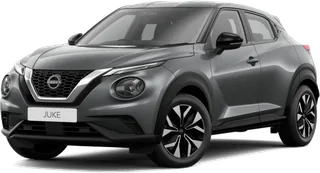
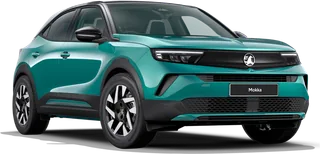
Nissan JUKE vs Vauxhall Mokka
Better figure, where one is clearly better
| NissanJUKE | VauxhallMokka | |
|---|---|---|
| Overview | ||
| Released | September 2019 | December 2020 |
| Performance | ||
| Powertrain | Petrol, Hybrid | Petrol, Hybrid, Electric |
| Power | 112–141 bhp | 129–278 bhp (better) |
| 0–62 mph | 10.1–11.8 s | 5.9–9 s (better) |
| Top speed | 103–112 mph | 93–129 mph (better) |
| Engine or motors | 1.0-litre DIG-T three-cylinder turbo petrol, 84 kW (114 PS); hybrid with a 1.6-litre four-cylinder petrol engine (94 PS), electric motor and 1.3 kWh battery, 105 kW (143 PS) system; bhp converted from Nissan's PS figures | 1.2-litre three-cylinder turbo petrol, 136PS (100 kW) manual or 130PS (96 kW) automatic; Hybrid: 1.2 turbo with 48V battery and a 21 kW (28hp) electric motor in the gearbox, 145PS (107 kW); Mokka Electric: 115 kW (156PS); Mokka GSE: 207 kW (281PS); bhp converted from Vauxhall's kW figures |
| Torque | 200 Nm (DIG-T); 148 Nm engine plus 205 Nm motor (hybrid) | 230 Nm (petrol and Hybrid), 260 Nm (Electric), 345 Nm (GSE) |
| Gearbox | 6-speed manual or 7-speed dual-clutch (DIG-T); multi-mode automatic (hybrid) | 6-speed manual (136PS), 8-speed automatic (130PS), 6-speed e-DCT6 dual-clutch automatic (Hybrid), single-speed (Electric and GSE) |
| Drive | Front-wheel drive | Front-wheel drive; Torsen multi-plate limited-slip differential on the GSE (Vauxhall) |
| Range and charging | ||
| Zero-emission range (WLTP) | – | 209–250 miles |
| Battery | – | 51 kWh |
| Fastest charging | – | 100 kW |
| Economy (WLTP) | 47.1–60.1 mpg (better) | 46.3–58.9 mpg |
| Range detail | – | WLTP combined: 250 miles (Mokka Electric, all trims); GSE 209 miles only with the optional Goodyear Eagle F1 tyres |
| Charging | – | 100 kW DC, 0–80% in 30 minutes; 11 kW three-phase AC on-board charger, 0–100% in 5 h; vehicle-to-load on the Mokka Electric |
| Efficiency | WLTP combined: 47.9–48.7 mpg (manual), 46.3–47.1 mpg (DCT), 58.9–60.1 mpg (hybrid) | WLTP combined: 49.6–50.4 mpg (136PS manual), 46.3 mpg (130PS automatic), 58.9 mpg (Hybrid 145PS); 15.4 kWh/100 km (Electric), 17.9–18.5 kWh/100 km (GSE) |
| CO2 emissions | 107–140 g/km (WLTP) | 108–138 g/km (petrol and hybrid, WLTP); 0 g/km (Electric and GSE) |
| Practicality | ||
| Body | Crossover | Crossover |
| Seats | 5 | 5 |
| Boot | 422 litres (better) | 350 litres |
| Length | 4,210 mm | 4,150 mm |
| Width | 1,800 mm | – |
| Weight | From 1,199 kg | From 1,219 kg |
| Boot | 422 litres (petrol) or 354 litres (hybrid) with the seats up; 1,305 or 1,237 litres folded | 350 litres below the cover, 1,105 litres with the rear seats folded; 310 and 1,060 litres (Electric) |
| Towing | 1,250 kg braked (DIG-T), 750 kg (hybrid) | 1,200 kg braked, 645–680 kg unbraked (petrol and hybrid); electric versions not listed for towing |
| Size | 4,210 mm long, 1,800 mm wide without mirrors, 1,593 mm high; 2,636 mm wheelbase; 10.57 m turning circle | 4,150 mm long, 1,534 mm high; 2,557 mm wheelbase (Electric 2,561 mm); kerb weight 1,219 kg (136PS manual), 1,287 kg (Hybrid), 1,540 kg (Electric), 1,597 kg (GSE); 44-litre fuel tank (42 litres Hybrid) |
| Tech and safety | ||
| Infotainment | – | 10-inch touchscreen and 10-inch digital instrument cluster; wireless Apple CarPlay and Android Auto |
| Warranty | 3 years or 60,000 miles | 3 years (first year unlimited mileage, then 60,000 miles); battery 8 years or 100,000 miles (70% capacity) |