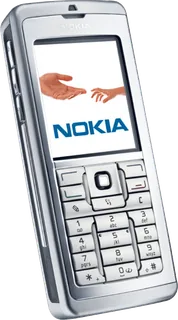
Nokia E60 vs Sony Ericsson P990i
Better figure, where one is clearly better
| NokiaE60 | Sony EricssonP990i | |
|---|---|---|
| Overview | ||
| Released | 2006 | August 2006 |
| Display | ||
| Screen size | – | 2.76″ |
| Resolution | 416 × 352 (better) | 320 × 240 |
| Sharpness | – | 145 pixels per inch |
| Panel | LCD | LCD |
| Display type | TFT with 16 million colours and 352 × 416 pixels in GSMArena's exact production test; portrait/landscape rotation. No physical diagonal inferred from the measured active area. | TFT touchscreen with 262,144 colours (PhoneArena) |
| Display features | – | Stylus touchscreen with full 240 × 320 resolution; 240 × 240 visible with the flip closed (OSnews) |
| Performance | ||
| Memory | – | 64 MB |
| Storage | 64 MB (better) | 60 MB |
| Memory | 64 MB internal user storage in both production reviews; no installed physical RAM borrowed from N80 or inferred from free application memory | – |
| Storage type | Reduced-size dual-voltage 1.8/3.0 V MultiMediaCard, hot-swappable in the exact owner guide; not microSD or full-size MMC/SD. No maximum capacity inferred. | Up to 60 MB internal user memory without 3D games; 64 MB Memory Stick PRO Duo supplied; supports cards up to 8 GB in the maker user guide; the original sale release stated up to 4 GB |
| Cameras | ||
| Main camera | None | 2 MP (better) |
| Ultra wide camera | None | None |
| Telephoto camera | None | None |
| Optical zoom | None | None |
| Main camera | No camera; intended for workplaces restricting camera-equipped devices | 2 MP autofocus camera with photo light, digital zoom and lens cover |
| Front camera | – | Separate video-call camera |
| Battery and charging | ||
| Battery | 970 mAh | – |
| Wireless charging | None | None |
| Battery life detail | Removable BL-5C 970 mAh in GSMArena's exact production test; its stated maker claim is up to 290 hours standby and 6 hours 40 minutes talk. Conditions and reviewer findings differ; not video playback. | – |
| Wired charging | Separate charger socket; exact issue 3 guide lists LCH-12, ACP-12 and AC-1 chargers. No charging wattage inferred. | – |
| Design | ||
| Type | Standard | Standard |
| Weight | 117 g (better) | 155 g |
| Thickness | 17 mm (better) | 26 mm |
| Height × width | 115 × 49 mm | 114 × 57 mm |
| Stylus | – | Yes |
| Size unfolded | – | Maker P1 comparison lists 21 mm body and 26 mm with flip; P990i user guide instead specifies 25 mm overall thickness |
| Weight detail | 117 g and 115 × 49 × 17 mm in GSMArena's exact production description; weight includes fitted battery. Maker dimension sheet not recovered. | – |
| Materials | Silver/black enclosure with metal front framing and side controls in GSMArena's exact test | – |
| Buttons | Numeric keypad, joystick, soft keys, call/menu/edit/correction keys, side volume and voice key; top power/profile button | Removable numeric keypad flip, fixed QWERTY keyboard and Jog Dial |
| Speakers | Built-in loudspeaker and MP3/AAC music playback; no FM radio in GSMArena's exact test | – |
| Software | ||
| Operating system | Symbian | Symbian |
| Software at launch | Symbian OS 9.1 with S60 Third Edition | Symbian OS 9.1 with UIQ 3 |
| Software features | Exact guide includes Word document, spreadsheet and presentation editing, PDF viewing, screen export and remote device management. Voice recorder maximum 60 seconds. Original maker launch supports corporate email and IP telephony; historical servers and downloads may no longer operate. | – |
| Release detail | Nokia announced E60 with E61/E70 on 12 October 2005, planning the first quarter of 2006. Nokia's 2006 annual report confirms actual first E60 shipments during 2006; earliest maker-supported retail month unresolved, so year precision retained. The announcement and planned quarter are not first-sale dates. No predecessor link inferred. | – |
| Connectivity | ||
| Mobile network | GSM 900/1800/1900 and WCDMA 2100 in Nokia's original launch release; GPRS and EDGE | GSM 900/1800/1900 and UMTS 2100; no EDGE support (OSnews) |
| Wi-Fi | WLAN with internet calling; IEEE 802.11g/e/i described in TechRadar's exact test | Wi-Fi 802.11b wireless network connectivity |
| Bluetooth | Bluetooth 1.2 in the exact owner guide, with headset/hands-free, serial/dial-up, file/object transfer, imaging and remote SIM profiles; no A2DP in GSMArena's production test | Bluetooth 2.0 with A2DP stereo audio (OSnews) |
| USB | Pop-Port accessory/data connector with USB-compatible cable and infrared; proprietary headset connection, not a standard headphone socket | USB 2.0 low speed (1.5 Mbit/s) and full speed (12 Mbit/s) through Fast Port; IrDA-SIR and IrOBEX infrared |
| Positioning | External Bluetooth GPS receiver needed for the Positions, Navigator and Landmarks applications in GSMArena's exact test; no integrated GPS | – |

More comparisons
- Sony Ericsson P990i vs Sony Xperia 1 VIII
- Nokia E60 vs Nokia E72
- Nokia E52 vs Nokia E60
- Nokia E55 vs Nokia E60
- Nokia E60 vs Nokia E63
- Nokia E60 vs Nokia E66
- Nokia E60 vs Nokia E71
- Nokia E60 vs Nokia E65
- Nokia E51 vs Nokia E60
- Nokia E61i vs Sony Ericsson P990i
- Nokia N95 vs Sony Ericsson P990i
- Nokia E62 vs Sony Ericsson P990i
- Nokia E60 vs Nokia E62
- Nokia E50 vs Sony Ericsson P990i
- Sony Ericsson P910i vs Sony Ericsson P990i
- Sony Ericsson P900 vs Sony Ericsson P990i