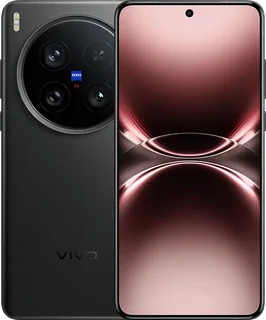
OPPO Find X8 Pro vs vivo X200 Ultra
Better figure, where one is clearly better
| OPPOFind X8 Pro | vivoX200 Ultra | |
|---|---|---|
| Overview | ||
| Released | October 2024 | April 2025 |
| Display | ||
| Screen size | 6.78″ | 6.82″ |
| Resolution | 2780 × 1264 | 3168 × 1440 (better) |
| Sharpness | 450 pixels per inch | 510 pixels per inch (better) |
| Panel | LTPO OLED | LTPO OLED |
| Refresh rate | 120 Hz | 120 Hz |
| Peak brightness | 4,500 nits | 4,500 nits |
| Display type | Flexible AMOLED; LTPO and adaptive 1–120 Hz identified by Stuff | 8T LTPO AMOLED, adaptive 1–120 Hz |
| Pixel density | 450 ppi | 510 ppi |
| Brightness detail | 800 nits typical, 1,600 nits HBM and 4,500 nits peak for HDR content | 4,500 nits local peak |
| Screen protection | Corning Gorilla Glass 7i, specified by maker UK sheet; Stuff's Victus 2 identification conflicts | Armor Glass |
| Display features | 10-bit colour; nature, pro and vivid modes 100% DCI-P3; touch sampling up to 240 Hz, default 120 Hz; 92.8% screen ratio; ProXDR and Ultra HDR support; PWM and DC dimming | 1.07 billion colours, P3 gamut, 8,000,000:1 contrast and HDR; 93.3% screen ratio; circular polariser, 1 Pulse DC-like dimming and 2,160 Hz PWM |
| Performance | ||
| Chip | MediaTek Dimensity 9400 | Qualcomm Snapdragon 8 Elite |
| Memory | 16 GB | 12 GB – 16 GB |
| Storage | 512 GB | 256 GB, 512 GB, 1 TB (better) |
| CPU | Eight-core Dimensity 9400, second-generation all-big-core design on TSMC second-generation 3 nm process | Eight 64-bit cores, 2 × 4.32 GHz + 6 × 3.53 GHz; 3 nm process |
| GPU | Arm Immortalis G925 MC12 | Qualcomm Adreno 830 |
| Storage type | UK CPH2659 16 GB/512 GB, LPDDR5X RAM and UFS 4.0; Singapore's 28 GB advertising includes 12 GB virtual RAM, not physical RAM | Four-channel LPDDR5X Ultra and UFS 4.1; China V2454A/V2454DA configurations 12 GB/256 GB, 16 GB/512 GB and 16 GB/1 TB with satellite communication; photography bundle uses same 1 TB model |
| Cooling | – | Vapour chamber with capillary wick and nanofluid cooling |
| Cameras | ||
| Main camera | 50 MP | 50 MP |
| Ultra wide camera | 50 MP | 50 MP |
| Telephoto camera | 50 MP | 200 MP |
| Optical zoom | 6× (better) | 3.7× |
| Front camera | 32 MP | 50 MP (better) |
| Main camera | 50 MP, 1/1.4-inch sensor, f/1.6, 23 mm equivalent, 85° field of view, seven-element lens, autofocus and two-axis OIS | 50 MP Sony LYT-818, 1/1.28-inch sensor, f/1.69, 35 mm equivalent, ZEISS T* coating, autofocus and CIPA 5.0 OIS |
| Ultra wide camera | 50 MP, 1/2.75-inch sensor, f/2.0, 15 mm equivalent, 120° field of view, six-element lens and autofocus | 50 MP Sony LYT-818, 1/1.28-inch sensor, f/2.0, 14 mm equivalent, autofocus and CIPA 5.0 OIS |
| Telephoto camera | 50 MP 3× periscope, Sony LYT600 1/1.95-inch sensor, f/2.6, 73 mm equivalent, 33° field of view, 1G3P lens, autofocus and two-axis OIS; additional 50 MP 6× periscope, 1/2.51-inch sensor, f/4.3, 135 mm equivalent, 18° field of view, 1G3P lens, autofocus and two-axis OIS | 200 MP HP9, 1/1.4-inch sensor, f/2.27, 85 mm equivalent, 1G2P4P floating periscope, autofocus and CIPA 5.0 OIS |
| Front camera | 32 MP, f/2.4, 90° field of view and five-element lens | 50 MP, f/2.45; autofocus identified by Digital Camera World |
| Zoom | 3× and 6× optical telephoto; AI Telescope Zoom and up to 120× digital for photos; video up to 6× optical and 18× digital | Maker specifies 3.7× optical telephoto and up to 105× digital; its zoom scale uses 23 mm as 1× despite 35 mm main lens; optional 2.35× ZEISS extender provides 200 mm equivalent |
| Video recording | Rear 4K30/60 with EIS/OIS; Dolby Vision HDR 4K60 from all cameras; slow motion 1080p240 or 720p240/480; cinematic 4K30; time-lapse 4K/1080p30; dual-view 1080p30 | Up to 8K; rear cameras support 4K120 slow motion, 4K60 10-bit Log, 4K60 Dolby Vision, 4K portrait and time-lapse; Rec.709 monitoring |
| Front video | Up to 4K60, Dolby Vision HDR and stabilisation; 1080p30/60 or 720p30 | Up to 4K60, identified by Android Central |
| Camera features | Hasselblad portrait and Master modes, XPAN, Hi-Res, night, long exposure, document scanning, Livephoto and Lightning Snap up to seven frames per second | V3+ and VS1 imaging chips; RAW, spatial photo/video, stage, street, landscape, portrait, underwater, food and Pro modes; zoom flash |
| Battery and charging | ||
| Battery | 5,910 mAh | 6,000 mAh (better) |
| Wired charging | Up to 80 W | Up to 90 W (better) |
| Wireless charging | Up to 50 W (better) | Up to 40 W |
| Battery life detail | Silicon-carbon battery; 5,910 mAh/22.88 Wh typical and 5,770 mAh/22.33 Wh rated | Single-cell 6,000 mAh/22.80 Wh typical and 5,880 mAh/22.35 Wh rated at 3.80 V; third-generation silicon anode and semi-solid technology; maker claims up to 18.3 days 4G single-SIM standby or 23.4 hours VoLTE calls in laboratory tests |
| Wired charging | 80 W SUPERVOOC; SUPERVOOC 2.0, SUPERVOOC and VOOC 4.0 compatible; PD 9 V/1.3 A; PPS 11 V/5 A in EU and 11 V/3 A elsewhere, as specified by maker UK page | 90 W FlashCharge |
| Wireless charging | 50 W AIRVOOC; magnetic case accessory enables magnetic mounting; reverse wireless charging reported by TechRadar without a confirmed rating | 40 W wireless FlashCharge |
| Charges other devices | – | OTG reverse charging supported |
| Design | ||
| Type | Standard | Standard |
| Weight | 215 g (better) | 232 g |
| Thickness | 8.34 mm (better) | 8.69 mm |
| Height × width | 162.27 × 76.67 mm | 163.14 × 76.76 mm |
| Water and dust resistance | IP68 | IP68 |
| Materials | Glass front and rear with aluminium frame; quad-curved glass and pearlescent pattern on Pearl White | – |
| Colours | Space Black at 8.24 mm thick; Pearl White at 8.34 mm; both 162.27×76.67 mm and approximately 215 g | Black Ka and Red Circle 232 g; Silver Tone 229 g, all 8.69 mm thick |
| Buttons | Three-stage alert slider and camera Quick Button; double-press launches camera, press captures, long-press burst, swipe adjusts zoom in landscape | Two-stage pressure-sensitive camera control; double press opens camera, half press locks focus/exposure when configured, sliding adjusts exposure, lens or zoom |
| Water resistance detail | IP68 and IP69; IP68 immersion at 1.5 m for 30 minutes; IP69 hot-water jets; resistance decreases with wear | IP68 and IP69 |
| Biometrics | Optical under-display fingerprint reader and face recognition | 3D ultrasonic single-point fingerprint sensor and face recognition |
| Sensors | Proximity, ambient light, colour temperature, compass, accelerometer, gyroscope, optical fingerprint, Hall, laser focusing, spectral and infrared remote control | Accelerometer, ambient light, proximity, gyroscope, compass, front/rear colour temperature, laser focusing, infrared remote, flicker and multispectral sensors; X-axis linear vibration motor |
| Speakers | Stereo speakers, confirmed by Stuff | Dual speakers |
| Software | ||
| Operating system | Android | Android |
| Software at launch | Android 15 with ColorOS 15.0 | Android 15 with China-market OriginOS 5 |
| Software updates | Six years of security updates, promised by maker Singapore launch notice | – |
| AI features | AI photo eraser, clarity, unblur and reflection tools; Notes and document assistance, recording transcription, Circle to Search and Gemini; Touch to Share with iOS/iPadOS was announced for a later OTA update | AI image expansion, erase, object moving, weather changes and automatic composition |
| In the box | UK phone, USB cable, SIM tool, quick guide and safety guide; no charger listed despite TechRadar's regional review bundle | – |
| Connectivity | ||
| Satellite messaging | – | Yes |
| Mobile network | GSM 850/900/1800/1900; WCDMA B1/2/4/5/6/8/19; LTE FDD B1/2/3/4/5/7/8/12/13/17/18/19/20/25/26/28/32/66 and TDD B38/39/40/41; 5G n1/2/3/5/7/8/12/20/25/26/28/38/40/41/66/75/77/78 | GSM 850/900/1800/1900 MHz; WCDMA B1/2/4/5/6/8/19; LTE TDD B34/38/39/40/41/42/43/48, FDD B1/2/3/4/5/7/8/12/17/18/19/20/25/26/28/66; 5G n1/2/3/5/7/8/12/18/20/25/26/28/38/40/41/48/66/77/78/79/80/81/83/84/89 |
| SIM | Two nano-SIM/nano-USIM slots and eSIM support | Two nano-SIMs, dual standby; dual 5G active on supported SA/VoNR band combinations |
| Wi-Fi | Wi-Fi 7/6/5 and 802.11a/b/g/n; simultaneous dual-band, 2×2 MIMO and MU-MIMO; Wi-Fi Display and tethering | Wi-Fi 6 and 7; 2.4 GHz, 5.1 GHz and 5.8 GHz; Wi-Fi Display, 2 × 2 MIMO, MU-MIMO and concurrent 2.4/5 GHz |
| Bluetooth | Bluetooth 5.4 and BLE; SBC, AAC, aptX, aptX HD, LDAC and LHDC 5.0; LHDC requires compatible OPPO Enco X or OnePlus Buds Pro | Bluetooth 5.4; SBC, AAC, aptX, aptX HD, aptX Adaptive, aptX Lossless, LDAC and LHDC 5.0 |
| NFC | Read/write 13.56 MHz cards, NFC-SIM in SIM1, HCE payments and eSE; HCE access-card functions limited to listed regions; availability depends on market | Reader and card-emulation modes, including vivo Wallet, SIM and HCE payments; SIM payment requires SIM1 |
| Satellite features | – | BeiDou short-message communication only on 16 GB/1 TB model, with China Mobile service activation; not available on smaller configurations |
| USB | USB-C, USB 3.2 Gen 1 and OTG; digital USB-C headphones supported, analogue USB-C headphones unsupported | USB-C, USB 3.2 Gen 1, OTG and DisplayPort output; USB-C headphone connection |
| Positioning | GPS L1/L5, GLONASS G1, BeiDou B1I/B1C/B2a/B2b, Galileo E1/E5a/E5b, QZSS L1/L5 and NavIC L5; A-GNSS, Wi-Fi and cellular positioning | GPS L1/L5, BeiDou B1C/B1I/B2a, GLONASS G1, Galileo E1/E5a, QZSS L1/L5, A-GPS, cellular and Wi-Fi positioning |

More comparisons
- Google Pixel 11 Pro vs OPPO Find X8 Pro
- OPPO Find X8 Pro vs OPPO Find X9 Ultra
- vivo X200 Ultra vs vivo X300 Ultra
- OPPO Find N6 vs OPPO Find X8 Pro
- OPPO Find X8 Pro vs Samsung Galaxy S26 Ultra
- vivo X200 Ultra vs vivo X300 FE
- OnePlus OnePlus 15 vs OPPO Find X8 Pro
- OnePlus OnePlus 15 vs vivo X200 Ultra
- OPPO Find X8 Pro vs OPPO Find X9
- OPPO Find X8 Pro vs OPPO Find X9 Pro
- vivo X200 Ultra vs vivo X300 Pro
- vivo X200 Ultra vs vivo X300
- iQOO iQOO 15 vs vivo X200 Ultra
- Apple iPhone 17 Pro Max vs vivo X200 Ultra
- vivo X200 FE vs vivo X200 Ultra
- vivo X200 Pro vs vivo X200 Ultra