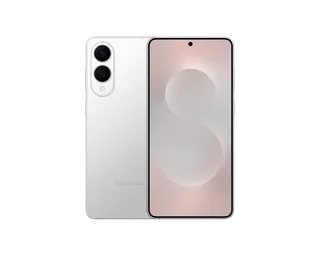
Samsung Galaxy S25 Edge vs Xiaomi REDMI Note 14 Pro+ 5G
Better figure, where one is clearly better
| SamsungGalaxy S25 Edge | XiaomiREDMI Note 14 Pro+ 5G | |
|---|---|---|
| Overview | ||
| Released | May 2025 | January 2025 |
| Display | ||
| Screen size | 6.7″ | 6.67″ |
| Resolution | 3120 × 1440 (better) | 2712 × 1220 |
| Sharpness | 513 pixels per inch (better) | 446 pixels per inch |
| Panel | LTPO OLED | OLED |
| Refresh rate | 120 Hz | 120 Hz |
| Peak brightness | – | 3,000 nits |
| Display type | Dynamic AMOLED 2X, Quad HD+, 16M colours; Super Smooth 120 Hz adaptive refresh rate (1–120 Hz); 6.7 inches as a full rectangle, 6.5 inches allowing for the rounded corners | CrystalRes AMOLED with curved edges and 12-bit colour |
| Brightness detail | – | Up to 3,000 nits peak |
| Screen protection | Corning Gorilla Glass Ceramic 2 | Corning Gorilla Glass Victus 2 |
| Display features | Vision booster; Adaptive colour tone; ProScaler image upscaling; mDNIe image processing | DCI-P3, 5,000,000:1 contrast, 480 Hz touch sampling, 1,920 Hz PWM dimming, 20,000-level brightness adjustment, Dolby Vision, HDR10+ and TÜV low blue light, flicker-free and circadian certifications |
| Performance | ||
| Chip | Snapdragon 8 Elite for Galaxy | Qualcomm Snapdragon 7s Gen 3 |
| Memory | 12 GB | 8 GB – 12 GB |
| Storage | 256 GB, 512 GB | 256 GB, 512 GB |
| CPU | Octa-core (4.47 GHz, 3.5 GHz); 3 nm | 4 nm octa-core CPU up to 2.5 GHz; GSMArena and Notebookcheck identify one Cortex-A720 at 2.5 GHz, three Cortex-A720 at 2.4 GHz and four Cortex-A520 at 1.8 GHz |
| GPU | Real-time ray tracing; Vulkan optimisation | Qualcomm Adreno; exact GPU identifiers differ between GSMArena and Notebookcheck |
| Storage type | – | LPDDR4X memory and UFS 2.2 storage |
| Cooling | Vapour chamber 10% larger than the Galaxy S25+'s, with a new hole structure in the front metal frame and a tailored thermal interface material | LiquidCool technology |
| Cameras | ||
| Main camera | 200 MP | 200 MP |
| Ultra wide camera | 12 MP | 8 MP |
| Telephoto camera | None | None |
| Optical zoom | None | None |
| Front camera | 12 MP | 20 MP (better) |
| Main camera | 200 MP wide, F1.7, OIS, autofocus | 200 MP, f/1.65, 1/1.4-inch sensor, 7-element lens, OIS and 16-in-1 binning to 2.24 µm pixels; GSMArena identifies Samsung ISOCELL HP3 |
| Ultra wide camera | 12 MP, F2.2, autofocus; macro shots | 8 MP, f/2.2; GSMArena and Notebookcheck confirm fixed focus |
| Front camera | 12 MP, F2.2, autofocus | 20 MP, f/2.2; fixed focus confirmed by GSMArena and Notebookcheck |
| Zoom | 2x optical-quality zoom (Adaptive Pixel sensor); digital zoom up to 10x | – |
| Video recording | Up to 8K (7680 × 4320) at 30 fps; slow motion at 240 fps (FHD) and 120 fps (FHD and UHD) | 4K at 24/30 fps, 1080p at 30/60 fps and 720p at 30 fps; slow motion 1080p at 120 fps or 720p at 120/240 fps |
| Front video | – | 1080p at 30/60 fps and 720p at 30 fps |
| Camera features | ProVisual Engine; Nightography; Object-aware Engine for portraits; Audio Eraser; Auto Trim | Additional 2 MP f/2.4 macro camera, Dynamic shots, Motion tracking focus, Lightning Burst, filmFrame, portrait, document and night modes |
| Battery and charging | ||
| Battery | 3,900 mAh | 5,110 mAh (better) |
| Video playback (maker's claim) | Up to 24 hours | – |
| Wired charging | Up to 25 W | Up to 120 W (better) |
| Wireless charging | Yes (wattage not published) | None |
| Battery life detail | 3,900 mAh typical, 3,786 mAh rated; at least 2,000 charge cycles; EU energy class A, 40 h 5 min per charge cycle | UK/global 5,110 mAh typical; Chinese and Indian versions have different hardware and are excluded |
| Wired charging | Up to 55% in around 30 minutes with a 25 W adapter (sold separately); compatible with QC2.0 and AFC/PD | Up to 120 W HyperCharge; adaptor sold separately in the UK, with a separate launch gift promotion |
| Wireless charging | Fast Wireless Charging (WPC); Samsung doesn't state the wattage | – |
| Charges other devices | Wireless PowerShare | – |
| Connectivity | ||
| Satellite messaging | Yes | – |
| Mobile network | 5G Sub6 (FDD, TDD, SDL); 4G LTE (FDD, TDD); 3G WCDMA; 2G GSM | 5G, LTE, WCDMA and GSM |
| SIM | Two nano-SIMs, nano-SIM and eSIM, or dual eSIM | Dual nano-SIM or nano-SIM plus eSIM; availability depends on carrier and region |
| Wi-Fi | Wi-Fi 7 (802.11a/b/g/n/ac/ax/be), 2.4, 5 and 6 GHz, EHT320, MIMO, 4096-QAM | Wi-Fi 6/6E, Wi-Fi 5 and Wi-Fi 4, 2.4/5 GHz, 2×2 MIMO and Wi-Fi Direct; Wi-Fi 6E availability depends on region and network |
| Bluetooth | Bluetooth 5.4 | Bluetooth 5.4 |
| Ultra Wideband | Yes | – |
| NFC | Yes | NFC |
| Satellite features | Works with O2 Satellite in the UK (texts, supported apps, maps and location sharing where O2 has no signal; not emergency calls) | – |
| USB | USB Type-C, USB 3.2 Gen 1 | USB-C; USB 2.0 and no wired video output, confirmed by Notebookcheck |
| Positioning | GPS, Glonass, Beidou, Galileo, QZSS | BeiDou B1I/B1c, GPS L1, Galileo E1, GLONASS G1 and QZSS L1 |
| Design | ||
| Type | Standard | Standard |
| Weight | 163 g (better) | 210.14 g |
| Thickness | 5.8 mm (better) | 8.75 mm |
| Height × width | 158.2 × 75.6 mm | 162.53 × 74.67 mm |
| Water and dust resistance | IP68 | IP68 |
| Stylus | No | – |
| Materials | Titanium frame (not the volume and side keys); Corning Gorilla Glass Ceramic 2 front, Corning Gorilla Glass Victus 2 back | Main dimensions and weight describe glass colours; Lavender Purple is 205.13 g and 8.85 mm thick; GSMArena and TechRadar identify an aluminium frame |
| Colours | Titanium Silver, Titanium Jetblack, Titanium Icyblue | Frost Blue, Midnight Black, Lavender Purple and Sand Gold |
| Water resistance detail | IP68, dust-tight and tested for submersion in up to 1.5 m of fresh water for up to 30 minutes; not advised for beach or pool use | IP68 tested at up to 1.5 m fresh water for 30 minutes; protection can decrease with wear |
| Biometrics | Fingerprint sensor | In-screen fingerprint sensor and AI face unlock |
| Sensors | Accelerometer, barometer, fingerprint sensor, gyro sensor, geomagnetic sensor, Hall sensor, light sensor, proximity sensor | Proximity, ambient light, accelerometer, electronic compass, IR blaster, flicker sensor and gyroscope; x-axis linear vibration motor |
| Speakers | Stereo speakers | Dual speakers with Dolby Atmos |
| Software | ||
| Operating system | Android | Android |
| Software at launch | One UI 7 (Android 15) | Xiaomi HyperOS based on Android 14, confirmed by all three full reviews |
| Software updates | Security updates until 31 May 2032 (UK) | Three Android version upgrades and four years of security patches, reported by Notebookcheck and TechRadar |
| AI features | Galaxy AI, including Now Brief, Now Bar, Audio Eraser and Drawing Assist; Gemini Live with camera and screen sharing; Gemini on the side button | Google Gemini, Circle to Search, AI Interpreter, Notes, Recorder, Subtitles, Film and image editing; availability depends on software and region |
| In the box | – | UK phone, USB-C cable, SIM tool, protective case, guides and warranty card; no adaptor |

More comparisons
- Samsung Galaxy S25 Edge vs Samsung Galaxy S26 FE
- Xiaomi REDMI Note 14 Pro+ 5G vs Xiaomi REDMI Note 17 Pro 5G
- Samsung Galaxy S25 Edge vs Samsung Galaxy S26
- Samsung Galaxy S25 Edge vs Samsung Galaxy S26 Ultra
- Samsung Galaxy S25 Edge vs Samsung Galaxy S26+
- Xiaomi REDMI Note 14 Pro+ 5G vs Xiaomi REDMI Note 15 Pro+ 5G
- Xiaomi REDMI Note 14 Pro+ 5G vs Xiaomi REDMI Note 15 5G
- Xiaomi REDMI Note 14 Pro+ 5G vs Xiaomi REDMI Note 15 Pro 5G
- Motorola edge 70 vs Samsung Galaxy S25 Edge
- Motorola edge 70 vs Xiaomi REDMI Note 14 Pro+ 5G
- Samsung Galaxy S25 Edge vs Samsung Galaxy S25 FE
- Samsung Galaxy S25 Edge vs Xiaomi POCO F7 Pro
- Samsung Galaxy S25 Edge vs Xiaomi POCO X7
- Samsung Galaxy S25 vs Samsung Galaxy S25 Edge
- Samsung Galaxy S25 Edge vs Samsung Galaxy S25 Ultra
- Samsung Galaxy S25 Edge vs Samsung Galaxy S25+