Sony INZONE M9 vs Sony INZONE M9 II
Better figure, where one is clearly better
| SonyINZONE M9 | SonyINZONE M9 II | |
|---|---|---|
| Overview | ||
| Released | July 2022 | September 2024 |
| Display | ||
| Screen size | 27″ | 27″ |
| Resolution | 3840 × 2160 (4K) | 3840 × 2160 (4K) |
| Sharpness | 163 pixels per inch | 163 pixels per inch |
| Panel | IPS (Direct LED backlight with full-array local dimming) | IPS (Full-array local dimming with backlight scanning) |
| Refresh rate | 144 Hz | 160 Hz (better) |
| Response time (grey to grey) | 1 ms | 1 ms |
| Brightness (typical) | 400 nits | 400 nits |
| HDR peak brightness | 600 nits | 750 nits (better) |
| HDR certification | DisplayHDR 600 | DisplayHDR 600 |
| HDR formats | HDR10, HLG | HDR10, HLG |
| Contrast ratio | 1,000:1 | – |
| Colour range | Over 95% DCI-P3 | 95% DCI-P3 |
| DCI-P3 coverage | 95% | 95% |
| Screen finish | Matte | Matte |
| Shape | Flat | Flat |
| Adaptive sync | G-Sync Compatible, HDMI VRR | VESA AdaptiveSync, G-Sync Compatible, HDMI VRR |
| Colour depth | 1.07 billion colours | 1.07 billion colours |
| Colour modes | Standard, FPS Game, Cinema, Game 1 and Game 2; black equalizer, crosshair, timer and frame-rate counter | SDR: FPS, MOBA/RTS, RPG, Cinema, Game, Standard, sRGB; HDR: DisplayHDR, Cinema, Game, RPG |
| HDR detail | Full-array local dimming; 96 zones reported by TechSpot. Sony's formal specifications give 600 cd/m² peak brightness, while its Japanese engineer interview describes a 750-nit design target. Dynamic contrast 80,000:1; static contrast 1,000:1. | Full-array local dimming; dynamic contrast 80,000:1 |
| Response time detail | 1 ms grey-to-grey in Fast mode (Sony Japan) | 1 ms grey-to-grey in the fastest response-time mode |
| Variable refresh range | 48–144 Hz over DisplayPort and 48–120 Hz over HDMI (Sony FAQ); supported vertical-frequency ranges are 24–144 Hz and 24–120 Hz respectively | – |
| Motion blur reduction | No backlight strobing (Sony FAQ) | Backlight scanning (Motion Blur Reduction) |
| Viewing angles | 178° horizontal and vertical | 178° / 178° |
| Eye care | TÜV Rheinland-certified low blue light and flicker-free display | TÜV Rheinland-certified low blue light and flicker reduction |
| Calibration | Sony states Delta E below 1 for HDR input in its FAQ; a factory colour-calibration report is supplied. This is not an SDR accuracy claim. | – |
| Connections | ||
| Video inputs | 2 × HDMI 2.1, DisplayPort 1.4, USB-C | 2 × HDMI 2.1, DisplayPort 2.1 UHBR10 |
| USB-C charging | Up to 15 W (better) | None |
| USB ports | 3 × USB-A | 2 × USB-A |
| KVM switch | Yes | No |
| Ethernet | No | No |
| Speakers | Yes | Yes |
| HDMI detail | 2 × HDMI 2.1, up to 4K 120 Hz; HDMI VRR, ALLM, CEC and HDCP 2.3. PS5 Auto HDR Tone Mapping and Auto Genre Picture Mode require supported PS5 software and settings. | 2 × HDMI 2.1, 24–144 Hz, VRR |
| DisplayPort detail | 1 × DisplayPort 1.4, up to 4K 144 Hz | 1 × DisplayPort 2.1 (UHBR10), 24–160 Hz; the included cable is DisplayPort 1.4 |
| USB-C detail | DisplayPort Alternate Mode and USB upstream; USB data transfer up to 480 Mbps (USB 2.0). Power output 5 V / 3 A, equivalent to 15 W (Sony FAQ). | – |
| USB hub detail | 1 × USB-B upstream (USB 3.0, 5 Gbps), 3 × USB-A downstream (5 V / 0.9 A each). Auto KVM switches peripherals between USB-B and USB-C upstream connections; video alone does not establish both USB connections. | 1 × USB-B upstream, 2 × USB-A downstream, 1 × USB-A for firmware updates |
| Audio out | 3.5 mm headphone jack | 3.5 mm headphone jack |
| Speaker detail | 2 W × 2 | 2 W × 2 |
| Design | ||
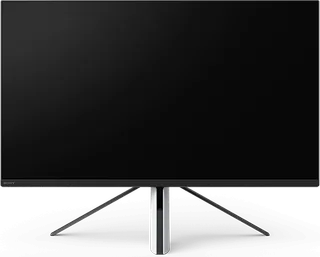
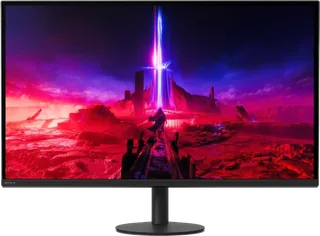
| Stand adjusts | Height, tilt | Height, tilt, swivel (better) |
| VESA mount | Yes | Yes |
| Weight with stand | 6.8 kg | 6.4 kg |
| Height adjustment | 70 mm | 130 mm |
| Tilt | 0° to 20° | -5° to 25° |
| Swivel | No swivel | ±180° |
| Pivot | No portrait pivot | – |
| VESA pattern | 100 × 100 mm | 100 × 100 mm |
| Size with stand | Approximately 615 × 479 × 248 mm (W × H × D) | 615 × 528 × 211 mm (W × H × D, approx.) |
| Size without stand | Approximately 615 × 363 × 73 mm (W × H × D) | 615 × 363 × 73 mm (W × H × D, approx.) |
| Weight without stand | Approximately 4.6 kg | 4.4 kg (approx.) |
| Weight detail | Approximately 6.8 kg including the stand | – |
| Controls | Rear joystick; configurable rear lighting with 13 colour options | – |
| Colours | White rear housing and black bezel | – |
| Power and support | ||
| Power use | Typical 139 W; Eco mode 28.9 W; standby 0.5 W (Sony UK specifications) | 100 W |
| Power supply | External AC adapter; 100–240 V AC, 50/60 Hz | – |
| Laptop charging | USB charging depends on the USB-hub/KVM selection settings (Sony FAQ) | – |
| Software | INZONE Hub for Windows; firmware updates through the PC software using a USB upstream connection | INZONE Hub (PC) |
| In the box | AC adapter, AC power cord, setup guide, operating instructions, factory colour-calibration report, warranty card and INZONE sticker. Video and USB cables are not included (Sony UK specifications and FAQ). | – |
More comparisons
- Sony INZONE M10S II vs Sony INZONE M9 II
- Sony INZONE M10S II vs Sony INZONE M9
- Gigabyte M27UP vs Sony INZONE M9 II
- Gigabyte M27UP vs Sony INZONE M9
- Dell 27 Plus 4K Monitor (S2725QS) vs Sony INZONE M9
- MSI MAG 275UPD E14 vs Sony INZONE M9
- MSI MAG 275UPD E14 vs Sony INZONE M9 II
- Dell 27 Plus 4K USB-C (S2725QC) vs Sony INZONE M9
- Dell Pro 27 Plus 4K USB-C Hub (P2725QE) vs Sony INZONE M9
- Dell UltraSharp 27 4K Thunderbolt Hub (U2725QE) vs Sony INZONE M9
- LG UltraGear 27G850A-B vs Sony INZONE M9 II
- Sony INZONE M10S vs Sony INZONE M9 II
- Sony INZONE M10S vs Sony INZONE M9
- Dell Alienware 27 4K Dual-Resolution (AW2725QF) vs Sony INZONE M9 II
- Sony INZONE M3 vs Sony INZONE M9 II
- Sony INZONE M3 vs Sony INZONE M9