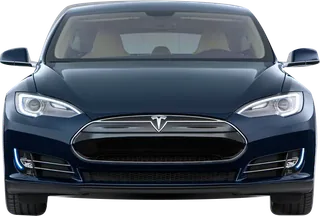
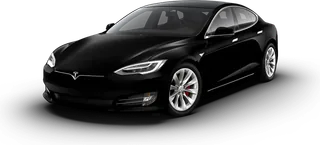
Tesla Model S (2012) vs Tesla Model S (2019)
Better figure, where one is clearly better
| TeslaModel S (2012) | TeslaModel S (2019) | |
|---|---|---|
| Overview | ||
| Released | June 2012 | 2019 |
| Performance | ||
| Powertrain | Electric | Electric |
| Power | 302–463 bhp | 534–778 bhp (better) |
| 0–62 mph | 3.3–5.8 s (better) | 3.8–4.2 s |
| Top speed | 120–155 mph | 155–162 mph (better) |
| Engine or motors | Original liquid-cooled AC induction rear motor; D versions add a front motor. Tesla’s 2012 US sheet gives 270 kW / 362 hp for the 85 and 310 kW / 416 hp for Performance. Its 2013 brochure (read as a ReadkonG copy) gives 225 kW / 302 hp for the original 60. Later European figures are from the exact EV Database listings: 278 kW (85), 235 kW (70), 245 kW (70D), 311 kW (85D) and 345 kW (P85D), converted to bhp. These are separate period specifications, rather than a single unchanging launch rating. | Tesla’s Q1 2019 investor update confirms a new powertrain without increasing the existing packs’ capacity. The original Tesla announcement reproduced by Electrek describes a permanent-magnet synchronous-reluctance front motor, induction rear motor and silicon-carbide power electronics. Configuration power is from EV Database: 398 kW (Standard Range and Long Range), 580 kW (2019–20 Performance), converted to bhp; explicitly estimated later power and usable battery capacities are omitted. |
| Torque | 2012 US specification: 440 Nm (85) or 600 Nm (Performance). | – |
| Gearbox | Single-speed transaxle; 9.73:1 reduction ratio on the original rear-wheel-drive version. | Single-speed fixed gear |
| Drive | Rear-wheel drive on the original 60, 70, 85 and P85/P85+; all-wheel drive on D versions. | Dual-motor all-wheel drive |
| Range and charging | ||
| Zero-emission range (WLTP) | – | 283–405 miles |
| Fastest charging | 90–120 kW | 100–200 kW (better) |
| Range detail | Tesla’s 2012 US sheet rates the 85 and Performance at 265 miles EPA. The 2013 brochure gives 208 miles EPA for the 60. EV Database gives 312 miles NEDC for the later European 85. EPA and NEDC figures are retained here and are not entered as WLTP range. Tesla’s 2012 acceleration figures are 0–60 mph (5.6 seconds for 85 and 4.4 for Performance), so they are not entered in the 0–62 mph fields. | Configuration WLTP combined ranges are from EV Database. Auto Express reported 375 miles WLTP for its August 2019 Long Range test car; EV Database lists 388 miles for the 2019–20 configuration, so these are not treated as one immutable launch rating. Tesla’s original 370-mile US Long Range claim is EPA, not WLTP. EV Database reports a claimed Performance acceleration figure of 2.5 seconds with one-foot rollout subtracted and estimates 2.8 seconds without it; neither estimated correction nor a mixed-test figure is used as a main 0–62 field. |
| Charging | 2012 US specification: 90 kW peak DC Supercharging on the 85; Supercharging was optional for the 60. Standard 10 kW AC onboard charger, or optional 20 kW twin chargers in that US specification. EV Database’s later European 70/70D/85/85D/P85D listings give up to 120 kW DC and 11 kW AC. Battery badge numbers are not published usable capacities. The original 60 has a 60 kWh pack, unlike the software-limited 75 kWh pack in the later 2016 60. | The original Tesla announcement, reproduced by Electrek, specifies up to 200 kW on V3 and 145 kW on V2 for the upgraded range. EV Database specifically lists the software-limited Standard Range at 100 kW. Later Long Range Plus and Performance 250 kW entries are explicitly estimates in those database records and are omitted. |
| Practicality | ||
| Body | Saloon | Saloon |
| Seats | 5–7 (better) | 5 |
| Boot | 744.7 litres | – |
| Length | 4,970 mm | 4,970 mm |
| Width | 1,964 mm | 1,964 mm |
| Boot | 2012 US sheet: rear luggage space 744.7 litres with rear seats up or 1,645.2 litres folded, plus a separate 150.1-litre front boot. The January 2016 European manual lists combined front/rear totals of 894.85 litres for single-motor cars and 815.5 litres for dual-motor cars; those combined totals are not used as rear boot capacity. Optional rear-facing seats accommodate two children, rather than two additional adults. | – |
| Size | Main dimensions use the January 2016 pre-facelift European manual: 4,970 mm long and 1,964 mm wide without mirrors; 2,189 mm with mirrors, 1,445 mm high and 2,960 mm wheelbase. The 2012 US launch sheet instead gives 4,978 mm length, 1,435 mm height and describes its 1,964 mm width as mirrors folded. These source differences are retained rather than treating all markets and dates as identical. | Tesla’s historical 2012–2020 North American manual gives 4,970 mm length, 1,964 mm width without mirrors, 2,189 mm with mirrors and 2,960 mm wheelbase. Its software documentation is updated, so features must be checked against the vehicle’s build date and options. |
| Release and generation details | First customer deliveries were on 22 June 2012 in the US. Tesla’s Q1 2013 filing confirms original 60 kWh deliveries began in that quarter; the launch sheet’s autumn 2012 wording was a production plan. UK deliveries began in June 2014. Dual-motor deliveries began in December 2014. Tesla reported the 70 kWh rear-/all-wheel-drive options and 90 kWh upgrade in its 2015 filing. The 90D/P90D badges and Ludicrous option are confirmed by the maker service manual, but later facelift performance figures are not substituted where pre-facelift specifications remain unverified. | – |
| Tech and safety | ||
| Infotainment | 17-inch portrait centre touchscreen and separate driver instrument display. | 17-inch portrait touchscreen with separate driver display. The 2019 hardware update adds fully adaptive air-suspension damping; this is distinct from earlier height-adjustable air suspension. Software and driver-assistance options vary by build date and purchased package. |
More comparisons
- Tesla Model S (2012) vs Tesla Model S (2025)
- Tesla Model S (2019) vs Tesla Model S (2025)
- Tesla Model S (2019) vs Tesla Model S (2021)
- Tesla Model S (2012) vs Tesla Model S (2021)
- Audi e-tron GT vs Tesla Model S (2019)
- Tesla Model 3 (2020 refresh) vs Tesla Model S (2019)
- Porsche Taycan vs Tesla Model S (2019)
- Tesla Model S (2016) vs Tesla Model S (2019)
- Tesla Model 3 (2017) vs Tesla Model S (2012)
- Tesla Model S (2012) vs Tesla Model S (2016)
- Tesla Model S (2012) vs Tesla Model X (2015)