Apple Apple IIgs (1986) · Apple (archived product sheet)
Apple IIgs (1986)
The original Apple IIgs adds a 16-bit 65C816 processor, colour graphics and an Ensoniq sound synthesiser to the expandable Apple II family. It uses external disk drives and a separate monitor.
- Type
- Compact
- Processor
- 65C816 2.8 MHz (Apple IIgs)
- Memory
- 256 KB – 512 KB
- Storage
- –
- Screen
- –
- Weight
- 3.96 kg
What reviewers say
Compute! and BYTE praised the colour graphics, sound capabilities and expansion options. Compute! was enthusiastic about the combination of new hardware and the existing software library. BYTE found the keyboard comfortable and compatibility generally good, but documented exceptions; its tests showed faster processor work without a similar improvement in disk-based BASIC tasks. BYTE also noted the limitations of mono sound output and the need for more memory. Its review used a 512 KB configuration.
From 1000bit.it and vintageapple.org
Product links
- Manufacturer’s product page
- Support page
- Owner’s Guide (archived original Apple manual)
- Setting Up Your Apple IIgs (archived original Apple guide)
- System Disk User’s Guide (archived 1986 Apple manual)
- Quick Start Guide (archived Apple guide)
- Technical Procedures (archived Apple service manual; also covers later 1MB model)
- Hardware Reference (archived Apple manual; also covers later 1MB model)
- Technical Introduction (archived original Apple manual)
- Firmware Reference (archived original Apple manual)
- Programmer’s Introduction (archived original Apple manual)
Specifications
Report a wrong or missing specPerformance
- Processor
- 65C816 2.8 MHz (Apple IIgs)
- CPU cores
- 1
- Memory
- 256 KB or 512 KB
- CPU
- 65C816 at 2.8 MHz or 1.0 MHz, selectable by software or the user; 16-bit registers, an 8-bit data bus and a 24-bit address bus. This record covers the original 256 KB motherboard, not the later 1989 1MB/ROM 3 hardware.
- GPU
- Apple Video Graphics Controller; 320 × 200 with 16 colours per line, or 640 × 200 with four or more colours per line, selected from a 4,096-colour palette. Also supports earlier Apple II graphics and 40- or 80-column text.
- Memory type
- 256 KB of main RAM and 128 KB ROM on the original motherboard. The 512 KB configuration uses an additional 256 KB memory card, as supplied in Apple’s August 1988 bundle; it is not the later 1MB motherboard. Apple’s later original-model support specifications list expansion to 8 MB with suitable cards; older technical procedures describe earlier expansion limits.
- Storage type
- No internal fixed storage. External Apple 3.5 Drive stores 800 KB per disk; Apple 5.25 Drive stores 143 KB per disk. Drives and disks are separate from the bare system unit.
- Expansion slots
- Seven general-purpose internal slots and one dedicated memory-expansion slot. Slots share functions with built-in ports; the Control Panel selects the required slot or built-in interface.
Display
- Screen
- None built in
Connections
- Ports
- Headphone jack
- Back ports
- Two 8-pin mini-DIN serial ports with AppleTalk support, DB-19 disk-drive port, DB-15 analogue RGB video, RCA composite video, 4-pin Apple Desktop Bus, DB-9 game port and 3.5 mm headphone output. Internal 7-pin sound-expansion connector; no built-in Ethernet, USB or Wi-Fi.
- External displays
- Separate Apple RGB display or compatible composite monitor. Display resolution and colour limits depend on the selected graphics mode; no screen is built into the system unit.
- Speakers
- Built-in mono speaker. Ensoniq synthesiser has 32 oscillators, 64 KB dedicated sound RAM and up to 15 simultaneous musical voices. BYTE found that the standard headphone connector also outputs mono; stereo requires additional hardware.
- Keyboard and mouse
- Separate Apple Desktop Bus keyboard and mouse; the 1988 maker bundle includes these with the main unit. External monitor and disk drives are not part of the bare main-unit measurements.
Design and power
- Type
- Compact
- Weight
- 3.96 kg
- Width × depth × height
- 284 × 348 × 117 mm
- Operating system
- ProDOS
- Size and weight detail
- Apple’s discontinued-model specifications give the main system unit as 284 mm wide × 348 mm deep × 117 mm high and 3.96 kg, excluding monitor, keyboard, mouse and external drives.
- Power supply
- Published US supply: 107–132 V AC, 50–60 Hz. Typical 11 W and maximum 60 W electrical consumption; these figures do not establish the voltage of a UK-market supply.
- In the box
- The original 1986 System Disk uses ProDOS 16 for 16-bit applications and ProDOS 8 for earlier 8-bit programs. Apple’s August 1988 bundle adds a 256 KB memory card and System Software 4.0 with GS/OS; that later bundle is not the original shipped software. DOS 3.3 and Pascal compatibility are documented; CP/M requires an appropriate coprocessor card. Contemporary October 1986 retail reporting establishes sale in 1986; the first on-sale month is unresolved.
Configurations
| Processor | Memory | Storage |
|---|---|---|
| 65C816 2.8 MHz (Apple IIgs) | 256 KB | – |
| 65C816 2.8 MHz (Apple IIgs) | 512 KB | – |
Pros and cons
Pros
- Seven general-purpose expansion slots and a dedicated memory slot
- Colour graphics with a 4,096-colour palette
- Ensoniq sound hardware and support for many earlier Apple II programs
Cons
- External disk drives and a monitor are required separately
- Original motherboard has only 256 KB of main memory
- Built-in speaker and standard sound output are mono
Closest rivals
Model | Type | Processor | Memory | Storage | Screen | Weight | Released |
|---|---|---|---|---|---|---|---|
| Compact | 68020 16 MHz (Macintosh II) | 1 MB | 40 MB | – | 10.9 kg | May 1987 | |
| All-in-one | Motorola 68000 8 MHz (Macintosh 512Ke) | 512 KB | – | 9″ | 7.5 kg | – | |
| Compact | 68030 16 MHz (Macintosh IIx) | 1 MB | 40 MB | – | 10.9 kg | Sept 1988 |
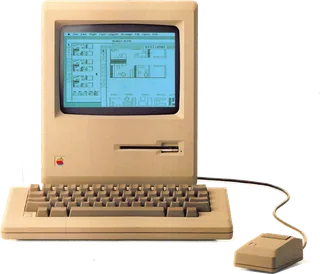
Sources
- mirrors.apple2.org.za/ftp.apple.asimov.net/documentation/advertisements/misc/ap…
- savagetaylor.com/til/KB001937.html
- mirrors.apple2.org.za/Apple%20II%20Documentation%20Project/Computers/Apple%20II…
- mirrors.apple2.org.za/Apple%20II%20Documentation%20Project/Computers/Apple%20II…
- mirrors.apple2.org.za/ftp.apple.asimov.net/documentation/misc/Apple%20IIgs%20Sy…
- mirrors.apple2.org.za/Apple%20II%20Documentation%20Project/Computers/Apple%20II…
- mirrors.apple2.org.za/Apple%20II%20Documentation%20Project/Computers/Apple%20II…
- mirrors.apple2.org.za/Apple%20II%20Documentation%20Project/Computers/Apple%20II…
- mirrors.apple2.org.za/Apple%20II%20Documentation%20Project/Computers/Apple%20II…
- mirrors.apple2.org.za/Apple%20II%20Documentation%20Project/Computers/Apple%20II…
- mirrors.apple2.org.za/Apple%20II%20Documentation%20Project/Computers/Apple%20II…
- wap.org/journal/showcase/washingtonapplepijournal1986v8no10oct86.pdf
- 1000bit.it/support/articoli/apple/a2gs/apple_iigs.asp
- vintageapple.org/byte/pdf/198704_Byte_Magazine_Vol_12-04_Instruction_Set_Strate…
Photo: Apple (archived product sheet)
- Original Apple IIgs with separate RGB monitor, keyboard and mouse; archived Apple owner-guide photograph: Apple (archived original documentation)
- Original Apple IIgs front view with keyboard and mouse; maker Technical Introduction cover photograph, retaining the original partial mouse framing: Apple (archived original documentation)
- Open rear of the original Apple IIgs with expansion-slot openings; partial detail from the maker owner’s guide: Apple (archived original documentation)
- Original Apple IIgs rear serial connectors and headphone output; maker close-up with original partial framing: Apple (archived original documentation)
- Original Apple IIgs with its lid raised, next to a separately opened monitor; maker annotated scene with original page-edge framing: Apple (archived original documentation)
- Original Apple IIgs motherboard close-up with optional memory card; partially framed original maker Firmware Reference cover photograph: Apple (archived original documentation)