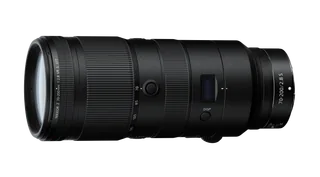
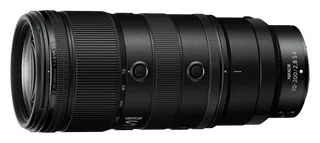
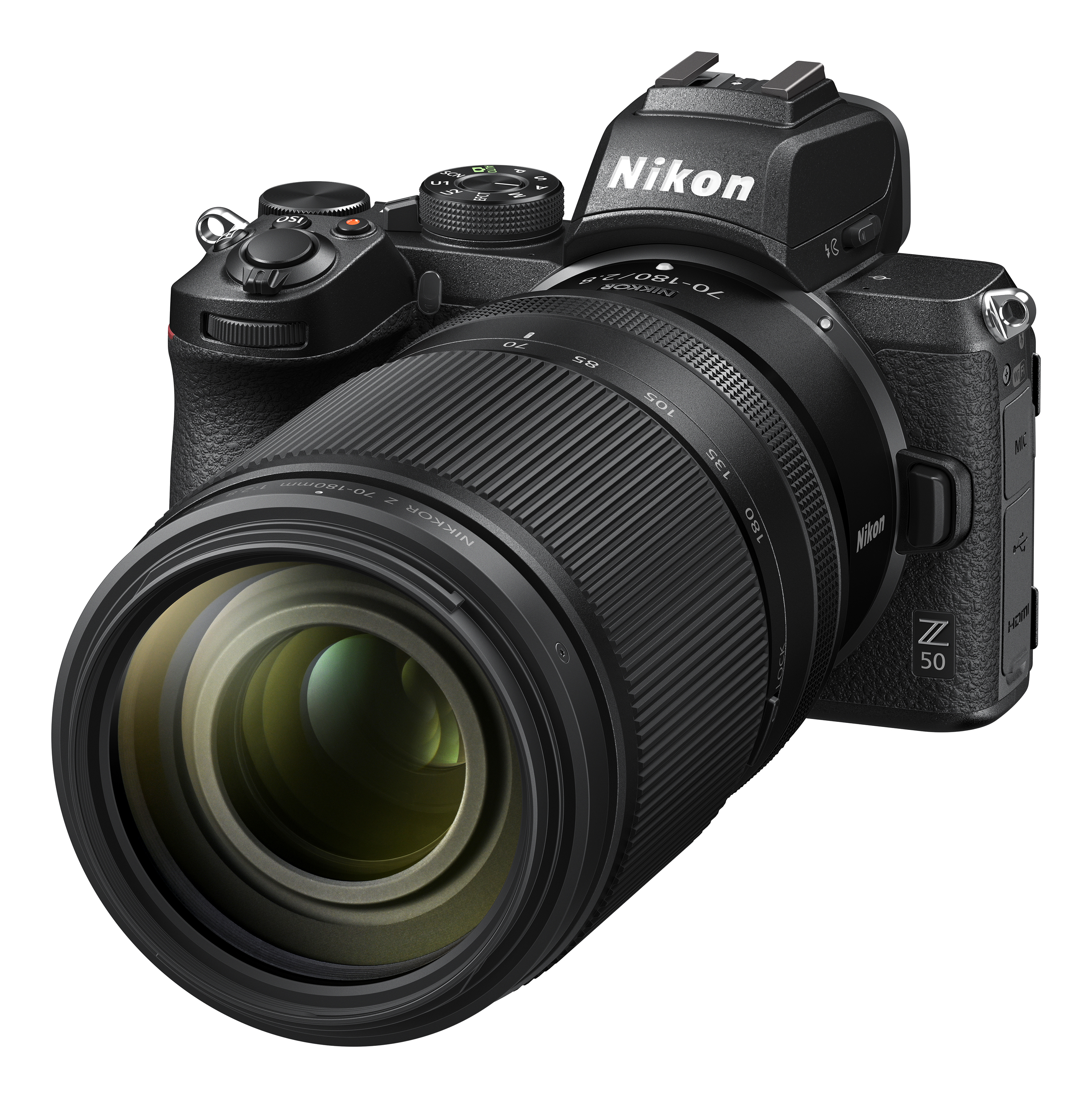
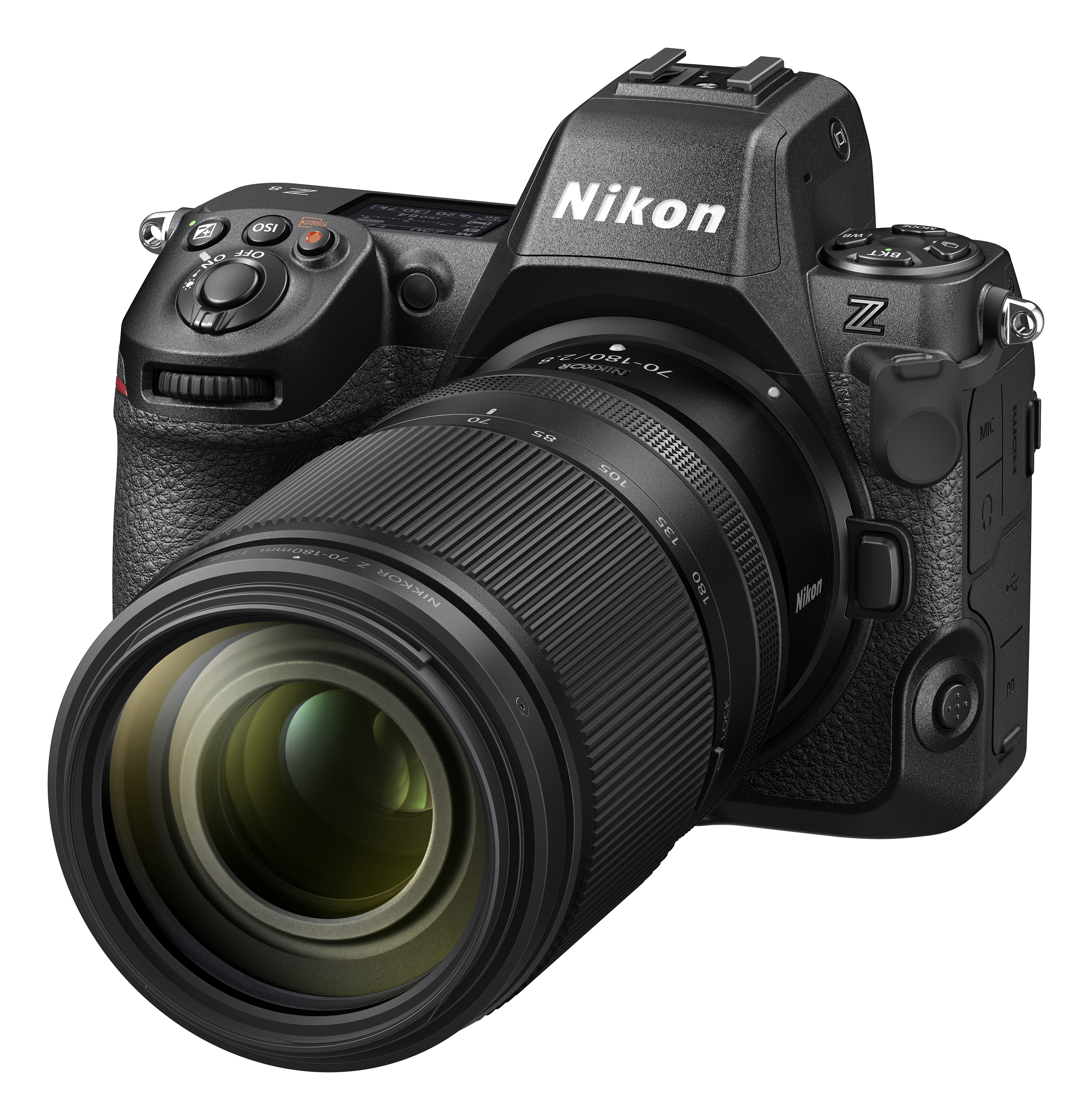
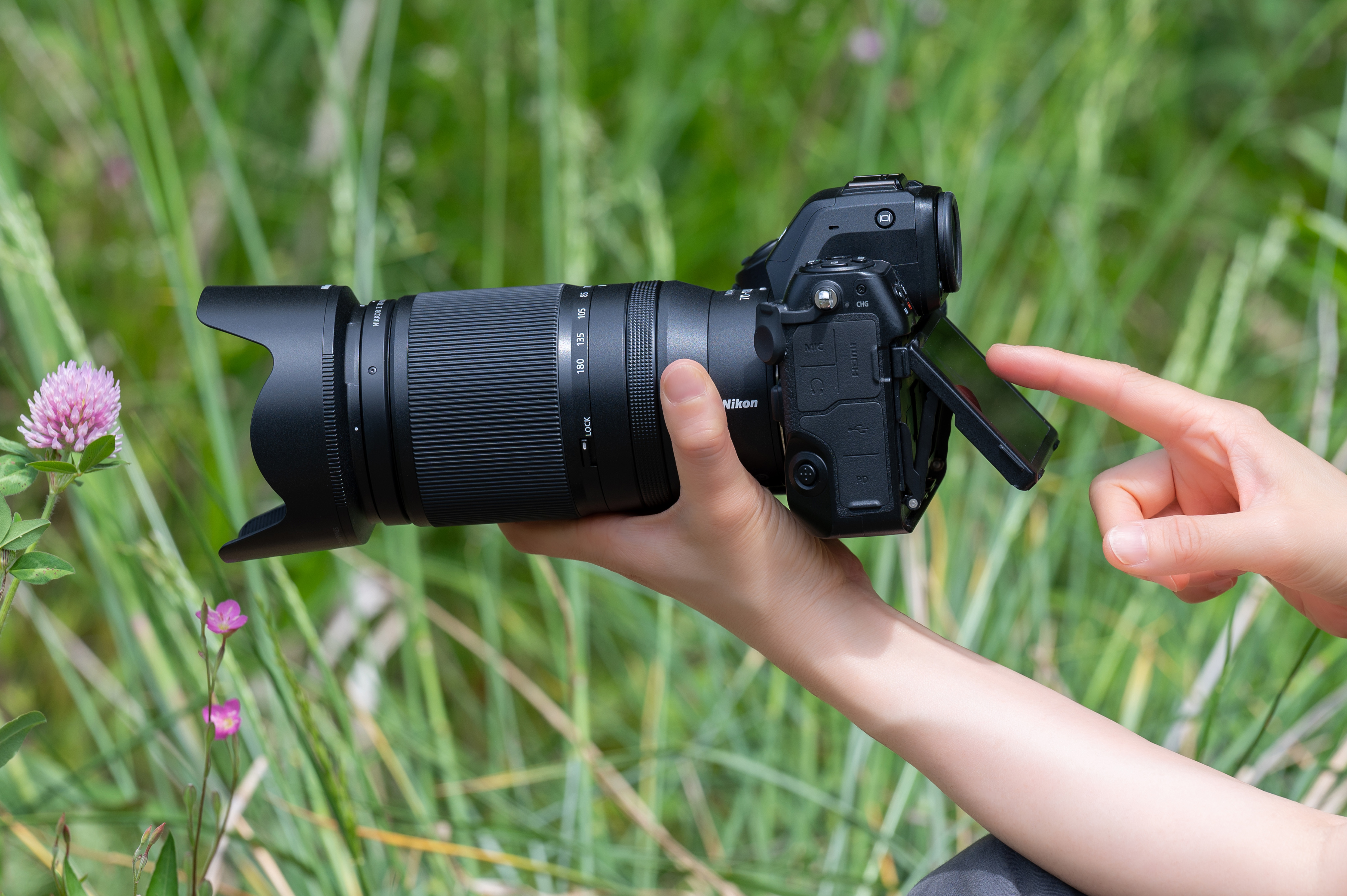
Both praise its manageable size, quiet autofocus and smooth background blur, while noting the lack of optical stabilisation and simpler controls. Digital Camera World finds strong sharpness, although close-ups are less impressive. CameraLabs finds it softer than the 70–200mm S lens, especially with a 2× converter, and warns of reduced contrast against bright light.
Five ED elements, one Super ED element and three aspherical elements
Coatings
Antifouling coating on the front-most surface
Diaphragm
Nine rounded blades
Angle of view
FX 34°20′–13°40′; DX 22°50′–9°
Mount and compatibility
Mounts
Nikon Z mount
Image circle
Full frame
Compatibility
Nikon Z mount; FX and DX cameras
Teleconverter support
Z TELECONVERTER TC-1.4× extends reach to 252 mm; TC-2.0× to 360 mm and maximum reproduction ratio to 0.96×. Nikon cautions that autofocus or electronic rangefinding may be unreliable depending on subject, lighting and focus point
Focus and stabilisation
Autofocus
Yes
Minimum focus distance
0.27 m (autofocus)
Maximum magnification
0.48× (autofocus)
Optical stabilisation
No
Autofocus detail
Stepping-motor autofocus; Nikon Japan identifies a multi-focus system
Focus distance detail
Internal focusing; minimum distances from focal plane 0.27 m at 70 mm, 0.33 m at 85 mm, 0.42 m at 105 mm, 0.58 m at 135 mm and 0.85 m at 180 mm. Nikon Japan explicitly confirms autofocus at minimum distance. CameraLabs measured 0.26 m at 70 mm in manual focus; that measured value does not replace Nikon's autofocus figure
Magnification detail
Nikon's maximum reproduction ratio is 0.48×, with autofocus at minimum distance. CameraLabs' manual-focus test at 70 mm reached 1:1.9; its closest-focus image quality was weaker outside the centre
Stabilisation detail
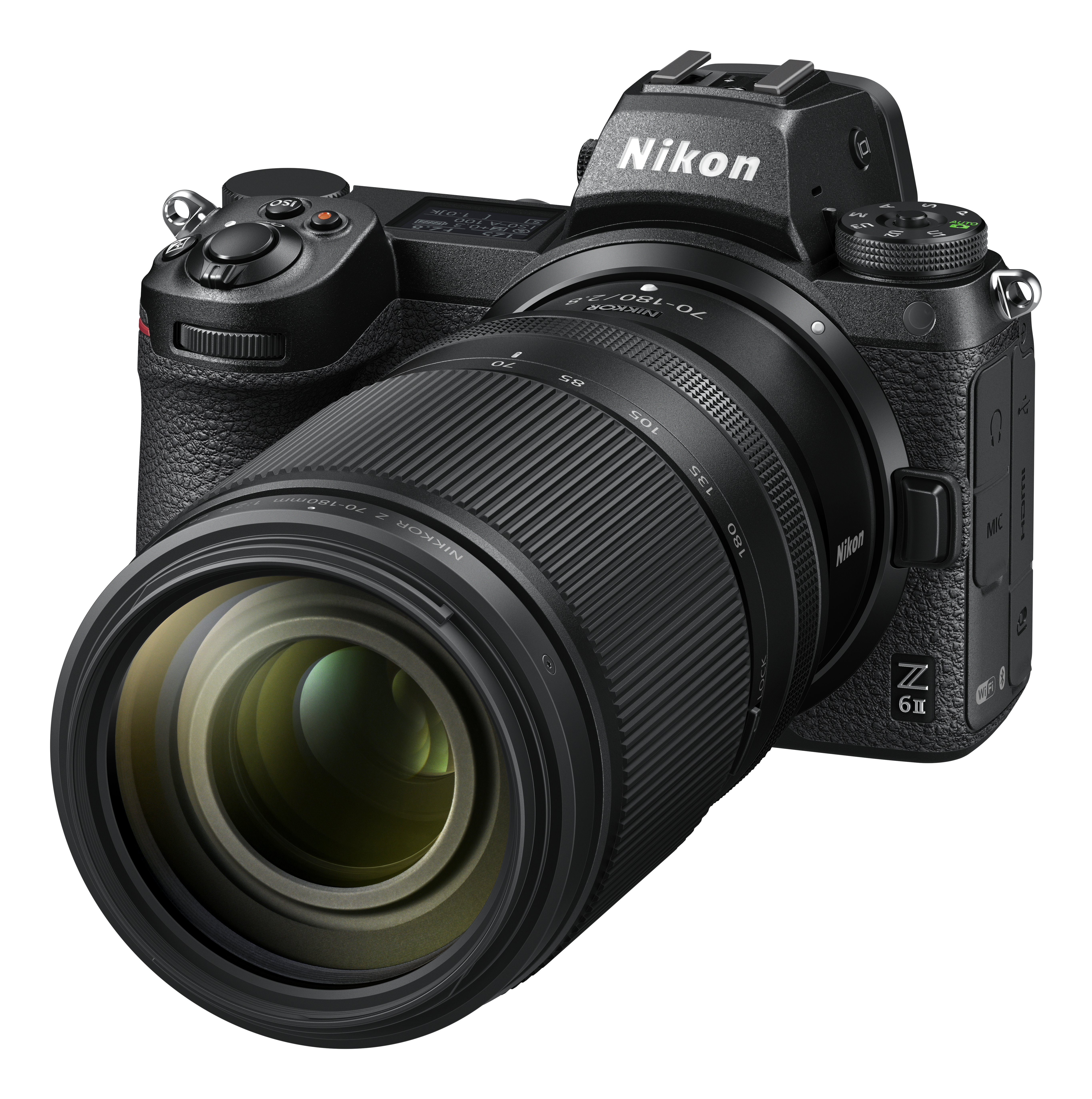
No optical VR; stabilisation depends on a compatible camera body's sensor-shift system
Video features
Nikon describes quiet focusing and reduced breathing, but warns that breathing can remain visible depending on distance. Digital Camera World and CameraLabs both observed breathing
Design
Dust and moisture resistant
Yes
Filter diameter
67 mm
Maximum diameter
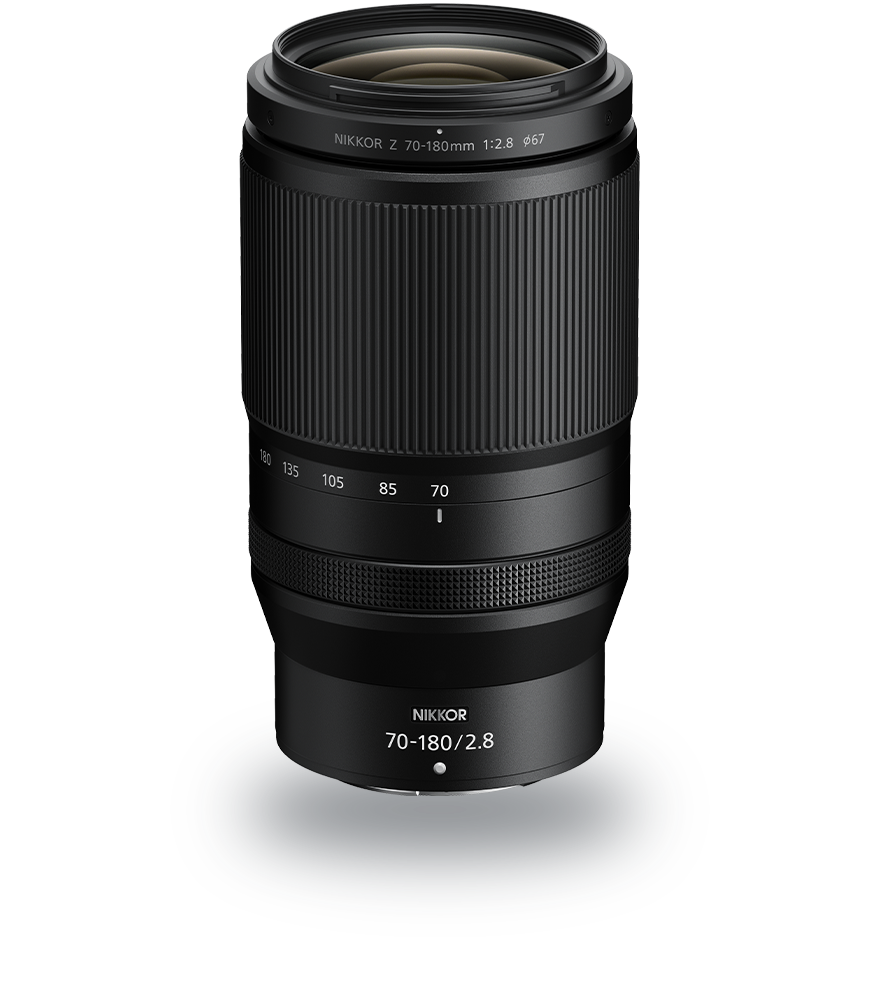
83.5 mm
Length
151 mm
Weight
795 g
Controls
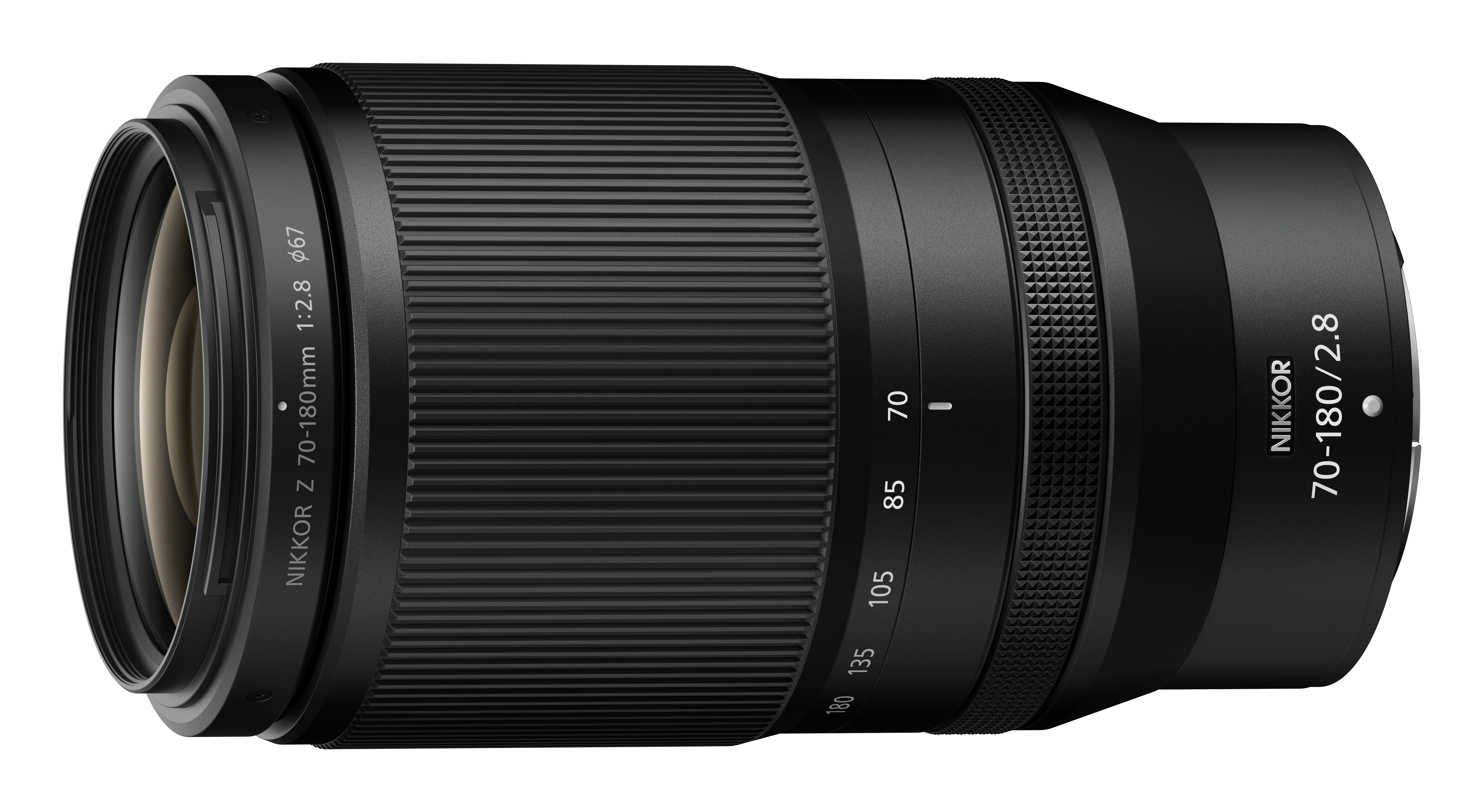
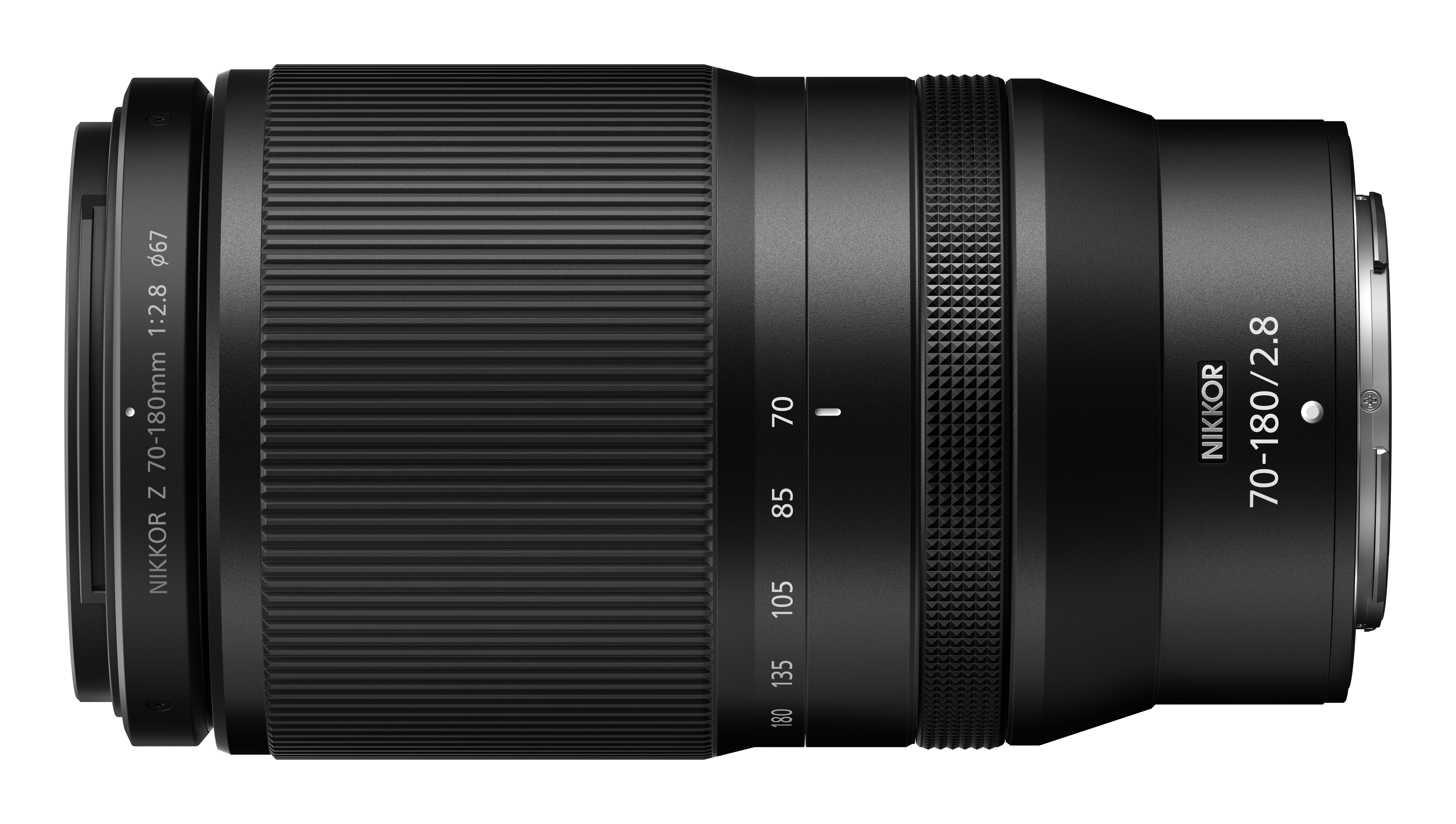
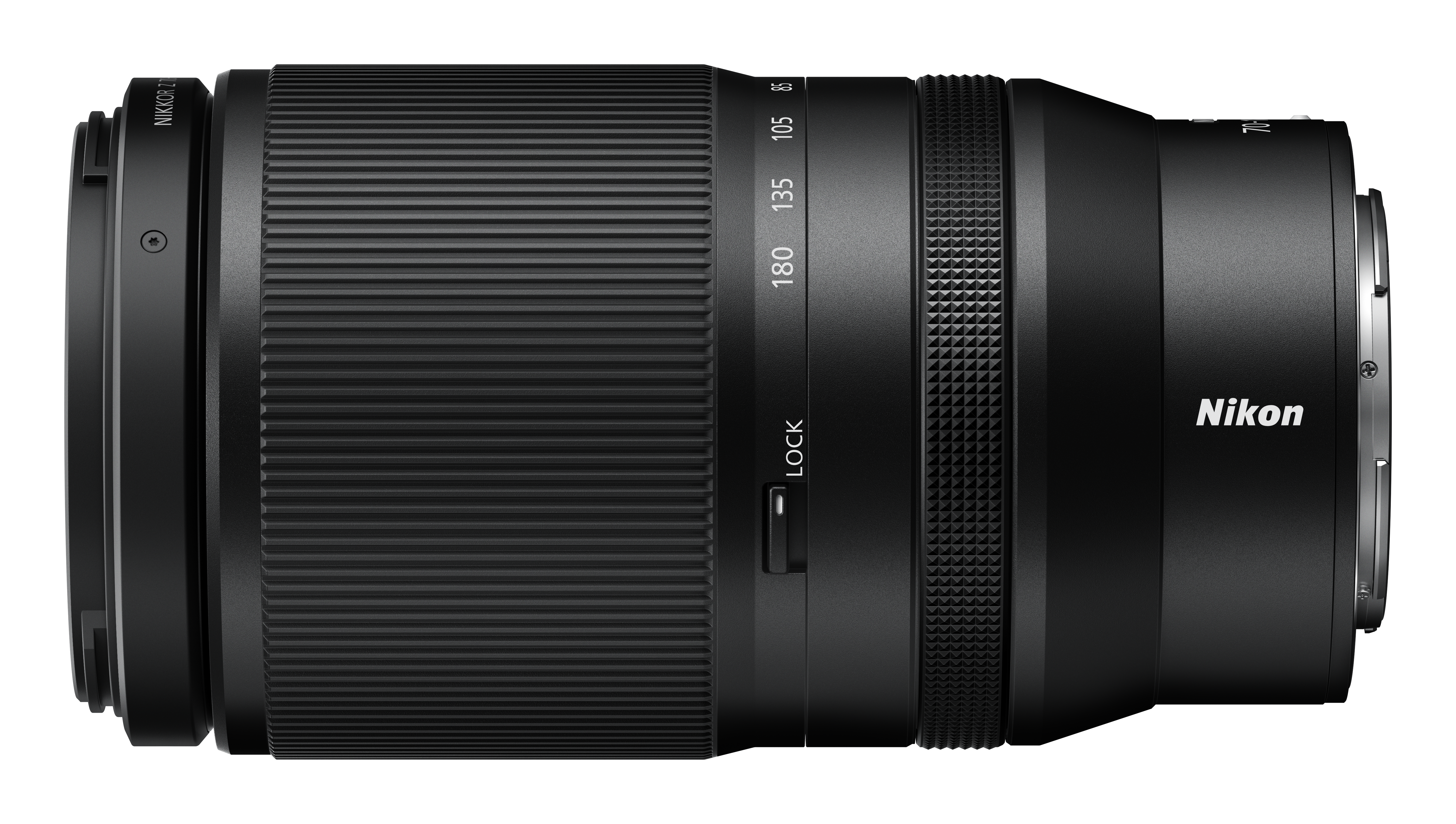
Zoom ring, programmable focus/control ring and zoom lock at 70 mm; no AF/MF switch, function buttons or display. Digital Camera World describes aperture, ISO and exposure-compensation assignments
Zoom design
Extending zoom barrel; no detachable tripod collar, as CameraLabs describes
Filter detail
67 mm screw-on filters, 0.75 mm pitch
Weather resistance
Nikon describes dust and drip resistance; complete protection is not guaranteed in all conditions
Dimensions detail
Approximately 83.5 × 151 mm; length from lens mount flange
Weight detail
Approximately 795 g
Lens hood
HB-113 hood included
In the box
LC-67B front cap, LF-N1 rear cap, HB-113 hood and CL-C2 case
Release detail
Nikon Japan gives 14 July 2023 as the on-sale date; the US announcement stated mid-July 2023
Pros and cons
Pros
+Constant f/2.8 aperture across the zoom range
+Compatible with Nikon Z 1.4× and 2× teleconverters
+Dust and moisture protection and coated front element
Cons
−No optical stabilisation
−Barrel extends while zooming
−No lens-mounted focus-mode switch or tripod collar
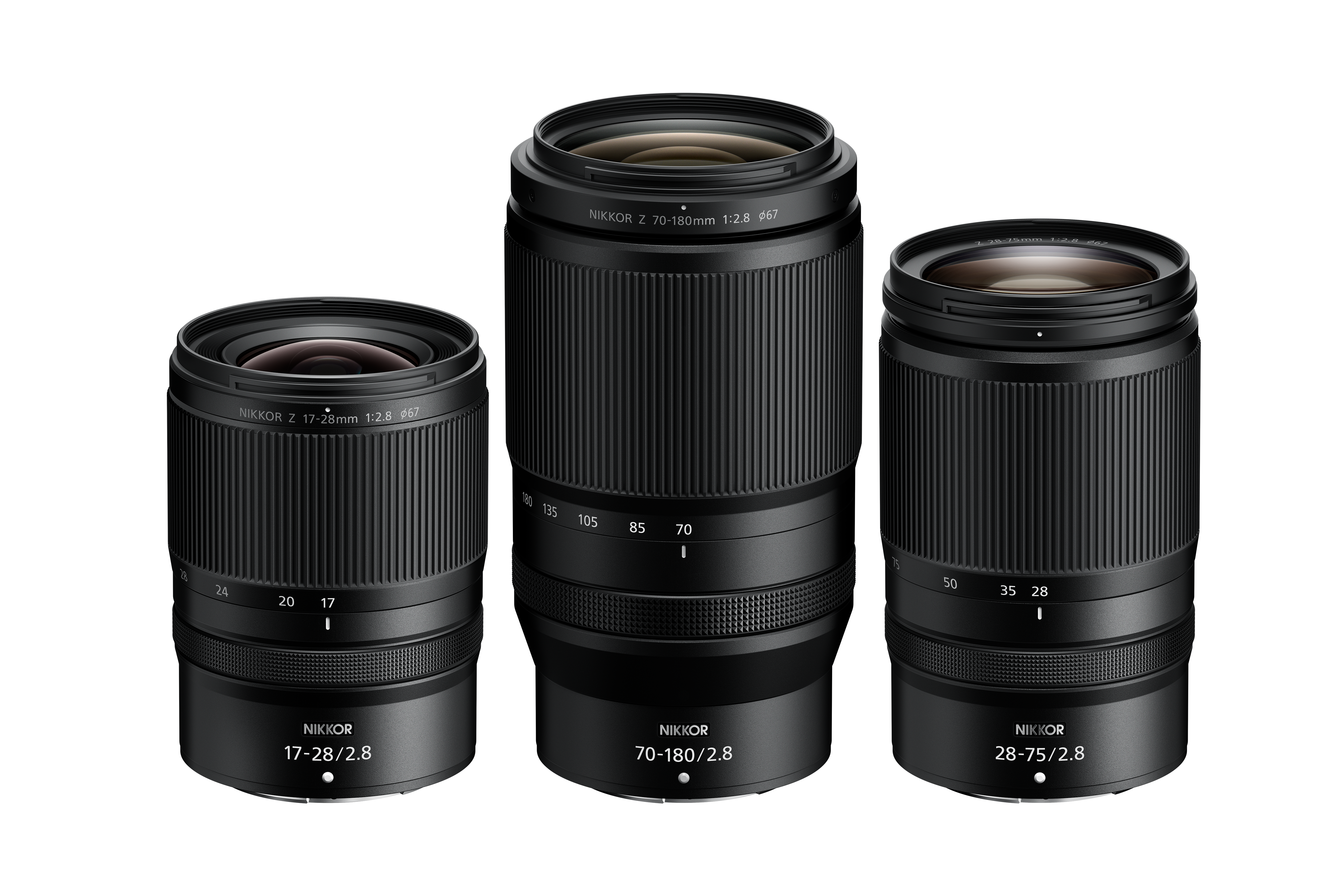
Nikon NIKKOR Z 70–180mm f/2.8: three-lens composition with NIKKOR Z 17–28mm f/2.8 and 28–75mm f/2.8 companion lenses: Nikon official press/product library