PhotographyBlog and CameraLabs praised image quality, the detailed OLED finder and practical controls, with the collapsing kit zoom improving portability. Both found the movie button awkward and missed touchscreen functions. CameraLabs highlighted weak low-light autofocus; PhotographyBlog criticised quirky menus and the kit lens slowing start-up, while still finding the camera highly capable.
16.7 million total pixels; charge-protection coating and ultrasonic dust reduction
Image formats
JPEG, RAW and RAW+JPEG; ARW 2.3
ISO detail
Standard ISO 100–25600; Auto ISO 100–3200; movies ISO 100–6400
Image processor
BIONZ
Lens and shooting
Lens mount
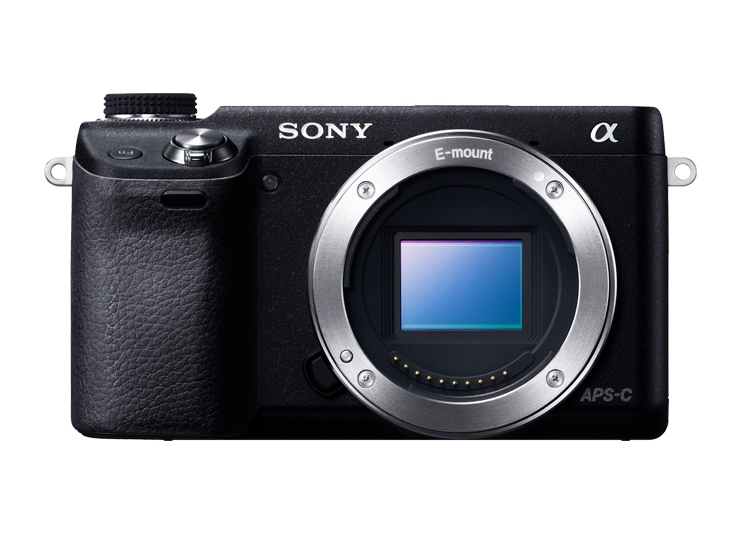
Sony E-mount
Stabilisation
Optical lens stabilisation
Maximum continuous burst
10 fps
Lens detail
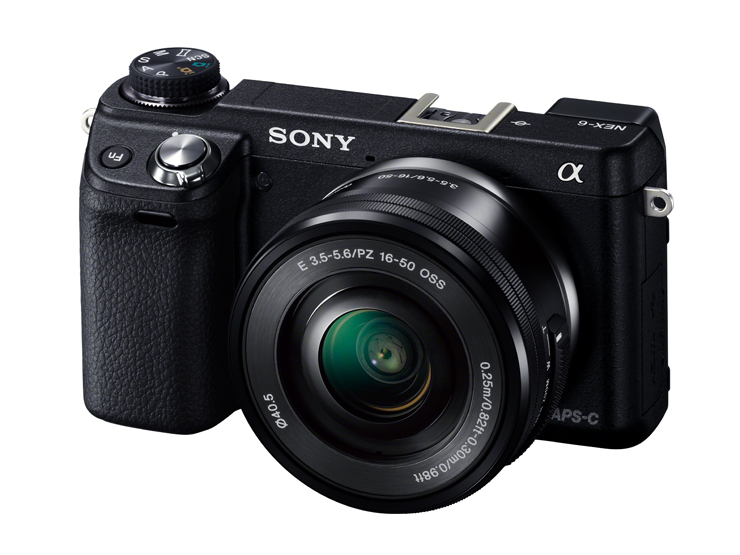
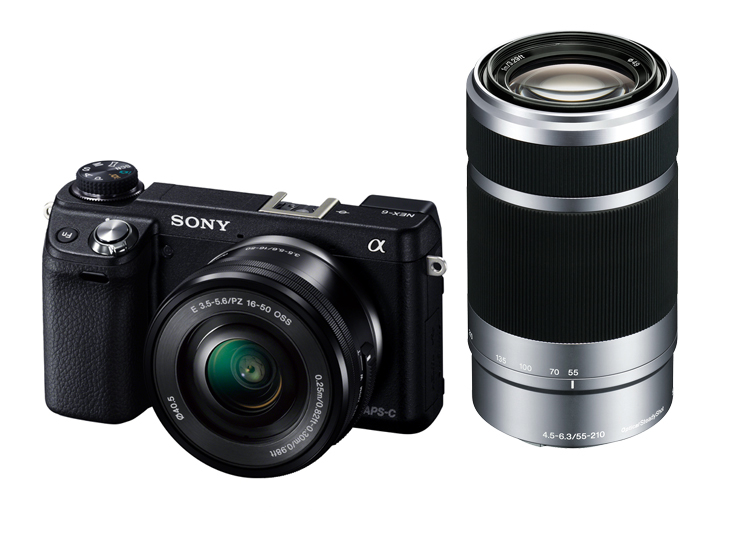
E-mount; Japanese NEX-6L includes E PZ 16–50mm F3.5–5.6 OSS; NEX-6Y adds E 55–210mm F4.5–6.3 OSS.
Autofocus
Fast Hybrid AF combines 99 phase-detection and 25 contrast-detection points; single and continuous AF, direct manual focus, tracking and manual-focus peaking
Shutter
Focal-plane shutter with electronic first curtain; 30 seconds to 1/4000 second plus Bulb; flash sync 1/160 second
Burst detail
Approximately 10 fps Speed Priority Continuous, with phase-detection tracking AF under Sony's supported-lens conditions; approximately 3 fps normal continuous advance. Maker buffers are 11 JPEG, 10 RAW or 9 RAW+JPEG frames and depend on shooting conditions and card.
Stabilisation detail
No sensor-shift stabilisation; optical correction requires a compatible OSS lens
Flash
Built-in pop-up flash; guide number 6 at ISO 100 in metres; approximately four-second recycle time. Multi Interface Shoe accepts compatible accessories; older Auto-lock flashes require ADP-MAA.
Video
Highest video resolution
1920 × 1080 at 60 fps
Video detail
Japanese model offers Full HD 60p up to 28 Mbps, 60i or 24p; Sony France specifies PAL Full HD 50p. MP4 records 1440 × 1080 or VGA; interlaced field rates are separate from full-frame rates.
Audio
Built-in stereo microphones and mono speaker; Dolby Digital or AAC-LC audio
Screen and viewfinder
Viewfinder
Electronic
Screen size
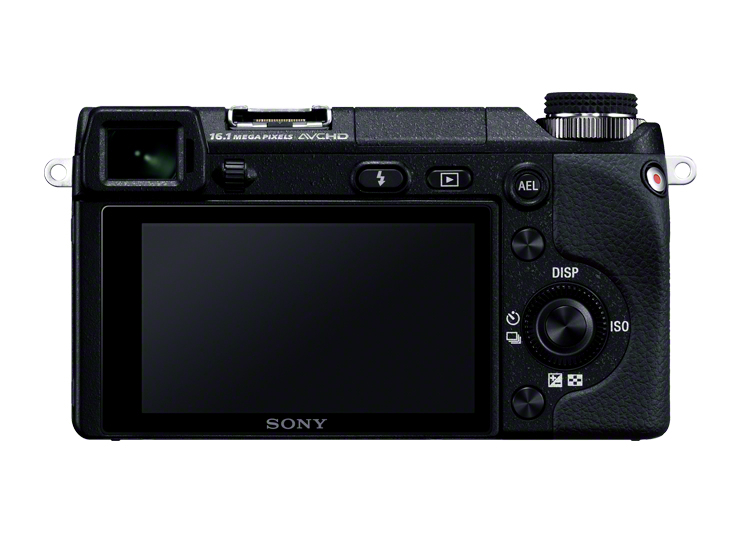
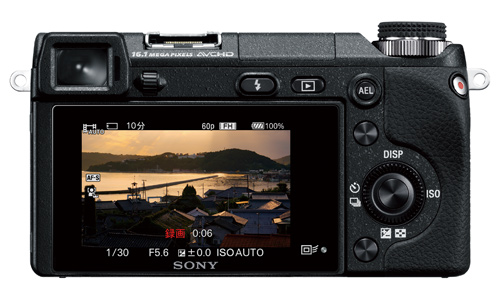
3″
Screen dots
921,600
Touchscreen
No
Tilting screen
Yes
Display detail
Non-touch LCD; tilts approximately 90° up and 45° down
Viewfinder detail
0.5-inch OLED electronic finder with 2,359,296 dots, 100% coverage and approximately 1.09× magnification with a 50mm lens at infinity; Sony does not express this as 35mm-equivalent magnification.
Connections and design
Wi-Fi
Yes
Battery life (maker's claim)
360 photographs
Body weight
287 g
Release detail
Sony France specified mid-November 2012 European availability; Sony Japan specified 16 November. Month precision follows the broader European maker announcement.
Recording media
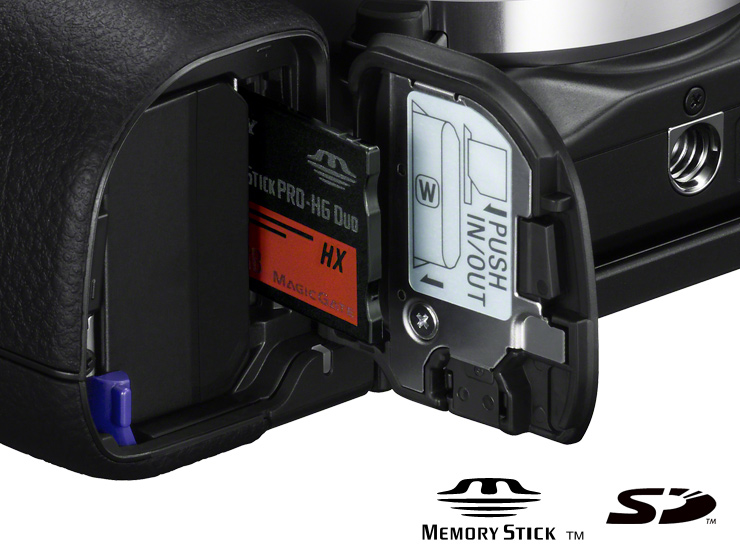
Memory Stick PRO Duo and PRO-HG Duo; SD, SDHC and SDXC
Ports
USB 2.0 Hi-Speed via Micro USB Type B; Mini HDMI Type C; Multi Interface Shoe; no microphone or headphone sockets
Wireless connections
Built-in Wi-Fi; launch features included PlayMemories Camera Apps downloads and smartphone transfer
Battery life detail
NP-FW50; approximately 360 CIPA photographs using LCD or 270 using electronic viewfinder
Charging
In-camera charging using supplied AC-UB10 and Micro USB cable; optional AC-PW20 power supply
Dimensions
Approximately 119.9 × 66.9 × 42.6 mm (width × height × depth)
Weight detail
Approximately 287 g body only; 345 g with battery and memory card; lens excluded
Colours
Black
In the box
NP-FW50 battery, AC-UB10 AC adapter, shoulder strap, accessory shoe cap, eyepiece cup, Micro USB cable and software CD; lens depends on kit
Pros and cons
Pros
+Built-in OLED electronic viewfinder
+Hybrid autofocus and 10 fps speed-priority bursts