Sony · Cyber-shot
Cyber-shot DSC-R1
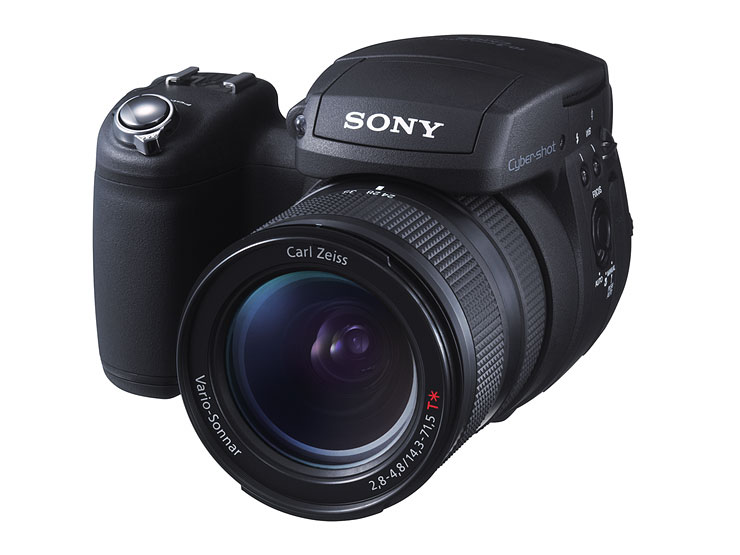
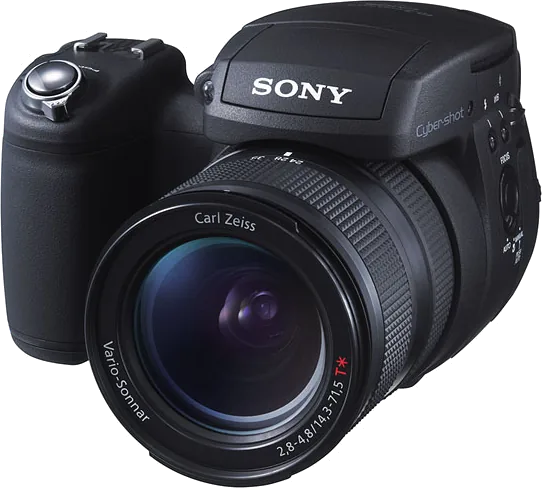
A fixed-lens bridge camera with a large CMOS sensor, a 24–120 mm zoom and a swivelling screen mounted on top.
- Type
- Bridge
- Sensor
- APS-C
- Megapixels
- 10.3
- Lens
- 24–120 mm equivalent
- Video
- –
- Body weight
- 926 g
What reviewers say
Cameralabs and digitalkamera.de praised lens quality, detailed images, the flexible screen and battery life. Both found the three-frame burst restrictive and eye sensor overly sensitive. Cameralabs saw disappointing high-ISO noise; digitalkamera.de considered it competitive with entry-level DSLRs but criticised sharpening and controls. Both noted absent video and more limited focusing or close-up capability than DSLR alternatives.
From cameralabs.com, cameralabs.com, cameralabs.com, cameralabs.com and digitalkamera.de
Specifications
Report a wrong or missing specImage and sensor
- Camera type
- Bridge
- Sensor format
- APS-C
- Sensor type
- CMOS
- Sensor dimensions
- 21.5 × 14.4 mm
- Effective resolution
- 10.3 MP
- Largest image
- 3888 × 2592
- RAW recording
- Yes
- Standard ISO range
- 160–3200
- Sensor detail
- Progressive-scan CMOS, 21.5 × 14.4 mm; maker 10.3 million effective and 10.8 million total photosites. The native 3888 × 2592 image contains approximately 10.08 million pixels. APS-C-sized description follows Cameralabs and digitalkamera.de, with actual maker dimensions retained
- Image formats
- JPEG Fine or Standard and SR2 RAW; RAW records a JPEG companion, with no TIFF option
Lens and shooting
- Built-in lens
- 24–120 mm equivalent
- Maximum aperture
- f/2.8–4.8
- Optical zoom
- 5×
- Lens detail
- Carl Zeiss Vario-Sonnar T*; actual 14.3–71.5 mm, equivalent 24–120 mm; f/2.8–4.8 maximum aperture; 12 elements in ten groups, four aspherical elements; seven-blade aperture; 67 mm filter thread; mechanical zoom and electronic manual-focus rings
- Autofocus
- Five-area automatic selection, centre or flexible spot contrast autofocus; AF illuminator rather than Hologram AF; single, monitor and continuous focus. Normal focus from 0.5 m; macro approximately 0.35 m wide or 0.4 m telephoto from sensor plane, as clarified by maker archive
- Shutter
- Automatic 1/8–1/2000 second, program 1–1/2000, aperture priority 8–1/2000 and shutter priority/manual 30–1/2000; TIME exposure up to 180 seconds
- Burst detail
- Maker archive specifies approximately 3 fps for a maximum of three full-resolution JPEG frames; no RAW burst. This brief buffer-limited rate is detail only, rather than maximum sustained continuous capture
- Flash
- Pop-up flash, Advanced Accessory Shoe and ACC connector; maker range 0.5–8.5 m wide and 0.4–5 m telephoto; ±2 EV flash adjustment and first/rear-curtain slow sync
- Exposure controls
- Automatic, program, aperture priority, shutter priority and manual modes; ±2 EV in 1/3 EV steps; Standard, Vivid and Adobe RGB colour; three-level sharpening, saturation and contrast; live histogram, RGB playback histograms, zebra highlight warning and grid
Screen and viewfinder
- Viewfinder
- Electronic
- Screen size
- 2″
- Screen dots
- 134,000
- Tilting screen
- Yes
- Display detail
- Top-mounted free-angle 2.0-inch TFT LCD with 134,000 dots and 100% coverage; 235,000-dot 0.44-inch electronic viewfinder with eye-sensor switching; body does not swivel
Connections and design
- Battery life (maker's claim)
- 500 photographs
- Body weight
- 926 g
- Release detail
- Sony Japan original 13 September 2005 announcement specifies 18 November 2005 sale; documented Japanese first-sale date. UK support ISO 100 minimum conflicts with original maker and archive ISO 160, corroborated by both reviews
- Recording media
- Separate Memory Stick/Memory Stick PRO and CompactFlash Type I/II/Microdrive slots; Duo formats require adapter; FAT16/FAT32; cards selected by switch, without simultaneous recording
- Ports
- Hi-Speed USB 2.0 Mini-B, video output, ACC connector, DC input and Advanced Accessory Shoe; PictBridge printing
- Battery life detail
- NP-FM50 InfoLithium; approximately 500 shots/250 minutes with Memory Stick or 460 shots/230 minutes with Microdrive, maker CIPA conditions: Fine quality, LCD on, alternate full zoom, flash every other shot, power cycling every ten shots and photograph every 30 seconds
- Charging
- In-camera charging with supplied AC-L15-series adapter, confirmed by maker archive; UK support accessory line incorrectly lists NP-FR1/AC-LS5, contradicting its own NP-FM50 field and original maker sources
- Dimensions
- Approximately 139.4 × 97.7 × 156 mm (width × height × depth), at wide zoom and excluding protrusions
- Weight detail
- Sony Japan original launch and archive specify approximately 926 g camera only; archive loaded figure 1047 g includes NP-FM50, Memory Stick, shoulder strap and lens hood. UK support lists 929 g camera-only; main follows consistent original maker 926 g figure, with no inferred regional hardware difference
- In the box
- NP-FM50 battery, AC adapter and power cable, video and USB cables, shoulder strap, lens cap, lens hood and two software CDs
Video
- Video detail
- No video recording, confirmed by maker archive; live view does not imply movie recording
Pros and cons
Pros
- 21.5 × 14.4 mm sensor and RAW recording
- 24–120 mm equivalent f/2.8–4.8 mechanically controlled zoom
- Swivelling screen, electronic viewfinder and histogram
Cons
- No video recording
- JPEG bursts limited to three frames
- Fixed lens and approximately 926 g camera-only weight
Closest rivals
Model | Type | Sensor | Megapixels | Lens | Video | Body weight | Released |
|---|---|---|---|---|---|---|---|
| Bridge | Other | 5.1 | 36–432 mm equivalent | 640 × 480 at 30 fps | 438 g | Jun 2005 | |
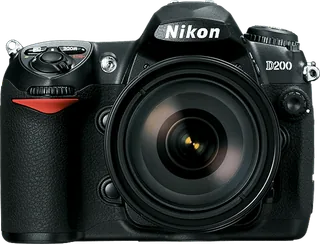
| DSLR | APS-C | 10.2 | Nikon F mount | – | 830 g | Dec 2005 | |
| DSLR | APS-C | 6.1 | Nikon F mount | – | 540 g | 2005 |


Sources
- sony.jp/cyber-shot/products/archive/DSC-R1/spec.html
- sony.jp/CorporateCruise/Press/200509/05-0913B
- sony.co.uk/electronics/support/compact-cameras-dsc-r-series/dsc-r1/specificatio…
- cameralabs.com/sonyr1
- cameralabs.com/sonyr1/2
- cameralabs.com/sonyr1/3
- cameralabs.com/sonyr1/4
- digitalkamera.de/Testbericht/Testbericht_Sony_DSC-R1/3080.aspx
Photo: sony.jp