
Toyota · C-HR
C-HR
The second-generation C-HR coupé-styled crossover, sold as a 1.8-litre self-charging hybrid or a 2.0-litre plug-in hybrid, suited to buyers who want a distinctive, frugal compact SUV.
Model history · 2 models, 2016–2023
- 2016C-HR (2016)Compare
- 2023C-HR
- Body
- Crossover
- Powertrain
- Hybrid, Plug-in hybrid
- Power
- 138–220 bhp
- Range
- 41 mi
- Boot
- 388 l
What reviewers say
Reviewers agree the second-generation C-HR is well equipped and economical, with an improved interior and a composed chassis that Autocar rated among the best in the class. All three find it expensive; Autocar and What Car? criticise the tight rear seats and small boot, Autocar found the engines noisy when worked hard, and Auto Express noted limited rear visibility.
From autocar.co.uk, whatcar.com and autoexpress.co.uk
Specifications
Report a wrong or missing specPerformance
- Powertrain
- Hybrid, Plug-in hybrid
- Power
- 138–220 bhp
- 0–62 mph
- 7.4–10.2 s
- Top speed
- 106–112 mph
- Engine or motors
- 1.8-litre four-cylinder petrol hybrid, 138 bhp (140 DIN hp, 103 kW) system output; 2.0-litre four-cylinder plug-in hybrid, 220 bhp (223 DIN hp, 164 kW) system output
- Torque
- Engine 142 Nm (1.8) or 190 Nm (2.0); electric motor 185 Nm (1.8) or 208 Nm (2.0 PHEV)
- Gearbox
- e-CVT automatic
- Drive
- Front-wheel drive
Range and charging
- Zero-emission range (WLTP)
- 41 miles
- Economy (WLTP)
- 60.1–353.1 mpg
- Range detail
- Plug-in hybrid electric range up to 41 miles
- Charging
- Plug-in hybrid has a 13.6 kWh lithium-ion battery and a 6.6 kW on-board charger (0–100% in under 2 h 30 min on a wallbox with the optional three-phase cable)
- Efficiency
- WLTP combined: from 60.1 mpg (1.8 hybrid), from 353.1 mpg (plug-in hybrid)
- CO2 emissions
- From 105 g/km (1.8 hybrid), from 19 g/km (plug-in hybrid) per Toyota's technical specification; the September 2026 price list gives 51–52 g/km for the plug-in hybrid
Practicality
- Body
- Crossover
- Seats
- 5
- Boot
- 388 litres
- Length
- 4,362 mm
- Width
- 1,832 mm
- Weight
- From 1,430 kg
- Boot
- 388 litres (hybrid) or 310 litres (plug-in hybrid) to the tonneau cover
- Towing
- 725 kg braked or unbraked
- Size
- 4,362 mm long, 1,832 mm wide, 1,564 mm high; 2,640 mm wheelbase; 5.5 m turning radius (tyre); kerb weight 1,430–1,490 kg (hybrid), 1,645–1,695 kg (plug-in hybrid); drag coefficient 0.318
Tech and safety
- Infotainment
- Eight-inch Toyota Smart Connect or 12.3-inch Toyota Smart Connect+ touchscreen; seven-inch or 12.3-inch digital driver's display; wireless charging tray
Pros and cons
Pros
- Up to 60.1 mpg (WLTP combined) from the 1.8 hybrid
- Plug-in hybrid covers up to 41 miles on electricity and reaches 62 mph in 7.4 seconds
- 12.3-inch digital driver's display from Design grade
Cons
- Towing limited to 725 kg
- Plug-in hybrid boot shrinks to 310 litres
- Plug-in hybrid charges at up to 6.6 kW AC only, with no DC charging
Closest rivals
Model | Body | Powertrain | Power | Range | Boot | Released |
|---|---|---|---|---|---|---|
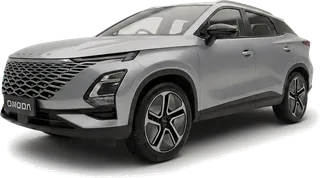
| Crossover | Petrol, Hybrid, Electric | 145–221 bhp | 267 mi | 380 l | Aug 2024 | |
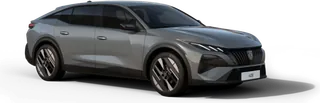
| Crossover | Hybrid, Plug-in hybrid, Electric | 143–237 bhp | 50–283 mi | 536 l | 2023 | |
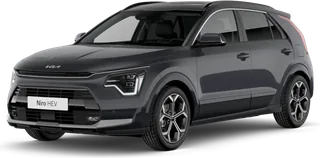
| Crossover | Hybrid, Plug-in hybrid | 136–168 bhp | 40 mi | 451 l | 2022 |
Previous model: C-HR (2016).
Sources
- media.toyota.co.uk/wp-content/uploads/sites/5/pdf/260120-C-HR-tech-specs.pdf
- media.toyota.co.uk/wp-content/uploads/sites/5/pdf/260120-C-HR-press-pack.pdf
- media.toyota.co.uk/wp-content/uploads/sites/5/pdf/C-HR-prices-September-2026.pdf
- media.toyota.co.uk/all-new-toyota-c-hr-prices-and-equipment-details
