Apple Multiple Scan 20 Display vs Apple Studio Display (21-inch CRT, 1999)
Better figure, where one is clearly better
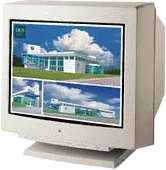
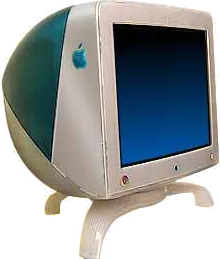
| AppleMultiple Scan 20 Display | AppleStudio Display (21-inch CRT, 1999) | |
|---|---|---|
| Overview | ||
| Released | March 1994 | January 1999 |
| Display | ||
| Screen size | 19.1″ | 19.8″ |
| Panel | CRT (Original nominal 20-inch Trinitron CRT, 19.1-inch viewable image and 0.31 mm stripe pitch; no fixed native matrix. Later Revision B uses a different 0.26 mm tube and is not substituted here.) | CRT (Nominal 21-inch Sony Trinitron aperture-grille CRT with a 19.8-inch viewable image; 0.25–0.27 mm variable aperture grille pitch. Vertically flat screen, without a fixed native pixel matrix.) |
| Pixel pitch | – | Variable 0.25–0.27 mm aperture grille pitch |
| Supported signal modes | Apple's support sheet lists 640 × 480 at 59.95, 66.7 or 75 Hz; 800 × 600 at 75 Hz; 832 × 624 at 75 Hz; 1024 × 768 at 74.93 or 75 Hz; 1152 × 870 at 75 Hz; and 1280 × 1024 at 75 Hz. Service Source gives horizontal scan range 29–82 kHz and vertical range 50–150 Hz. These are supported CRT signal modes, not a native pixel matrix or native refresh rate; modes depend on the computer and adaptor. | Supports 1600 × 1200, 1280 × 1024 and 1024 × 768 at up to 85 Hz; 1152 × 870 and 832 × 624 at up to 75 Hz. Horizontal scan 31–107 kHz; vertical scan 48–120 Hz. These are selectable CRT signal modes, not a fixed native matrix or one native refresh rate. |
| Screen coating | Bonded glass panel with multilayer antiglare and antistatic coating | Antireflective and antistatic screen coating |
| Calibration | – | Internal measurement system adjusts the electron beam to maintain factory calibration; stores ColorSync profiles. Includes an ambient-light tool, variable 4100–9300 K white-point selection and gamma-curve adjustment. |
| Connections | ||
| Video inputs | DA-15 | VGA |
| USB-C charging | None | None |
| USB ports | – | 4 × USB-A |
| Other connections | Macintosh 15-pin DA-15 analogue RGB cable; VGA computers need a video adaptor. Two front ADB device ports and rear ADB pass-through port. | 15-pin mini D-Sub VGA video connector with supplied VGA-to-Macintosh adaptor |
| Design | ||
| Stand adjusts | Tilt, swivel | – |
| Weight with stand | 30 kg | 35 kg |
| Tilt | −5° to +15° | – |
| Swivel | At least ±45° | – |
| Size with stand | Apple support publishes 18.7 × 18.7 × 19.7 inches (height × width × depth); Service Source separately lists 474 × 474 × 501.5 mm | 51.1 × 56.6 × 55 cm (width × height × depth), January 1999 Blueberry datasheet; later Graphite enclosure dimensions differ |
| Weight detail | Service Source gives monitor weight 30 kg (66 lb), distinct from the 36 kg boxed shipping weight. The later 1995 Apple Facts sheet for the 0.26 mm tube instead gives 29.7 kg. | – |
| Controls | Front-panel power, reset, brightness and contrast; image position, size, rotation, convergence and colour-temperature controls. Automatic power-on degauss. | Power, brightness and contrast; compatible Mac software supplies geometry, convergence, degauss, white-point and calibration adjustments |
| Colours | – | Translucent Blueberry and white enclosure |
| Power and support | ||
| Power use | Maximum 165 W; less than 15 W in Energy Saver mode | Maximum 180 W operating; less than 30 W standby; less than 5 W when the computer is in energy-saving mode |
| Power supply | Service Source specifies 90–132 or 198–264 V AC, 47–63 Hz; support archive instead gives the upper band as 198–260 V. These are mains ratings. | 90–264 V AC, single-phase 47–63 Hz; mains frequency is separate from display refresh |
| Software | System 7.1 or later; older Macs may need additional adaptors. Apple support identifies March 1994 introduction, and InfoWorld's 14 March 1994 shipping section reports rollout that week; month precision retained. Service Source distinguishes original 0.31 mm hardware from later Revision B 0.26 mm hardware with different deflection board, controller and power supply. No Revision B retail date is inferred. Brightness and contrast ratio are unpublished. | Maker announced the new Studio Display family on 5 January 1999; January retail precision is used because a distinct first-sale day is unconfirmed. January M6204LL/A datasheet requires the new Power Macintosh G3 with built-in USB and Mac OS 8.0 or later. Brightness and contrast ratio are unpublished and omitted; no pixel density is assigned to this CRT. |
| In the box | – | Display, Apple Displays software, VGA-to-Macintosh adaptor, power cord, ambient-light tool and setup guide |
| Certifications | US EPA Energy Star power conservation | – |
More comparisons
- Apple Multiple Scan 20 Display vs Apple Studio Display (2026)
- Apple Multiple Scan 20 Display vs Apple Studio Display XDR
- Apple Studio Display (2026) vs Apple Studio Display (21-inch CRT, 1999)
- Apple Studio Display (21-inch CRT, 1999) vs Apple Studio Display XDR
- Apple Studio Display (2022) vs Apple Studio Display (21-inch CRT, 1999)
- Apple Studio Display (17-inch LCD, 2001) vs Apple Studio Display (21-inch CRT, 1999)
- Apple Studio Display (21-inch CRT, 1999) vs Sony GDM-F520
- Apple Multiple Scan 20 Display vs Sony GDM-F520
- Apple Studio Display (15-inch ADC, 2000) vs Apple Studio Display (21-inch CRT, 1999)
- Apple Studio Display (17-inch CRT ADC, 2000) vs Apple Studio Display (21-inch CRT, 1999)
- Apple Studio Display (21-inch CRT, 1999) vs Sony GDM-FW900
- Apple Multiple Scan 20 Display vs Sony GDM-FW900
- Apple Studio Display (15-inch DVI, 1999) vs Apple Studio Display (21-inch CRT, 1999)
- Apple Studio Display (17-inch CRT, 1999) vs Apple Studio Display (21-inch CRT, 1999)
- Apple Studio Display (15-inch LCD, 1999) vs Apple Studio Display (21-inch CRT, 1999)
- Apple AppleVision 850 vs Apple Studio Display (21-inch CRT, 1999)