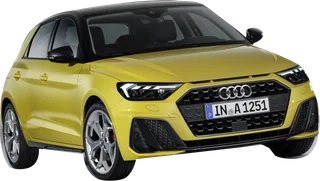
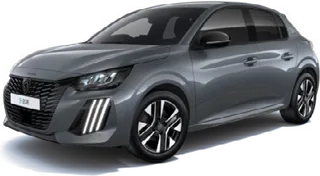
Audi A1 Sportback vs Peugeot Peugeot 208
Better figure, where one is clearly better
| AudiA1 Sportback | PeugeotPeugeot 208 | |
|---|---|---|
| Overview | ||
| Released | 2018 | September 2019 |
| Performance | ||
| Powertrain | Petrol | Petrol, Hybrid, Electric |
| Power | 94–148 bhp | 99–154 bhp (better) |
| 0–62 mph | 8.1–11.5 s | 8.1–10.1 s |
| Top speed | 120–140 mph (better) | 93–127 mph |
| Engine or motors | 1.0-litre TFSI (999 cc, 95 or 116 PS) or 1.5-litre TFSI (1,498 cc, 150 PS); bhp converted from Audi's PS figures | 1.2-litre three-cylinder turbo petrol, 100 hp (74 kW); Hybrid 110 and 145: 1.2 turbo with an electric motor in the gearbox, 110 hp or 145 hp system output; E-208: front electric motor, 136 hp (100 kW) or 156 hp (115 kW). bhp converted from Peugeot's hp (PS) and kW figures |
| Torque | 175 Nm (95 PS), 200 Nm (116 PS), 250 Nm (150 PS) | 205 Nm (Turbo 100 and Hybrid 110 engine), 230 Nm (Hybrid 145 engine), 260 Nm (E-208) |
| Gearbox | 5-speed manual (95 PS), 6-speed manual (116 PS) or 7-speed S tronic | 6-speed manual (Turbo 100), 6-speed dual-clutch automatic e-DSC6 (Hybrid), single-speed automatic (E-208) |
| Drive | Front-wheel drive | Front-wheel drive |
| Range and charging | ||
| Zero-emission range (WLTP) | – | 226–268 miles |
| Battery | – | 50–51 kWh |
| Fastest charging | – | 100 kW |
| Economy (WLTP) | 49.8–52.4 mpg | 56.8–65.7 mpg (better) |
| Range detail | – | WLTP combined 226 miles (Electric 136) or 268 miles (Electric 156) for Allure; 205.7–231.8 and 246.7–272.8 miles across configurations; Peugeot lists battery capacity as 50 kWh and 51 kWh without saying whether gross or usable; E-208 top speed 93 mph in Sport mode |
| Charging | – | 7.4 kW on-board AC charger; 20–80% in about 4 hours 30–40 minutes from a wall box or 25–27 minutes at a 100 kW DC charger; 3 kW vehicle-to-load on the Electric 156 with the optional bidirectional charger |
| Efficiency | WLTP combined: 50.6–52.4 mpg (95 PS manual), 49.0–50.7 mpg (95 PS S tronic), 50.2–52.4 mpg (116 PS manual), 48.9–50.6 mpg (116 PS S tronic), 48.8–49.8 mpg (150 PS); depends on trim | WLTP combined: 47.7–56.8 mpg (Turbo 100), 54.9–65.7 mpg (Hybrid 110), 54.8–65.6 mpg (Hybrid 145) |
| CO2 emissions | 122–132 g/km, WLTP combined | 116–134 g/km (Turbo 100), 97–117 g/km (Hybrid), 0 g/km (E-208), WLTP combined |
| Practicality | ||
| Body | Hatchback | Hatchback |
| Seats | 5 | 5 |
| Boot | 335 litres | 352 litres (better) |
| Length | 4,041 mm | 4,055 mm |
| Width | 1,740 mm | 1,745 mm |
| Weight | From 1,100 kg | From 1,121 kg |
| Boot | 335 litres, 1,090 litres with the rear seats folded | 352 litres (309 litres E-208) with the seats up; 1,163 litres (1,118 litres E-208) with the rear seats folded; 44-litre fuel tank |
| Towing | – | 1,200 kg braked (petrol and hybrid) |
| Size | 4,041 mm long, 1,740 mm wide, 1,439 mm high (Audi Netherlands configurator; Audi UK gives 4.03 metres); weight is Audi UK's unladen figure, 1,100 kg (95 PS manual) to 1,180 kg (150 PS) | 4,055 mm long, 1,745 mm wide excluding mirrors (1,765 mm with mirrors folded; 1,960 mm with mirrors open), 1,430 mm high; 2,540 mm wheelbase; kerb weight 1,121 kg (Turbo 100), 1,220 kg (Hybrid 110), 1,228 kg (Hybrid 145), 1,455 kg (E-208) |
| Tech and safety | ||
| Infotainment | 10.25-inch instrument cluster and 10.1-inch MMI colour display as standard | 10-inch touchscreen; i-Cockpit with a 10-inch digital instrument panel (3.5-inch on Style); wireless Apple CarPlay and Android Auto |
| Driver assistance | – | Active Safety Brake, Lane Keeping Assist, speed limit and road sign recognition, driver attention alert as standard; adaptive cruise control with Stop and Go, lane positioning assist and blind-spot monitoring optional (standard on GT Premium) |