Audi Q3 Sportback vs Toyota RAV4
Better figure, where one is clearly better
| AudiQ3 Sportback | ToyotaRAV4 | |
|---|---|---|
| Overview | ||
| Released | June 2025 | May 2026 |
| Performance | ||
| Powertrain | Mild hybrid, Petrol, Diesel, Plug-in hybrid | Plug-in hybrid |
| Power | 148–268 bhp | 268–305 bhp (better) |
| 0–62 mph | 5.7–9.2 s (better) | 5.8–7.5 s |
| Top speed | 129–149 mph (better) | 112 mph |
| Engine or motors | 1.5-litre TFSI with 48V mild hybrid (150 PS), 2.0-litre TFSI quattro (204 or 265 PS), 2.0-litre TDI (150 PS, or 193 PS with quattro), 1.5 TFSI e-hybrid plug-in hybrid (272 PS system output, 85 kW electric motor); bhp converted from Audi's PS figures | 2.5-litre four-cylinder petrol (141 bhp) with front motor (151.4 kW); AWD-i adds a 40.7 kW rear motor; system output 268 bhp (272 DIN hp, 201 kW) FWD or 305 bhp (309 DIN hp, 227 kW) AWD-i |
| Torque | 250 Nm (TFSI 150), 320 Nm (TFSI 204), 400 Nm (TFSI 265 and TDI 193), 360 Nm (TDI 150), 400 Nm system (e-hybrid) | Engine 227 Nm; front motor 272 Nm; rear motor 122.6 Nm (AWD-i) |
| Gearbox | 7-speed S tronic; 6-speed S tronic on e-hybrid | CVT (shift-by-wire) |
| Drive | Front-wheel drive (TFSI 150, TDI 150, e-hybrid) or quattro four-wheel drive | Front-wheel drive (Icon, Design, Excel) or AWD-i all-wheel drive (Design, Excel, GR Sport) |
| Range and charging | ||
| Zero-emission range (WLTP) | 73 miles | 83–85 miles (better) |
| Battery | 19.7 kWh | – |
| Fastest charging | 40 kW (better) | 35 kW |
| Economy (WLTP) | 33.1–161.8 mpg | 176.6–217.3 mpg (better) |
| Range detail | e-hybrid WLTP electric range: 65–73 miles combined, 78–88 miles city, depending on trim | WLTP electric range: up to 85 miles (FWD), up to 83 miles (AWD-i) |
| Charging | e-hybrid has a 19.7 kWh net (25.7 kWh gross) battery; 11 kW AC (150 minutes to full) and 40 kW DC on Audi UK's data (10–80% in 26 minutes); Audi's international press release gives up to 50 kW DC | 22.7 kWh lithium-ion battery; 11 kW AC; 35 kW DC (10–80% in 28 minutes) |
| Efficiency | WLTP combined: 42.6–46.3 mpg (TFSI 150), 33.9–36.5 mpg (TFSI 204), 31.5–33.1 mpg (TFSI 265), 49.3–53.4 mpg (TDI 150), 42.3–46.0 mpg (TDI 193), 130.4–161.8 mpg weighted (e-hybrid); depends on trim | WLTP weighted combined: 217.3 mpg (Icon), 166.2 mpg (Design, Excel FWD), 176.6 mpg (Excel AWD-i, GR Sport) |
| CO2 emissions | 138–151 g/km (TFSI 150 and TDI 150), 161–175 g/km (TDI 193), 176–204 g/km (TFSI quattro), 40–49 g/km (e-hybrid), WLTP combined | 30–39 g/km weighted combined; 117–131 g/km in charge-sustaining mode (WLTP) |
| Practicality | ||
| Body | SUV | SUV |
| Seats | 5 | 5 |
| Boot | 488 litres | 672 litres (better) |
| Length | 4,531 mm | 4,600 mm |
| Width | 1,859 mm | 1,855 mm |
| Weight | From 1,635 kg | From 1,920 kg |
| Boot | 488 litres, 1,289 litres with the rear seats folded; 375/1,196 litres in the e-hybrid | 672 litres with the rear seats in place; 1,189 litres folded to the tonneau cover, 1,690 litres to the roof |
| Towing | Up to 1,800 kg braked (TFSI 150), 2,000 kg (TDI 150, TFSI 204, e-hybrid), 2,100 kg (TFSI 265), 2,200 kg (TDI 193) | 800 kg braked (FWD), 2,000 kg (AWD-i); 750 kg unbraked |
| Size | 4,531 mm long, 1,859 mm wide, 1,581 mm high; weight is Audi UK's unladen figure, 1,635 kg (TFSI 150) to 1,900 kg (e-hybrid) | 4,600 mm long, 1,855 mm wide (1,880 mm GR Sport), 1,700 mm high; 2,690 mm wheelbase; kerb weight 1,920–1,990 kg (FWD), 1,980–2,060 kg (AWD-i); drag coefficient 0.35 |
| Tech and safety | ||
| Infotainment | – | 12.9-inch multimedia touchscreen on the Arene software platform; 12.3-inch digital instrument display |
| Warranty | – | 3 years or 60,000 miles |
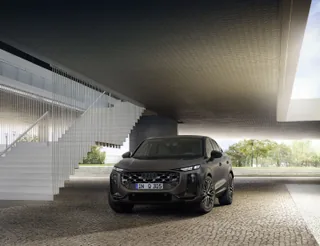
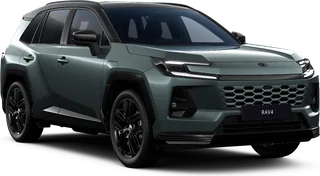
More comparisons
- Mazda CX-5 vs Toyota RAV4
- Audi Q9 vs Toyota RAV4
- Audi Q7 vs Toyota RAV4
- Mercedes-Benz GLB vs Toyota RAV4
- Audi Q3 vs Toyota RAV4
- Toyota RAV4 vs Toyota RAV4 (2019)
- Mercedes-Benz CLA Shooting Brake vs Toyota RAV4
- Audi Q3 vs Audi Q3 Sportback
- Audi Q3 Sportback vs Jaecoo Jaecoo 7
- Audi Q3 Sportback vs Volkswagen Tiguan