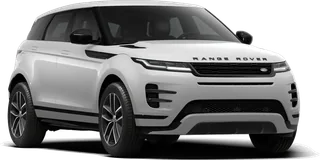
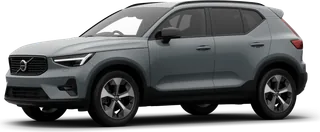
Land Rover Range Rover Evoque vs Volvo XC40
Better figure, where one is clearly better
| Land RoverRange Rover Evoque | VolvoXC40 | |
|---|---|---|
| Overview | ||
| Released | November 2018 | February 2018 |
| Performance | ||
| Powertrain | Mild hybrid, Plug-in hybrid | Mild hybrid |
| Power | 158–265 bhp (better) | 161–194 bhp |
| 0–62 mph | 7.2–10.3 s (better) | 7.6–8.6 s |
| Top speed | 118–132 mph (better) | 112 mph |
| Engine or motors | 1.5-litre three-cylinder petrol mild hybrid, 160 PS (P160); 2.0-litre four-cylinder diesel mild hybrid, 163 PS (D165) or 204 PS (D200); 1.5-litre petrol plug-in hybrid, 269 PS system output (P270e); bhp converted from Land Rover's PS figures. UK 0–60 mph: 9.7 s (P160), 9.2 s (D165), 7.9 s (D200), 6.8 s (P270e); 0–62 mph figures are from Land Rover Germany (the German plug-in hybrid is rated at 268 PS) | Petrol mild hybrid: B3 120 kW (163 hp), B4 145 kW (197 hp); bhp converted from Volvo's kW figures |
| Torque | 260 Nm (P160), 380 Nm (D165), 430 Nm (D200), 540 Nm (P270e) | 265 Nm (B3), 300 Nm (B4) |
| Gearbox | 9-speed automatic | Automatic |
| Drive | All-wheel drive; front-wheel drive with the P160 | Front-wheel drive |
| Range and charging | ||
| Zero-emission range (WLTP) | 37.9 miles | – |
| Battery | 11.5 kWh | – |
| Fastest charging | 32 kW | – |
| Economy (WLTP) | 36–196.4 mpg (better) | 42.8 mpg |
| Range detail | P270e: WLTP electric range 37.9 miles combined, 46.6 miles city | – |
| Charging | P270e: 11.5 kWh usable battery; 0–80% in about 30 minutes at 32 kW DC (CCS); 0–100% in about 2 hours 12 minutes on a 7 kW AC charger | – |
| Efficiency | WLTP combined: 34.9–36.0 mpg (P160), 42.6–44.6 mpg (D165), 41.4–44.6 mpg (D200), 196.4 mpg weighted and 182.9 Wh/km (P270e) | 42.8 mpg (WLTP combined) |
| CO2 emissions | 32–184 g/km (WLTP combined) | 149 g/km (WLTP combined) |
| Practicality | ||
| Body | SUV | SUV |
| Seats | 5 | 5 |
| Boot | 472 litres (better) | 443 litres |
| Length | 4,371 mm | 4,440 mm |
| Width | – | 1,873 mm |
| Weight | From 1,717 kg | From 1,688 kg |
| Boot | 472 litres dry (591 litres wet) with the rear seats up; 1,156 litres dry (1,383 litres wet) with them folded; 40:20:40 split rear seat | 443 litres (569 litres maximum) with the rear seats up; 1,432 litres folded |
| Towing | Braked: 2,000 kg (D165, D200), 1,600 kg (P270e); not rated for towing (P160); 750 kg unbraked; 100 kg nose weight | 1,600 kg (B3), 2,000 kg (B4) |
| Size | 4,371 mm long, 1,996 mm wide with mirrors folded (2,100 mm with mirrors out), 1,649 mm high; 2,681 mm wheelbase; 11.6 m turning circle (kerb to kerb); 212 mm ground clearance; 530 mm wading depth; P160 unladen weight is 1,717 kg DIN without a driver (1,792 kg EU with a driver) | 4,440 mm long, 1,873 mm wide (2,034 mm with mirrors), 1,652 mm high; 2,702 mm wheelbase; 11 m turning circle; running-order mass 1,688 kg |
| Tech and safety | ||
| Infotainment | Pivi Pro with an 11.4-inch touchscreen, connected navigation, Apple CarPlay and Android Auto, wireless device charging; Interactive Driver Display | – |
| Driver assistance | Adaptive Cruise Control, Lane Keep Assist, Emergency Braking, Traffic Sign Recognition and Adaptive Speed Limiter, 3D Surround Camera and front and rear parking aids as standard; Blind Spot Assist, Rear Traffic Monitor and Head-up Display on higher trims | – |
More comparisons
- Land Rover Range Rover Evoque vs Land Rover Range Rover Sport
- Mercedes-Benz GLA vs Volvo XC40
- Ford Kuga vs Volvo XC40
- Ford Kuga vs Land Rover Range Rover Evoque
- Peugeot Peugeot 2008 vs Volvo XC40
- Land Rover Range Rover Evoque vs Toyota RAV4 (2019)
- Toyota RAV4 (2019) vs Volvo XC40
- BMW Z4 vs Land Rover Range Rover Evoque
- Audi Q2 vs Land Rover Range Rover Evoque
- Audi Q2 vs Volvo XC40