LG OLED B4 vs LG OLED EG9600
Better figure, where one is clearly better
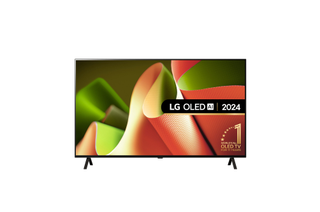
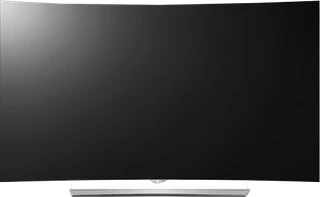
| LGOLED B4 | LGOLED EG9600 | |
|---|---|---|
| Overview | ||
| Released | March 2024 | 2015 |
| Display | ||
| Panel | OLED | OLED |
| Panel detail | Self-lit 4K OLED with pixel dimming | Curved WRGB OLED with passive Cinema 3D and Ultra Luminance |
| Resolution | 3840 × 2160 (4K) | 3840 × 2160 (4K) |
| Refresh rate | 120 Hz | – |
| HDR formats | Dolby Vision, HDR10, HLG | None |
| Picture processing | AI Picture Pro, α8 AI Super Upscaling 4K, AI Brightness Control, Dynamic Tone Mapping Pro and Filmmaker Mode | Triple XD Engine, 4K upscaling, Real Cinema 24p and HEVC decoding up to 4K 60p, per the exact European maker tables |
| Picture modes | Personalised Picture Wizard, Vivid, Standard, APS, Cinema, Sports, Game, Filmmaker and ISF Expert bright/dark room modes | – |
| Motion handling | Native 120Hz panel; OLED Motion and HDMI 4K 120 fps input | Native panel refresh rate unconfirmed; Absolute Motion Clarity and 4K 60p input compatibility are not native-Hz figures. |
| Sizes | ||
| Sizes | 48, 55, 65, 77″ | 55, 65″ |
| Largest size | 77″ (better) | 65″ |
| Gaming | ||
| HDMI ports | 4 (all HDMI 2.1 at 4K 120 Hz+) (better) | 3 (0 HDMI 2.1 at 4K 120 Hz+) |
| Variable refresh rate | HDMI VRR, FreeSync Premium, G-Sync Compatible | None |
| Auto low latency mode | Yes | – |
| HDMI detail | Four inputs support 4K 120Hz, VRR, ALLM and QMS; eARC on HDMI 3 | Three HDMI inputs; maker table specifically lists two side inputs supporting 4K 60p. HDTVTest identifies HDMI 1 and 2 as HDMI 2.0 with HDCP 2.2; ARC support confirmed by both exact UK reviews. AVForums claims MHL, conflicting with the French maker table's No, so MHL support is not asserted. |
| Input lag | – | 49 ms in Game mode (HDTVTest); 52 ms (AVForums) |
| Variable refresh range | LG specifies 40–120Hz | – |
| Game features | Game Optimiser and Dashboard, HGiG, AMD FreeSync Premium, NVIDIA G-SYNC Compatible and Dolby Vision gaming at 4K 120Hz | – |
| Smart TV and sound | ||
| Smart TV platform | webOS | webOS |
| Processor | α8 AI Processor 4K | Tru Ultra HD Engine |
| Speakers | 20 W, 2.0 channels | 20 W, 2.0 channels |
| Dolby Atmos | Yes | – |
| eARC | Yes | – |
| Wi-Fi | Wi-Fi 5 | Built-in Wi-Fi |
| Bluetooth | 5.1 | – |
| Speaker detail | Down-firing 2.0-channel speakers | Harman Kardon 20 W, 2.0-channel system with tweeters and Ultra Surround |
| Audio features | α8 AI Sound Pro with virtual 9.1.2 up-mixing, acoustic tuning, Clear Voice Pro, Bluetooth Surround Ready and WiSA up to 2.1 channels | Dolby Digital and DTS decoding, Clear Voice II, optical and wireless Sound Sync; aptX encoder listed by LG France |
| Voice assistants | Built-in Amazon Alexa and LG intelligent voice recognition; supported languages vary by country | Voice control through the Magic Remote |
| Casting | Apple AirPlay 2, ThinQ remote app and Multi View | DLNA, WiDi and Miracast |
| Software updates | webOS 24; LG states four upgrades over five years with regional scheduling differences and security support through 31 December 2028. LG Australia's March 2024 launch notice confirms the range available now and lists 55/65-inch B4 March availability; release records that first confirmed series month, not a universal UK size-specific date. | webOS 2.0. The UK launch reviews describe no HDR support; a bounded exact European firmware search did not verify its later availability. Separately, LG's US September 2015 release confirms EG9600 HDR streaming after a firmware update, and Japan's November release confirms network/USB HDR with HDMI explicitly unsupported. Japan's current page names HDR10. Those regional updates are not assigned to the UK EG960V main HDR fields. First-sale year remains 2015: the UK April review confirms retail availability, but an exact first worldwide sale month remains unresolved. |
| TV tuners | – | DVB-T2, DVB-C and DVB-S2; CI+ 1.3; HbbTV and USB hard-drive recording/time shift. UK Freeview HD and satellite reception confirmed by the exact reviews. |
| USB | Two USB 2.0 ports | Three USB inputs, one USB 3.0 and two USB 2.0 |
| Ethernet | Ethernet LAN port | Ethernet LAN port |
| Optical audio out | One optical digital audio output | Optical digital audio output and headphone output |
| Design and power | ||
| Size | Without stand (W × H × D): 48″ 1070 × 620 × 45.9 mm; 55″ 1228 × 708 × 45.9 mm; 65″ 1449 × 832 × 45.9 mm; 77″ 1719 × 989 × 50.9 mm | Without stand (W × H × D): 55″ 1226 × 719 × 49.9 mm; 65″ 1447 × 826 × 49.9 mm |
| Stand | With stand (W × H × D; weight): 48″ 1070 × 684 × 235 mm, 11.7 kg; 55″ 1228 × 772 × 235 mm, 14.5 kg; 65″ 1449 × 896 × 235 mm, 17.3 kg; 77″ 1719 × 1057 × 319 mm, 23.5 kg. Stand footprint: 48″ 933 × 235 mm; 55/65″ 1057 × 235 mm; 77″ 1403 × 319 mm. | With stand (W × H × D; weight): 55″ 1226 × 760 × 213 mm, 18.9 kg; 65″ 1447 × 884 × 237 mm, 25.1 kg. Fixed curved metal base with transparent support; no swivel. |
| VESA pattern | 300 × 200 mm across these UK sizes | – |
| Power use | Under 0.5 W standby; 100–240 V AC, 50–60Hz supply | Maker European energy-table on-mode/standby: 55″ 134/0.3 W; 65″ 142/0.3 W; 100–240 V AC, 50–60Hz supply. The pages' annual-consumption unit is inconsistent, so no annual figure is copied. |
| In the box | Magic Remote MR24, two AA batteries and attached power cable | MR15 Magic Remote and two pairs of F310 passive 3D glasses in the European maker table; AVForums' review sample also included two clip-on pairs, which is not assumed for every retail package |
More comparisons
- LG OLED B4 vs Samsung OLED S95H
- LG OLED B4 vs LG OLED B6
- LG OLED EG9600 vs LG OLED evo C6
- LG OLED B6 vs LG OLED EG9600
- LG OLED B4 vs Sony BRAVIA 8 II
- Hisense A85Q vs LG OLED EG9600
- LG OLED B4 vs LG OLED B5
- LG OLED B5 vs LG OLED EG9600
- LG OLED B3 vs LG OLED B4
- LG OLED B4 vs Panasonic EZ1002
- LG OLED B4 vs Panasonic LZ2000
- LG OLED B4 vs Panasonic MZ2000
- LG OLED B4 vs LG OLED evo G4
- LG OLED B2 vs LG OLED B4
- LG OLED B4 vs LG OLED C1
- LG OLED B4 vs LG OLED evo G1