Nintendo Switch 2 vs Nintendo Switch Lite
Better figure, where one is clearly better
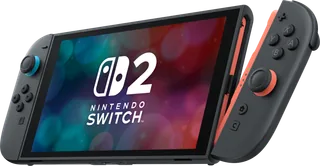
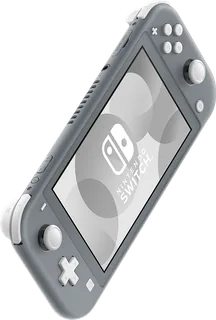
| NintendoSwitch 2 | NintendoSwitch Lite | |
|---|---|---|
| Overview | ||
| Released | June 2025 | September 2019 |
| Performance | ||
| Type | Hybrid | Handheld |
| CPU | Custom NVIDIA processor, 8-core Arm Cortex-A78C | NVIDIA customised Tegra processor |
| GPU | NVIDIA Ampere, 1,536 CUDA cores | NVIDIA customised Tegra processor (integrated GPU) |
| Memory | 12 GB (better) | 4 GB |
| Storage | 256 GB (better) | 32 GB |
| Disc drive | No | No |
| CPU | Custom processor made by NVIDIA; 8 Arm Cortex-A78C cores, 6 available to games; 1101 MHz handheld, 998 MHz docked (Nintendo developer documentation, reported by Digital Foundry) | NVIDIA customised Tegra processor (Tegra X1-based ODNX10-A1, according to iFixit) |
| GPU | NVIDIA Ampere GPU with RT cores and Tensor cores for DLSS; 1,536 CUDA cores at 561 MHz handheld and 1007 MHz docked, 3.072 TFLOPS docked (Nintendo developer documentation, reported by Digital Foundry) | – |
| Memory detail | 12 GB in two 6 GB modules; iFixit identified Micron LPDDR5 in one console; 102 GB/s docked, 68 GB/s handheld; 3 GB reserved for the system (Digital Foundry) | 4 GB LPDDR4X in two 16 Gb Samsung chips (iFixit; not published by Nintendo) |
| Storage detail | 256 GB UFS; part is reserved for the system | 32 GB; about 6.2 GB is reserved for the system |
| Storage expansion | microSD Express cards up to 2 TB; other microSD cards can only be used to copy screenshots and videos | microSD, microSDHC and microSDXC cards |
| Display and video | ||
| Maximum output | 4K up to 120 fps | – |
| Built-in screen | 7.9″ LCD, 1920 × 1080, 120 Hz | 5.5″ LCD, 1280 × 720 |
| Built-in screen | Capacitive touch screen; 7.9-inch wide colour gamut LCD; HDR10; VRR up to 120 Hz (NVIDIA G-SYNC in handheld mode); brightness sensor | Capacitive touch screen; 5.5-inch LCD; 1280 × 720. Nintendo doesn't publish the refresh rate |
| Video output | HDMI through the dock in TV mode; up to 3840 × 2160 at 60 fps; 120 fps at 1920 × 1080 or 2560 × 1440 | None |
| HDR | HDR10 | – |
| Variable refresh rate | Up to 120 Hz on the built-in screen | – |
| Audio | Stereo speakers; linear PCM 5.1ch over HDMI in TV mode; built-in microphone with noise and echo cancellation; 3.5 mm headset jack | Stereo speakers; 3.5 mm headset jack |
| Design and power | ||
| Battery life (maker's claim) | Up to 6.5 hours | Up to 7 hours |
| Weight | 534 g | 275 g (better) |
| Battery life detail | About 2 to 6.5 hours; charges in about 3 hours. Nintendo lists a non-replaceable 5220 mAh battery variant (401 g console, 534 g with Joy-Con 2) and a user-replaceable 5172 mAh variant (441 g, 548 g with Joy-Con 2) | About 3 to 7 hours (Nintendo support); the product page says more than six hours depending on the game (roughly four hours in The Legend of Zelda - Breath of the Wild); 3570 mAh; charges in about 3 hours |
| Power use | 19 W average while gaming in TV mode; 8 W on the HOME Menu; 0.5 W in sleep mode | 4 W while gaming |
| Colours | – | Blue, Coral, Yellow, Grey |
| Connections | ||
| Ports | 2 × USB-C on the console (bottom for charging and the dock, top for accessories); dock has 2 × USB 2.0, HDMI and LAN | USB-C (charging only) |
| Wi-Fi and Bluetooth | Wi-Fi 6, Bluetooth; wired LAN through the dock in TV mode | Wi-Fi 5 (IEEE 802.11 a/b/g/n/ac), Bluetooth 4.1, NFC |
| Controller | Detachable Joy-Con 2 (L) and (R) with HD rumble 2, mouse sensor, NFC; about 20 hours per charge | Built-in controls with a +Control Pad; Joy-Con can be paired separately |
| Backward compatibility | Plays compatible physical and digital Nintendo Switch games; some are unsupported or have issues | Nintendo Switch game cards only; games must support handheld mode |
More comparisons
- ASUS ROG Xbox Ally vs Nintendo Switch 2
- ASUS ROG Xbox Ally X vs Nintendo Switch 2
- Nintendo Switch 2 vs Sony PlayStation Vita Slim (PCH-2000)
- Nintendo Switch 2 vs Valve Steam Deck OLED
- Nintendo Game Boy Micro vs Nintendo Switch 2
- Nintendo DS Lite vs Nintendo Switch 2
- Nintendo Switch 2 vs Sony PlayStation Portal
- Lenovo Legion Go S (8″, 1) vs Nintendo Switch 2
- Nintendo Switch 2 vs Nintendo Switch – OLED Model
- Nintendo Switch vs Nintendo Switch 2
- Nintendo Switch Lite vs Sony PlayStation Portal
- ASUS ROG Ally (2023) vs Nintendo Switch Lite
- Nintendo Switch Lite vs Valve Steam Deck LCD
- Nintendo Switch Lite vs Nintendo Switch – OLED Model
- Nintendo Switch Lite vs Sony PSPgo
- Nintendo Switch Lite vs Sony PSP-3000