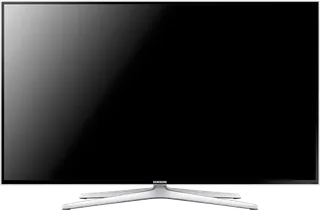
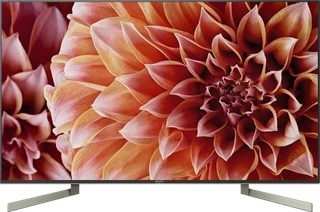
Samsung LED H6400 vs Sony BRAVIA XF90
Better figure, where one is clearly better
| SamsungLED H6400 | SonyBRAVIA XF90 | |
|---|---|---|
| Overview | ||
| Released | 2014 | 2018 |
| Display | ||
| Panel | LED LCD | LED LCD |
| Panel detail | Flat LCD with active-shutter 3D; HDTVTest identifies direct LED backlighting on the 40-inch model. Samsung's 200 Clear Motion Rate is not native panel refresh. | Direct LED backlight with full-array local dimming and Triluminos colour. AVForums and Expert Reviews counted 48 dimming zones on their 55-inch review samples; Sony does not publish a series-wide count. X-Motion Clarity is picture processing, not a native refresh specification. |
| Resolution | 1920 × 1080 (Full HD) | 3840 × 2160 (4K) (better) |
| HDR formats | None | HDR10, HLG, Dolby Vision |
| HDR extras | – | Sony announced Dolby Vision support for XF90 and now lists the series as compatible; it arrived through a firmware update after launch. |
| Peak brightness | – | AVForums measured about 1,000 nits in its brightest HDR mode and 705 nits in Cinema Pro on its UK 55-inch review sample; these are test results, not maker series specifications. |
| Picture processing | Samsung's UK specifications list Wide Colour Enhancer Plus and Film Mode, with no Micro Dimming or Precision Black local dimming. | 4K X-Reality PRO, X-tended Dynamic Range PRO, Object-based HDR remaster, Super Bit Mapping 4K HDR and X-Motion Clarity. |
| Motion handling | Samsung's 200 Clear Motion Rate combines processing and lighting behaviour. Native panel Hz is unpublished in the checked maker tables. | Sony describes X-Motion Clarity but its exact UK size sheets do not publish a native refresh figure, so no Hz value is assigned to the series. |
| Viewing angle | HDTVTest observed picture washout beyond about 45 degrees off-axis on its 40-inch sample. | AVForums and Expert Reviews report the 55-inch LCD's contrast and colour degrade when viewed from the side. |
| Sizes | ||
| Sizes | 32, 40, 48, 55, 65, 75″ | 49, 55, 65, 75″ |
| Largest size | 75″ | 75″ |
| Gaming | ||
| HDMI ports | 4 (0 HDMI 2.1 at 4K 120 Hz+) | 4 (0 HDMI 2.1 at 4K 120 Hz+) |
| Variable refresh rate | None | None |
| Auto low latency mode | No | – |
| HDMI detail | Four HDMI inputs with HDMI 1.4 3D and Audio Return Channel in Samsung's UK tables; component, shared composite, SCART and headphone connections also provided. | Four HDMI inputs. AVForums reports only HDMI 2 and 3 accept the higher-bandwidth 4K 60 Hz signal modes. ARC is supported; no HDMI 2.1 bandwidth. |
| Input lag | 43 ms on the 40-inch sample using a Leo Bodnar tester (HDTVTest). | Expert Reviews measured 25 ms at 4K and 42 ms at 1080p in Game mode on its 55-inch sample. |
| Game features | Manual Game Mode; no variable refresh or automatic low-latency switching. | Game mode; no HDMI VRR. |
| Smart TV and sound | ||
| Smart TV platform | Samsung Smart TV | Android TV |
| Processor | 3D HyperReal Engine; quad-core smart processor on the checked 40-, 55- and 65-inch UK tables | 4K HDR Processor X1 Extreme |
| Speakers | 20 W | 20 W, 2.0 channels |
| eARC | No | – |
| Wi-Fi | Built-in Wi-Fi | 802.11a/b/g/n/ac |
| Bluetooth | – | 4.1 |
| Speaker detail | Samsung lists two 10 W down-firing full-range speakers, without a woofer. | Two 10 W speakers with ClearAudio+ and S-Force Front Surround. |
| Audio features | Dolby MS10, DTS Studio Sound, DTS Premium Sound 5.1 and TV SoundConnect on the checked 40-, 48-, 55- and 65-inch tables. | – |
| Voice assistants | Original Samsung voice control and Voice Interaction; availability depends on the original services. | – |
| Casting | Screen Mirroring, Smart View and Wi-Fi Direct in Samsung's UK tables. | Chromecast built in, per Sony UK specifications. |
| TV tuners | The 48-inch UK table explicitly lists DVB-T2/C. The other checked sizes list DVB-T/C without T2; HDTVTest and What Hi-Fi confirm Freeview HD on the 40-inch UK model. | Sony UK lists DVB-T/T2 terrestrial, DVB-C cable and DVB-S/S2 satellite tuners. |
| USB | Three USB ports, media playback, recording and time shift. | Three USB inputs, including support for media playback and USB HDD recording. |
| Ethernet | Ethernet LAN. | One LAN input. |
| Optical audio out | One optical digital audio output. | One optical digital audio output. |
| Design and power | ||
| Size | Width × height × depth without stands: 32-inch 732.3 × 430.7 × 62.9 mm; 40-inch 917.6 × 535.4 × 63.1 mm; 48-inch 1086.1 × 630.1 × 63.5 mm; 55-inch 1241.4 × 717.4 × 64 mm; 65-inch 1465.4 × 845.3 × 70.9 mm; 75-inch 1687 × 970 × 70.9 mm. Configuration weights exclude stands. | Without stand (W × H × D), Sony UK sheets: 49″ 1093 × 629 × 69 mm; 55″ 1228 × 706 × 69 mm; 65″ 1447 × 829 × 69 mm; 75″ 1674 × 958 × 73 mm. Configuration weights also exclude stands. |
| Stand | Swivelling four-legged Quad stand on the checked UK 40-, 48-, 55- and 65-inch models. | Wide-set feet; VESA is 200 × 200 mm for 49″, 300 × 300 mm for 55/65″ and 400 × 300 mm for 75″. |
| Power use | Typical use by size from Samsung's UK tables: 32-inch 43 W; 40-inch 50 W; 48-inch 59 W; 55-inch 71 W; 65-inch 97 W; 75-inch 124 W. | – |
| In the box | Two SSG-5100GB 3D glasses, standard and Smart Control remotes, IR extender, power cable and manual on the checked 40-, 48-, 55- and 65-inch tables. | Sony announced the series in January 2018; AVForums reported UK retailer availability in March 2018. |
More comparisons
- Samsung LED H6400 vs Samsung OLED S90H
- Samsung LED H6400 vs Samsung Neo QLED QN80H
- Sony BRAVIA 7 II vs Sony BRAVIA XF90
- Sony BRAVIA 9 II vs Sony BRAVIA XF90
- Sony BRAVIA 3 II vs Sony BRAVIA XF90
- Sony BRAVIA 8 II vs Sony BRAVIA XF90
- Sony BRAVIA 5 vs Sony BRAVIA XF90
- Sony BRAVIA 3 vs Sony BRAVIA XF90
- Hisense E8Q vs Samsung LED H6400
- Hisense E8Q vs Sony BRAVIA XF90
- Sony BRAVIA 9 vs Sony BRAVIA XF90
- Sony BRAVIA 8 vs Sony BRAVIA XF90
- Samsung LED H6400 vs Sony X90J
- Samsung Neo QLED QN90A vs Sony BRAVIA XF90
- Samsung QLED Q90T (2020) vs Sony BRAVIA XF90
- Samsung QLED Q90R (2019) vs Sony BRAVIA XF90