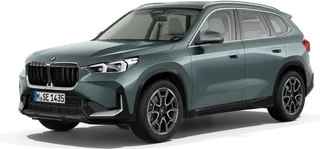
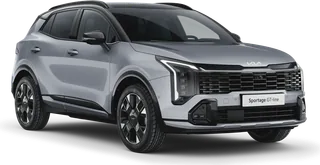
BMW X1 vs Kia Sportage
Better figure, where one is clearly better
| BMWX1 | KiaSportage | |
|---|---|---|
| Overview | ||
| Released | October 2022 | 2021 |
| Performance | ||
| Powertrain | Mild hybrid, Diesel, Plug-in hybrid, Petrol | Petrol, Hybrid, Plug-in hybrid |
| Power | 148–322 bhp (better) | 147–283 bhp |
| 0–62 mph | 5.4–8.9 s (better) | 7.5–9.7 s |
| Top speed | 118–155 mph (better) | 121–128 mph |
| Engine or motors | sDrive20i 125 kW (170 hp) and xDrive23i 160 kW (218 hp) petrol mild hybrids; sDrive18d 110 kW (150 hp) diesel; xDrive23d 155 kW (211 hp) diesel mild hybrid; xDrive25e 180 kW (245 hp) and xDrive30e 240 kW (326 hp) plug-in hybrids; M35i xDrive 221 kW (300 hp); bhp converted from BMW's kW figures | 1.6 T-GDi four-cylinder turbo petrol (1,598 cc), 147 bhp; hybrid 235 bhp and plug-in hybrid 283 bhp combined. Kia Europe gives 150 PS, 239 PS and 288 PS, and a 1.49 kWh battery with a 64 kW motor for the hybrid |
| Torque | 280 Nm (sDrive20i), 360 Nm (xDrive23i, sDrive18d), 400 Nm (xDrive23d, M35i), 477 Nm (plug-in hybrids) | 250 Nm (petrol, Kia Europe) |
| Gearbox | 7-speed Steptronic dual-clutch automatic | 6-speed manual or 7-speed DCT (petrol); 6-speed automatic (hybrid and plug-in hybrid) |
| Drive | Front-wheel drive (sDrive) or xDrive all-wheel drive | Front-wheel drive; all-wheel drive on the GT-Line S hybrid and on plug-in hybrids |
| Range and charging | ||
| Zero-emission range (WLTP) | 50–52 miles (better) | 40–44 miles |
| Battery | 14.2 kWh | – |
| Economy (WLTP) | 36.7–117.7 mpg (better) | 91.1–104.6 mpg |
| Range detail | WLTP electric range 47–52 miles (xDrive25e) and 47–50 miles (xDrive30e), depending on trim | Plug-in hybrid: WLTP electric range 44 miles (2WD) or 40 miles (AWD). Kia UK's pricing page lists prices for the updated plug-in hybrid, but in September 2026 its Sportage page says a plug-in hybrid "will also be available soon" |
| Charging | Plug-in hybrids: 14.2 kWh battery, 11 kW AC charging | – |
| Efficiency | WLTP combined: 46.3–49.6 mpg (sDrive20i), 42.2–44.1 mpg (xDrive23i), 52.3–56.5 mpg (sDrive18d), 55.4–58.9 mpg (xDrive23d), 100.9–117.7 mpg (xDrive25e), 100.9–113 mpg (xDrive30e), 35.8–36.7 mpg (M35i) | WLTP combined: 7.0–7.2 l/100km (petrol), 5.6–6.4 l/100km (hybrid); plug-in hybrid weighted 104.6 mpg (2WD) or 88.2–91.1 mpg (AWD), 108–111 Wh/km. Kia UK gives petrol and hybrid figures in l/100km only |
| CO2 emissions | – | 158–163 g/km (petrol), 125–145 g/km (hybrid), 23–26 g/km (plug-in hybrid), WLTP |
| Practicality | ||
| Body | SUV | SUV |
| Seats | 5 | 5 |
| Boot | – | 591 litres |
| Length | 4,500 mm | 4,540 mm |
| Width | 1,845 mm | 1,865 mm |
| Boot | 540–1,600 litres (sDrive18d, M35i); 500–1,545 litres (mild hybrids); 490–1,495 litres (plug-in hybrids) | 591 litres (petrol) or 587 litres (hybrid) with the rear seats up, 1,780 or 1,776 litres folded (Kia UK specification brochure) |
| Towing | Up to 1,800 kg braked (sDrive20i) | 1,650 kg braked (petrol), 1,510 kg (hybrid); 100 kg tow ball load (Kia UK specification brochure) |
| Size | 4,500 mm long (4,505 mm M35i), 1,845 mm wide (2,104 mm with mirrors), 1,642 mm high; 2,692 mm wheelbase; EC unladen weight including a 75 kg driver is 1,625 kg (sDrive20i) to 1,935 kg (xDrive30e) | 4,540 mm long, 1,865 mm wide without mirrors, 1,645 mm high; 2,680 mm wheelbase (Kia Europe) |
| Tech and safety | ||
| Infotainment | – | 12.3-inch touchscreen navigation; 4.2-inch driver display (12.3-inch on Storm and GT-Line S); head-up display and Harman Kardon audio on GT-Line S |
| Driver assistance | – | Forward Collision-Avoidance Assist with junction turning; Smart Cruise Control 2, Highway Driving Assist 2 and Lane Following Assist 2; Remote Smart Parking Assist and Blind-Spot View Monitor on GT-Line S |
| Safety rating | – | 5 stars, Euro NCAP 2022 |
| Warranty | – | 7 years or 100,000 miles |