Canon RF 100–400mm F5.6–8 IS USM vs Nikon NIKKOR Z 100-400mm f/4.5-5.6 VR S
Better figure, where one is clearly better
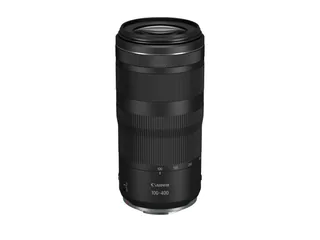
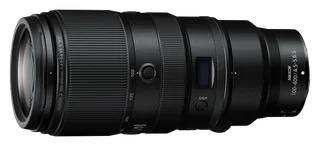
| CanonRF 100–400mm F5.6–8 IS USM | NikonNIKKOR Z 100-400mm f/4.5-5.6 VR S | |
|---|---|---|
| Overview | ||
| Released | October 2021 | December 2021 |
| Optics | ||
| Lens type | Zoom | Zoom |
| Focal length | 100–400 mm | 100–400 mm |
| Maximum aperture | f/5.6–8 | f/4.5–5.6 |
| Minimum aperture | f/32–45 | f/32–40 |
| Optical construction | 12 elements in nine groups | Twenty-five elements in twenty groups |
| Special elements | One UD element and one PMo aspherical element | Six ED and two Super ED elements |
| Coatings | Super Spectra; no fluorine coating, per UK maker table | Nano Crystal Coat and ARNEO Coat; fluorine coating on the front element |
| Diaphragm | Nine blades | Nine rounded blades |
| Angle of view | – | FX 24°20′–6°10′; DX 16°–4° |
| Mount and compatibility | ||
| Mounts | Canon RF | Nikon Z mount |
| Image circle | Full frame | Full frame |
| Compatibility | Canon RF mount, full-frame image circle; incompatible with EF DSLRs and EOS M cameras | Nikon Z full-frame and DX cameras. Nikon Japan says mounting this lens disables selection of the mechanical-shutter setting, leaving Auto or electronic front-curtain options; use the latest camera firmware |
| Teleconverter support | RF1.4× gives 140–560 mm f/8–11 and maximum 0.58×; RF2× gives 200–800 mm f/11–16 and maximum 0.83×. Maker confirms autofocus and IS, with reduced AF coverage on listed EOS R bodies; extenders usable throughout the zoom range | Z TELECONVERTER TC-1.4x and TC-2.0x supported; maximum focal length becomes 560 or 800 mm. Nikon warns focusing can take longer or become less reliable depending on subject, brightness and focus point |
| Focus and stabilisation | ||
| Autofocus | Yes | Yes |
| Minimum focus distance | 0.88 m | 0.75 m |
| Maximum magnification | 0.41× | 0.38× |
| Optical stabilisation | Yes | Yes |
| Autofocus detail | Nano USM autofocus and electronic manual focus | Multi-focusing system with two stepping motors |
| Focus distance detail | Maker minimum focus 1.2 m at 100 mm, 0.88 m at 200 mm, 0.95 m at 300 mm and 1.05 m at 400 mm. Main value is the closest published distance at 200 mm; Cameralabs’ approximate constant-distance observation does not replace the maker’s per-focal-length table | Internal focusing; minimum distances from focal plane 0.75 m at 100 mm, 0.78 m at 135 mm, 0.8 m at 200 mm, 0.87 m at 300 mm and 0.98 m at 400 mm |
| Magnification detail | 0.09× at 100 mm, 0.24× at 200 mm, 0.34× at 300 mm and 0.41× at 400 mm; no unpublished AF/MF distinction inferred | Maximum reproduction ratio 0.38× at 400 mm; 0.16× at 100 mm, as Nikon Japan specifies |
| Stabilisation detail | Optical IS rated 5.5 stops at 400 mm on EOS R under CIPA, yaw/pitch; coordinated EOS R5 body/lens IS rated six stops under the same maker conditions. Cameralabs measured approximately five stops at 100 mm and three at 400 mm with EOS R6, a different test condition | Lens-shift VR with voice-coil motors. Nikon rates 5.5 stops under CIPA conditions in NORMAL mode on a full-frame camera at maximum telephoto |
| Video features | Cameralabs found little focus breathing and mostly maintained focus while zooming in its tests; these are reviewer observations rather than maker parfocal certification | Nikon describes reduced focus breathing, quiet autofocus and smooth aperture control |
| Design | ||
| Dust and moisture resistant | No | Yes |
| Filter diameter | 67 mm | 77 mm |
| Maximum diameter | 79.5 mm | 98 mm |
| Length | 164.7 mm | 222 mm |
| Weight | 635 g (better) | 1,355 g |
| Controls | Separate zoom, electronic manual focus and custom control rings; AF/MF and IS switches; zoom lock | Focus-mode and FULL/infinity–3 m limiter switches; zoom and focus rings, assignable control ring, L-Fn controls and display button. Photography Blog identifies aperture, focus-distance and focal-length display options |
| Zoom design | Extending zoom barrel; main maker length measured retracted | Barrel extends towards 400 mm; Nikon's Inner Balance Technology minimises centre-of-gravity movement. Zoom ring turns through 80° |
| Filter detail | – | 77 mm screw-on filters, 0.75 mm pitch |
| Weather resistance | UK maker specification explicitly states no dust/moisture resistance | Dust and drip protection; complete resistance is not guaranteed in all conditions |
| Dimensions detail | Approximately 79.5 mm maximum diameter × 164.7 mm length when retracted | Approximately 98 × 222 mm; length from lens mount at 100 mm |
| Weight detail | Approximately 635 g lens | Approximately 1,355 g without tripod collar; 1,435 g with it |
| Tripod mount | – | Rotating collar with removable foot, as Photography Blog describes |
| Lens hood | ET-74B, optional accessory | HB-103 hood included |
| In the box | – | LC-77B front cap, LF-N1 rear cap, HB-103 hood and CL-C3 case |
| Release detail | October 2021 marketed month in Canon Camera Museum, matching Canon Canada’s original October availability. No exact worldwide first-sale day inferred; no direct replacement of brighter EF or RF L-series zooms assumed | Nikon Korea explicitly gives 16 December 2021 as the release and promotion start date; Nikon USA announced availability within 2021. Nikon Japan's regional on-sale date was later, 4 February 2022 |
More comparisons
- Canon RF 100–400mm F5.6–8 IS USM vs Sony FE 100–400mm F5.6–8 OSS
- Canon RF 100–400mm F5.6–8 IS USM vs Canon RF 20-50mm F4L IS USM PZ
- Nikon NIKKOR Z 100-400mm f/4.5-5.6 VR S vs Nikon NIKKOR Z 70–200mm f/2.8 VR S II
- Canon RF 100–400mm F5.6–8 IS USM vs Canon RF 14mm F1.4L VCM
- Canon RF 100–400mm F5.6–8 IS USM vs Canon RF 7-14mm F2.8-3.5L FISHEYE STM
- Nikon NIKKOR Z 100-400mm f/4.5-5.6 VR S vs Nikon NIKKOR Z 24–105mm f/4–7.1
- Canon RF 100–400mm F5.6–8 IS USM vs Canon RF 45mm F1.2 STM
- Nikon NIKKOR Z 100-400mm f/4.5-5.6 VR S vs Nikon NIKKOR Z DX 16–50mm f/2.8 VR
- Nikon NIKKOR Z 100-400mm f/4.5-5.6 VR S vs Nikon NIKKOR Z DX MC 35mm f/1.7
- Canon RF 100–400mm F5.6–8 IS USM vs Canon RF 85mm F1.4L VCM
- Nikon NIKKOR Z 100-400mm f/4.5-5.6 VR S vs Nikon NIKKOR Z 24-70mm f/2.8 S II
- Canon RF 100–400mm F5.6–8 IS USM vs Canon RF 75–300mm F4–5.6
- Nikon NIKKOR Z 100-400mm f/4.5-5.6 VR S vs Nikon NIKKOR Z 28-135mm f/4 PZ
- Canon RF 100–400mm F5.6–8 IS USM vs Canon RF 20mm F1.4 L VCM
- Canon RF 100–400mm F5.6–8 IS USM vs Canon RF-S 14–30mm F4–6.3 IS STM PZ
- Nikon NIKKOR Z 100-400mm f/4.5-5.6 VR S vs Nikon NIKKOR Z 35mm f/1.2 S