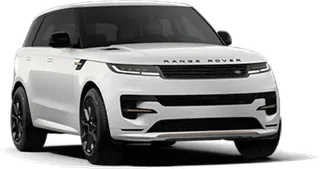
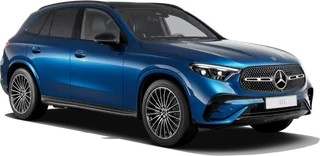
Land Rover Range Rover Sport vs Mercedes-Benz GLC
Better figure, where one is clearly better
| Land RoverRange Rover Sport | Mercedes-BenzGLC | |
|---|---|---|
| Overview | ||
| Released | May 2022 | 2022 |
| Performance | ||
| Powertrain | Mild hybrid, Plug-in hybrid | Mild hybrid, Plug-in hybrid |
| Power | 245–542 bhp (better) | 194–329 bhp |
| 0–62 mph | 4.5–7.7 s (better) | 6.2–8 s |
| Top speed | 128–155 mph (better) | 135–151 mph |
| Engine or motors | 3.0-litre Ingenium six-cylinder twin-turbo diesel mild hybrid, 250 PS (183 kW), 300 PS (221 kW) or 350 PS (258 kW); 3.0-litre six-cylinder twin-turbo petrol mild hybrid, 380 PS (280 kW); 4.4-litre twin-turbo V8 petrol mild hybrid, 540 PS (395 kW); 3.0-litre six-cylinder petrol plug-in hybrid, 460 PS (338 kW) or 550 PS (404 kW); bhp converted from Land Rover's kW figures | GLC 220 d: 1,993 cc four-cylinder diesel, 145 kW (197 hp) plus 17 kW mild-hybrid motor; GLC 300: 1,999 cc four-cylinder petrol, 190 kW (258 hp) plus 17 kW; GLC 300 d: 1,993 cc four-cylinder diesel, 198 kW (269 hp) plus 17 kW; GLC 300 e: 150 kW petrol plus 115 kW electric motor, 230 kW (313 hp) system; GLC 300 de: 145 kW diesel plus 115 kW motor, 245 kW (333 hp) system; bhp converted from Mercedes' kW figures |
| Torque | 600 Nm (D250), 650 Nm (D300), 700 Nm (D350), 550 Nm (P380), 750 Nm (P540), 660 Nm (P460e), 800 Nm (P550e) | 440 Nm (GLC 220 d), 400 Nm (GLC 300), 550 Nm (GLC 300 d), 550 Nm system (GLC 300 e), 750 Nm system (GLC 300 de) |
| Gearbox | Automatic | 9G-TRONIC 9-speed automatic |
| Drive | All-wheel drive | All-wheel drive (4MATIC) |
| Range and charging | ||
| Zero-emission range (WLTP) | 71.5–73.3 miles | 74–75 miles (better) |
| Battery | 31.8 kWh (better) | 25.28 kWh |
| Fastest charging | 50 kW | 60 kW (better) |
| Economy (WLTP) | 24.1–381.8 mpg (better) | 38.7–166.2 mpg |
| Range detail | WLTP electric range: 73.3 miles combined and 81.4 miles city (P460e); 71.5 miles combined and 78.3 miles city (P550e) | WLTP electric range 75 miles (GLC 300 e) or 74 miles (GLC 300 de); equivalent all-electric range 77 or 74 miles |
| Charging | Plug-in hybrids: 31.8 kWh usable battery (Land Rover Germany); 0–80% in about 40 minutes on a 50 kW rapid charger; 0–100% in about 5 hours on a 7 kW AC charger, or 15 hours from a domestic socket | Plug-in hybrids: 25.28 kWh usable battery; 11 kW AC (0–100% in 2.75 hours); DC up to 60 kW (10–80% in 29 minutes) |
| Efficiency | WLTP combined, up to: 39.5 mpg (D250), 38.8 mpg (D300), 38.1 mpg (D350), 29.3 mpg (P380), 24.1 mpg (P540); weighted 381.8 mpg and 248.6 Wh/km (P460e), 356.8 mpg and 254.5 Wh/km (P550e) | WLTP combined: 53.3 mpg (GLC 220 d), 38.7 mpg (GLC 300), 50.4 mpg (GLC 300 d), 128.4 mpg (GLC 300 e; earlier Mercedes UK figure 128.5 mpg), 166.2 mpg (GLC 300 de); plug-in hybrids 18.2 kWh/100 km |
| CO2 emissions | 16–265 g/km (WLTP combined) | 140 g/km (GLC 220 d), 165 g/km (GLC 300), 148 g/km (GLC 300 d), 50 g/km (GLC 300 e) and 44 g/km (GLC 300 de) weighted |
| Practicality | ||
| Body | SUV | SUV |
| Seats | 5 | 5 |
| Boot | 647 litres (better) | 620 litres |
| Length | 4,946 mm | 4,716 mm |
| Width | – | 1,890 mm |
| Weight | From 2,315 kg | From 1,965 kg |
| Boot | 647 litres dry (835 litres wet) behind the second row; 1,491 litres dry (1,860 litres wet) behind the first row | 620 litres (mild hybrids); 470 litres (plug-in hybrids) |
| Towing | 3,500 kg braked (3,000 kg for the plug-in hybrids); 750 kg unbraked | 2,500 kg (GLC 220 d), 2,400 kg (GLC 300) or 2,000 kg (plug-in hybrids) braked; 750 kg unbraked |
| Size | 4,946 mm long, 2,047 mm wide with mirrors folded (2,209 mm with mirrors out); 2,997 mm wheelbase; turning circle 12.53 m, or 11.01 m with all-wheel steering (kerb to kerb); ground clearance up to 283 mm; 900 mm wading depth; D250 and D300 unladen weight is 2,315 kg DIN without a driver (2,390 kg EU with a driver) | 4,716 mm long, 1,890 mm wide without mirrors (1,920 mm plug-in hybrids; 2,075 mm with mirrors), 1,640 mm high (1,647 mm plug-in hybrids); 11.8 m turning circle; kerb weight 1,965 kg (GLC 300) to 2,442 kg (GLC 300 de) |
| Tech and safety | ||
| Infotainment | Pivi Pro touchscreen with connected navigation, Apple CarPlay and Android Auto | – |
| Driver assistance | Advanced Tow Assist available | – |
More comparisons
- Mercedes-Benz GLC vs Mercedes-Benz Electric GLC
- Mercedes-Benz GLC vs Mercedes-Benz GLC Coupé
- BMW XM vs Land Rover Range Rover Sport
- BMW X1 vs Mercedes-Benz GLC
- Land Rover Range Rover Sport vs Mercedes-Benz GLE Coupé
- Land Rover Range Rover Evoque vs Land Rover Range Rover Sport
- Lexus NX vs Mercedes-Benz GLC