Apple Mac mini (M6 or M5 Pro) vs Framework Desktop (AMD Ryzen AI Max 300 Series)
Better figure, where one is clearly better
| AppleMac mini (M6 or M5 Pro) | FrameworkDesktop (AMD Ryzen AI Max 300 Series) | |
|---|---|---|
| Overview | ||
| Released | September 2026 | August 2025 |
| Performance | ||
| Processor | Apple M6 or Apple M5 Pro | AMD Ryzen AI Max 385 or AMD Ryzen AI Max+ 395 |
| CPU cores | 12, 15 or 18 | 8 or 16 |
| CPU threads | – | 16 or 32 |
| Graphics | 12-core GPU, 16-core GPU or 20-core GPU | Radeon 8050S Graphics or Radeon 8060S Graphics |
| AI engine (NPU) | – | 50 TOPS |
| Memory | 16 GB, 24 GB, 32 GB, 48 GB or 64 GB | 32 GB, 64 GB or 128 GB (better) |
| Storage | 256 GB to 8 TB | 500 GB to 8 TB |
| CPU | M6: 12-core CPU with 2 super cores, 4 performance cores and 6 efficiency cores; M5 Pro: 15-core CPU with 5 super cores and 10 performance cores, or 18-core CPU with 6 super cores and 12 performance cores | Ryzen AI Max 385 with 8 cores and 16 threads, 3.6 GHz base, up to 5.0 GHz boost, 32 MB L3 cache; Ryzen AI Max+ 395 with 16 cores and 32 threads, 3.0 GHz base, up to 5.1 GHz boost, 64 MB L3 cache; Zen 5 cores with AVX-512; soldered; runs at 120 W sustained and 140 W boost |
| GPU | Neural Accelerators; hardware-accelerated ray tracing | Radeon 8050S with 32 RDNA 3.5 compute units up to 2.8 GHz, or Radeon 8060S with 40 compute units up to 2.9 GHz; 32 MB MALL cache; up to 96 GB of memory can be assigned to the GPU on Windows |
| AI engine | Dual 16-core Neural Engine (M6); 16-core Neural Engine (M5 Pro) | – |
| Memory bandwidth | M6: 153GB/s with 16GB, 170GB/s with 24GB or 32GB; M5 Pro: 307GB/s | 256 GB/s (256-bit LPDDR5x-8000, soldered) |
| Storage type | SSD | 2 × NVMe PCIe 4.0 x4 M.2 2280 sockets with heatspreaders, up to 8 TB each; SanDisk SN7100 (500 GB to 4 TB) or 850X (1 TB to 8 TB) SSDs offered, or bring your own; PCIe x4 slot on the mainboard (not exposed in the standard case) |
| Media engine | Hardware-accelerated H.264, HEVC, ProRes and ProRes RAW; video decode engine; video encode engine; ProRes encode and decode engine; AV1 decode | – |
| Display | ||
| Screen | None built in | None built in |
| Connections | ||
| Ports | 3 × Thunderbolt 4, 2 × USB-C, HDMI, Ethernet, headphone jack | 2 × USB4, 2 × USB-A, HDMI, 2 × DisplayPort, Ethernet, headphone jack |
| Ethernet | 2.5 Gb/s | 5 Gb/s (better) |
| External displays | Up to 3 | Up to 4 (better) |
| Wi-Fi | Wi-Fi 7 | Wi-Fi 7 |
| Bluetooth | 6 | – |
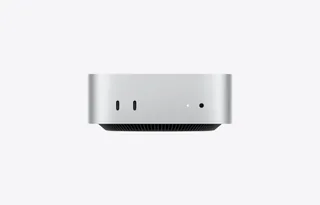
| Front ports | 2 × USB-C with USB 3 (up to 10Gb/s); 3.5 mm headphone jack with advanced support for high-impedance headphones | 2 × Expansion Card slots (USB 3.2 Gen 1, configurable to Gen 2 in the BIOS); cards sold separately, including USB-C, USB-A, microSD, SD, Audio, Ethernet and WisdPi 10G Ethernet |
| Back ports | M6: 3 × Thunderbolt 4 (USB-C) with Thunderbolt 4 and USB 4 (up to 40Gb/s) and DisplayPort; M5 Pro: 3 × Thunderbolt 5 (USB-C) with Thunderbolt 5 (up to 120Gb/s), USB 4 (up to 40Gb/s) and DisplayPort; HDMI with multichannel audio output; 2.5Gb Ethernet (RJ-45), configurable to 10Gb Ethernet | HDMI 2.1 with CEC; 2 × DisplayPort 2.1; 2 × USB4 (USB-C); 2 × USB-A (USB 3.2 Gen 2); 5 Gbit Ethernet (Realtek RTL8126); 3.5 mm combo audio jack (Realtek ALC623) |
| External displays | M6: up to three (two at up to 6K 60Hz or 4K 165Hz, plus a third at up to 5K 60Hz over Thunderbolt or 4K 60Hz over HDMI), or two (one at up to 8K 60Hz, 5K 120Hz or 4K 240Hz, plus one at up to 5K 60Hz over Thunderbolt or 4K 60Hz over HDMI); M5 Pro: up to three at up to 6K 60Hz or 4K 165Hz, or two (one at up to 8K 60Hz, 5K 120Hz or 4K 240Hz, plus one at up to 5K 120Hz or 4K 200Hz); VRR and HDR supported | – |
| Speakers | Built-in speaker | – |
| Microphones | None built in; Apple says an external microphone or headset is needed for calls | – |
| Design and power | ||
| Type | Compact | Compact |
| Weight | 0.67 kg (better) | 3.1 kg |
| Width × depth × height | 127 × 127 × 50 mm | 96.8 × 205.5 × 226.1 mm |
| Operating system | macOS | Windows |
| Power supply | Built-in; 100–240V AC; 155W maximum continuous power | Internal 400 W FlexATX (ATX 3.0) unit, Gold efficiency at 110 V and Silver at 230 V; 100–240 V; 40 mm fan with 0-RPM mode |
| Power use | M6 with 16GB and 256GB: 4W idle, 70W maximum; M5 Pro with 64GB and 8TB: 6W idle, 145W maximum | – |
| Noise | 5 dBA sound pressure at idle (operator position); declared to ECMA-109 as 1.3 B sound power and 4 dB sound pressure at idle and wireless web (M5 Pro, 18-core CPU, 20-core GPU) | 120 mm CPU fan options rated at 28.8 dBA (Noctua NF-A12x25 HS-PWM) or 30 dBA, 34 dBA max (Cooler Master Mobius 120p ARGB) |
| Materials | 100% recycled aluminium enclosure; 50% recycled content overall | 30% post-consumer recycled plastic; 50% post-consumer recycled aluminium |
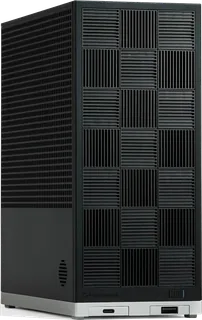
| Colours | Silver | Black or Translucent side panel; front tiles in Black, Orange, Lavender, Green, Gray or Red, in straight or diagonal patterns |
| In the box | Mac mini, power lead (1.8 m) | Framework Desktop DIY Edition, left panel, CPU fan mounting kit, screwdriver; CPU fan, storage, tiles and Expansion Cards as ordered |
More comparisons
- Apple Mac mini (M1) vs Apple Mac mini (M6 or M5 Pro)
- Apple Mac mini (2018) vs Apple Mac mini (M6 or M5 Pro)
- Apple Mac mini (Early 2009) vs Apple Mac mini (M6 or M5 Pro)
- Apple Mac mini (M6 or M5 Pro) vs Apple Mac mini (Mid 2010)
- Apple Mac mini (Early 2006) vs Apple Mac mini (M6 or M5 Pro)
- Apple Mac mini (2005) vs Apple Mac mini (M6 or M5 Pro)
- Apple Mac mini (M6 or M5 Pro) vs Apple Mac mini (Mid 2007)
- Apple Mac mini (M4 or M4 Pro) vs Apple Mac mini (M6 or M5 Pro)
- Apple Mac mini (M2 or M2 Pro) vs Apple Mac mini (M6 or M5 Pro)
- Apple Mac mini (Late 2014) vs Apple Mac mini (M6 or M5 Pro)
- Apple Mac mini (Late 2012) vs Apple Mac mini (M6 or M5 Pro)
- Apple Mac mini (M6 or M5 Pro) vs Apple Mac mini (Mid 2011)
- Apple Mac mini (M6 or M5 Pro) vs Apple Mac Studio (M5 Max or M5 Ultra)
- Apple Mac mini (Late 2009) vs Apple Mac mini (M6 or M5 Pro)
- Apple Mac mini (Late 2006) vs Apple Mac mini (M6 or M5 Pro)
- Apple Mac mini (M4 or M4 Pro) vs Framework Desktop (AMD Ryzen AI Max 300 Series)