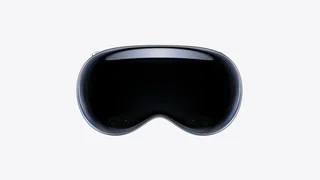
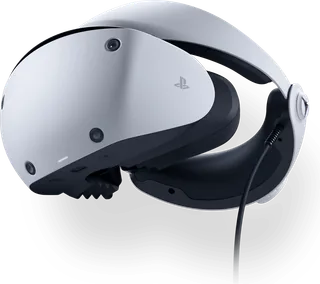
Apple Vision Pro vs Sony PlayStation VR2
Better figure, where one is clearly better
| AppleVision Pro | SonyPlayStation VR2 | |
|---|---|---|
| Overview | ||
| Released | February 2024 | February 2023 |
| Display | ||
| Resolution per eye | 3660 × 3200 (better) | 2000 × 2040 |
| Panel | Micro-OLED | OLED |
| Refresh rate | 100 Hz | 120 Hz (better) |
| Display details | Micro-OLED 3D display system, 23 million pixels, 7.5-micron pixel pitch, 92% DCI-P3; 90, 96 and 100 Hz; about 3660 × 3200 per eye (iFixit measurement; Apple doesn't give a per-eye figure) | OLED, 2000 × 2040 per eye; 90 and 120 Hz |
| Lenses | – | Fresnel lenses; field of view approx. 110° (Sony doesn't say horizontal or diagonal); adjustable lens separation with a dial |
| Lens spacing (IPD) | 51–75 mm | – |
| Tracking and input | ||
| Eye tracking | Yes | Yes |
| Hand tracking | Yes | No |
| Controllers in the box | No | Yes |
| Colour passthrough | Yes | No |
| Sensors | Six world-facing tracking cameras, four eye-tracking cameras, TrueDepth camera, LiDAR scanner, four IMUs, flicker and ambient light sensors; input by eyes, hands and voice | Inside-out; four embedded cameras for headset and controller tracking; one IR eye-tracking camera per eye; six-axis motion sensor; IR proximity sensor |
| Controllers | None included; works with keyboards, trackpads and game controllers | Two PS VR2 Sense controllers with adaptive triggers, haptic feedback, finger touch detection and IR LED tracking; 520 mAh built-in battery, 168 g each; Bluetooth 5.1 |
| Passthrough | Two high-resolution main cameras; 12 ms photon-to-photon latency via the R1 chip; stereoscopic 3D camera for spatial photos and video (18 mm, ƒ/2.0, 6.5 stereo megapixels) | Monochrome See-through View from the tracking cameras, at the touch of a button (Tom's Guide) |
| Performance | ||
| Works | Standalone | Needs a PC or console |
| Chip | M2 | – |
| Storage | 256 GB, 512 GB, 1 TB | – |
| Chip details | M2 with 8-core CPU (4 performance, 4 efficiency), 10-core GPU and 16-core Neural Engine; R1 with 256 GB/s memory bandwidth | – |
| Memory | 16 GB unified memory | – |
| Connections | Wi-Fi 6 (802.11ax), Bluetooth 5.3; up to 720p AirPlay mirroring | Single USB-C cable to a PS5; PC via the PlayStation VR2 PC adapter (from 7 August 2024) for SteamVR games. HDR, eye tracking, headset feedback, adaptive triggers and haptic feedback beyond rumble are unavailable on PC. |
| Design | ||
| Battery | Separate, on a cable | None (powered by a PC or console) |
| Battery life (maker's claim) | Up to 2 hours | – |
| Weight (headset) | 600 g | 560 g (better) |
| Weight (separate battery) | 353 g | – |
| Battery details | Separate battery (353 g) on a cable; up to 2 hours of general use, 2.5 hours of video; can be used while charging | – |
| Audio | Spatial Audio with dynamic head tracking; six-mic array; H2-to-H2 low-latency connection to AirPods Pro 2 (USB-C) | Built-in microphone; stereo headphone jack |
| Strap | Weight 600–650 g, depending on Light Seal and head band configuration | Adjustable headband and scope; approx. 212 × 158 × 278 mm; 560 g excluding cables |