Samsung Galaxy XR vs Sony PlayStation VR2
Better figure, where one is clearly better
| SamsungGalaxy XR | SonyPlayStation VR2 | |
|---|---|---|
| Overview | ||
| Released | October 2025 | February 2023 |
| Display | ||
| Resolution per eye | 3552 × 3840 (better) | 2000 × 2040 |
| Panel | Micro-OLED | OLED |
| Refresh rate | 90 Hz | 120 Hz (better) |
| Field of view | 109° horizontal | – |
| Display details | Micro-OLED, 3552 × 3840 per eye, 27 million pixels in total, 6.3-micron pixel pitch, 95% DCI-P3; 60 Hz, 72 Hz (default) and up to 90 Hz on request | OLED, 2000 × 2040 per eye; 90 and 120 Hz |
| Lenses | 109° horizontal and 100° vertical field of view; vision correction with optical inserts sold separately | Fresnel lenses; field of view approx. 110° (Sony doesn't say horizontal or diagonal); adjustable lens separation with a dial |
| Lens spacing (IPD) | 54–70 mm | – |
| Tracking and input | ||
| Eye tracking | Yes | Yes |
| Hand tracking | Yes | No |
| Controllers in the box | No | Yes |
| Colour passthrough | Yes | No |
| Sensors | Six world-facing tracking cameras, four eye-tracking cameras, depth sensor, five IMUs, flicker sensor; input by voice, eyes and hand gestures | Inside-out; four embedded cameras for headset and controller tracking; one IR eye-tracking camera per eye; six-axis motion sensor; IR proximity sensor |
| Controllers | None included; Galaxy XR Controller sold separately | Two PS VR2 Sense controllers with adaptive triggers, haptic feedback, finger touch detection and IR LED tracking; 520 mAh built-in battery, 168 g each; Bluetooth 5.1 |
| Passthrough | Two passthrough cameras; video passthrough mode; camera for 3D photos and video (6.5 MP, ƒ/2.0) | Monochrome See-through View from the tracking cameras, at the touch of a button (Tom's Guide) |
| Performance | ||
| Works | Standalone | Needs a PC or console |
| Chip | Snapdragon XR2+ Gen 2 | – |
| Storage | 256 GB | – |
| Chip details | Snapdragon XR2+ Gen 2; Android XR | – |
| Memory | 16 GB RAM; 256 GB storage | – |
| Connections | Wi-Fi 7 (802.11be, 2.4, 5 and 6 GHz); Bluetooth 5.4 | Single USB-C cable to a PS5; PC via the PlayStation VR2 PC adapter (from 7 August 2024) for SteamVR games. HDR, eye tracking, headset feedback, adaptive triggers and haptic feedback beyond rumble are unavailable on PC. |
| Design | ||
| Battery | Separate, on a cable | None (powered by a PC or console) |
| Battery life (maker's claim) | Up to 2 hours | – |
| Weight (headset) | 545 g (better) | 560 g |
| Weight (separate battery) | 302 g | – |
| Battery details | Separate battery (302 g) on a cable; up to 2 hours of general use, 2.5 hours of video; can be used while charging | – |
| Audio | Two 2-way speakers (woofer and tweeter); six-microphone array with beamforming | Built-in microphone; stereo headphone jack |
| Strap | 545 g with forehead cushion; varies with whether the light shield is attached | Adjustable headband and scope; approx. 212 × 158 × 278 mm; 560 g excluding cables |
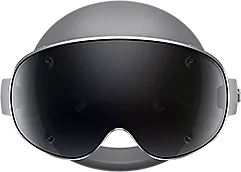
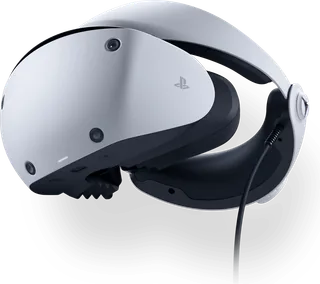
More comparisons
- Meta VR Glasses vs Samsung Galaxy XR
- Samsung Galaxy XR vs Valve Steam Frame
- Apple Vision Pro (M5) vs Samsung Galaxy XR
- Apple Vision Pro vs Samsung Galaxy XR
- Pimax Crystal Light vs Sony PlayStation VR2
- Apple Vision Pro vs Sony PlayStation VR2
- Sony PlayStation VR vs Sony PlayStation VR2
- Meta Quest Pro vs Sony PlayStation VR2