Nintendo Game Boy vs SEGA Master System
Better figure, where one is clearly better
| NintendoGame Boy | SEGAMaster System | |
|---|---|---|
| Overview | ||
| Released | September 1990 | August 1987 |
| Performance | ||
| Type | Handheld | Home console |
| CPU | Sharp SM83 (8-bit), 4.19 MHz | Zilog Z80A, 3.58 MHz |
| GPU | Nintendo DMG-CPU (built-in picture processing) | SEGA video display processor (VDP) |
| Memory | 16 KB | 24 KB (better) |
| Disc drive | No | No |
| CPU | Sharp SM83 (8-bit) at 4.194304 MHz in the Nintendo DMG-CPU (mGBA documentation) | Zilog Z80A at 3.58 MHz (SEGA service manual for the overseas Master System) |
| GPU | Picture processing built into the DMG-CPU; 40 sprites, up to 10 per line (mGBA documentation) | – |
| Memory detail | 8 KB work RAM and 8 KB video RAM; compatible cartridges can add up to 128 KB RAM (Nintendo programming manual) | 8 KB RAM plus 16 KB VRAM (SEGA) |
| Storage detail | Game Boy Game Paks (cartridges); saves on the cartridge | Cartridges and Sega Cards (SEGA) |
| Display and video | ||
| Built-in screen | 2.5″ LCD, 160 × 144 | – |
| Built-in screen | 2.5-inch monochrome LCD, no backlight; 160 × 144; four shades; about 59.7 Hz (Nintendo and mGBA documentation) | No built-in screen |
| Video output | – | 256 × 192, up to 32 colours on screen from a 64-colour palette (SEGA developer and service manuals) |
| Audio | Four channels (2 pulse wave, 1 wave, 1 noise); mono speaker and stereo headphone jack (Nintendo and mGBA documentation) | Programmable sound generator with three tone channels and one noise channel; the overseas model lacks the Japanese model's FM sound (SEGA) |
| Design and power | ||
| Battery life (maker's claim) | Up to 30 hours | – |
| Weight | 220 g | – |
| Battery life detail | 4 × AA batteries, up to 30 hours (Nintendo) | – |
| Power use | About 0.7 W from the external 6 V DC input (Nintendo US manual) | – |
| Connections | ||
| Ports | Game Link Cable port, Game Pak slot, headphone jack, 6 V DC input (Nintendo) | – |
| Controller | Built-in D-pad, A, B, Start and Select buttons; volume and contrast dials | Control Pad with D-pad and two buttons |
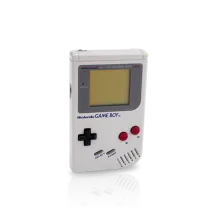
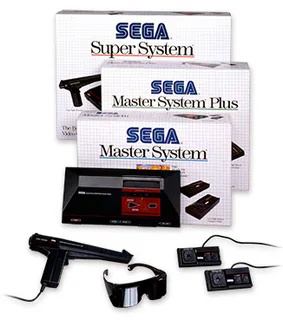
More comparisons
- Nintendo Game Boy vs Nintendo Game Boy Advance SP
- Nintendo Game Boy vs Nintendo Game Boy Color
- Nintendo Game Boy vs SEGA Mega Drive
- Nintendo Game Boy vs Nintendo Entertainment System (NES)
- SEGA Master System vs SEGA Mega Drive
- Nintendo Entertainment System (NES) vs SEGA Master System
- Atari Atari 2600 vs SEGA Master System