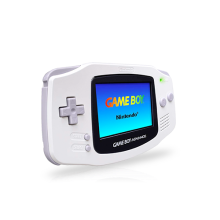
Game Boy Advance
Nintendo's 2001 32-bit handheld with a wide 240 × 160 colour screen, which also plays Game Boy and Game Boy Color games, for collectors and anyone comparing it with the Game Boy Color or Nintendo DS.
Model history · 3 models, 1990–2001
- 1990Game BoyCompare
- 1998Game Boy ColorCompare
- 2001Game Boy Advance
- Type
- Handheld
- Output
- –
- Memory
- 384 KB
- Storage
- –
- Weight
- 140 g
What reviewers say
Reviewers agree it is a big leap over the Game Boy Color, with a sharper, more colourful screen, better sound and backward compatibility with older Game Boy games. Both criticise the screen's lack of backlighting, which makes it hard to see indoors; IGN also found the shoulder buttons awkwardly placed and older games too dark on it.
Specifications
Report a wrong or missing specPerformance
- Type
- Handheld
- CPU
- ARM7TDMI (32-bit), 16.78 MHz
- GPU
- Nintendo CPU AGB (built-in 2D graphics)
- Memory
- 384 KB
- Disc drive
- No
- CPU
- ARM7TDMI (32-bit) at 16.78 MHz, plus an integrated 8-bit CPU for Game Boy and Game Boy Color games (Nintendo programming manual)
- GPU
- 2D graphics built into the AGB chip, with tile, sprite and bitmap modes (Nintendo programming manual)
- Memory detail
- 32 KB internal work RAM and 256 KB external work RAM, plus 96 KB video RAM, 1 KB object attribute memory and 1 KB palette RAM (Nintendo programming manual)
- Storage detail
- Game Boy Advance Game Paks (cartridges); saves on the cartridge
Display and video
- Built-in screen
- 2.9″ LCD, 240 × 160
- Built-in screen
- 2.9-inch reflective TFT colour LCD, no backlight; 240 × 160 (3:2); 32,768 colours (Nintendo)
- Audio
- Two 8-bit Direct Sound channels plus four Game Boy sound channels; mono speaker and stereo headphone jack (Nintendo)
Design and power
- Battery life (maker's claim)
- Up to 15 hours
- Weight
- 140 g
- Battery life detail
- 2 × AA batteries, up to 15 hours (Nintendo)
Connections
- Ports
- Game Link Cable port, Game Pak slot, headphone jack (Nintendo)
- Controller
- Built-in D-pad, A, B, L, R, Start and Select buttons
- Backward compatibility
- Game Boy and Game Boy Color games
Pros and cons
Pros
- 32-bit ARM7TDMI processor and a 240 × 160 widescreen display
- Plays Game Boy and Game Boy Color games
- L and R shoulder buttons
Cons
- Reflective screen with no backlight (fixed by the later Game Boy Advance SP)
- Mono speaker; stereo only through headphones
- Runs on two AA batteries, up to 15 hours
Closest rivals
Model | Type | Output | Memory | Storage | Weight | Released |
|---|---|---|---|---|---|---|
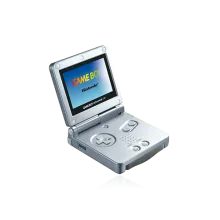
| Handheld | – | 384 KB | – | 143 g | Mar 2003 | |
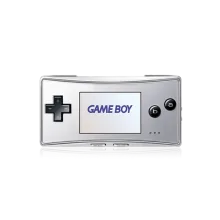
| Handheld | – | – | – | 80 g | Nov 2005 | |
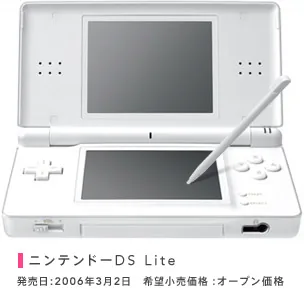
| Handheld | – | – | – | 218 g | Mar 2006 |
Previous model: Game Boy Color.