BMW iX3 vs Tesla Cybercab
Better figure, where one is clearly better
| BMWiX3 | TeslaCybercab | |
|---|---|---|
| Overview | ||
| Released | March 2026 | 2026 (early information) |
| Performance | ||
| Powertrain | Electric | Electric |
| Power | 315–463 bhp | – |
| 0–62 mph | 4.9–5.9 s | – |
| Top speed | 124–130 mph | – |
| Engine or motors | iX3 40: rear motor, 235 kW (320 hp); iX3 50 xDrive: two motors, 345 kW (469 hp); bhp converted from BMW's kW figures | Electric propulsion; Tesla's cited production documentation does not publish motor power or traction-battery capacity |
| Torque | 500 Nm (40), 645 Nm (50 xDrive) | – |
| Gearbox | Single-speed automatic | – |
| Drive | Rear-wheel drive (40) or all-wheel drive (50 xDrive) | – |
| Range and charging | ||
| Zero-emission range (WLTP) | 395–500 miles | – |
| Battery | 82.6–108.7 kWh | – |
| Fastest charging | 300–400 kW | – |
| Range detail | WLTP 331–395 miles (40) and 420–500 miles (50 xDrive), depending on trim; BMW UK marks some figures as provisional | No WLTP or EPA range is published in the cited production documentation |
| Charging | Battery capacity 82.6 kWh (40) or 108.7 kWh (50 xDrive) as BMW UK lists it; 800 V; DC up to 300 kW (40) or 400 kW (50 xDrive), 10–80% in 21 minutes, up to 187 miles (40) or 231 miles (50 xDrive) added in 10 minutes; AC 11 kW or 22 kW | Tesla's 2026 emergency response guide shows a physical rear charge port under the boot lid. It does not publish peak charging power; prototype-era wireless-only descriptions are not used as production specifications |
| Efficiency | 3.6–4.3 miles/kWh (40), 3.5–4.1 miles/kWh (50 xDrive), WLTP combined | – |
| CO2 emissions | 0 g/km | – |
| Practicality | ||
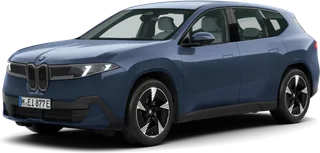
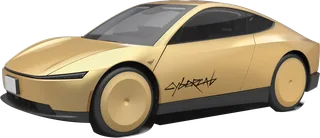
| Body | SUV | Coupé |
| Seats | 5 (better) | 2 |
| Boot | 520 litres | 572 litres (better) |
| Length | 4,782 mm | – |
| Width | 1,895 mm | 1,754 mm |
| Boot | 520 litres, 1,750 litres with the rear seats folded | Rear boot 572 litres with both seats available, from the production rider guide. Tesla's support page gives 20.2 cubic feet and describes room for two standard checked bags plus two carry-on bags |
| Towing | 2,000 kg braked | – |
| Size | 4,782 mm long, 1,895 mm wide (2,093 mm with mirrors), 1,635 mm high; 2,897 mm wheelbase; EC unladen weight including a 75 kg driver is 2,160 kg (40), 2,360 kg (50 xDrive) | Rider guide: 1,754 mm wide and 1,408 mm high; 414 mm entry step and 144 mm ground clearance. Overall length is not published. The support FAQ rounds or differs on step height and ground clearance; the exact rider-guide dimensions are used here. There are no exterior side mirrors |
| Release and generation details | – | Tesla's Q2 2026 report described production and testing, with employee rides in July. Its subsequently published support page states Cybercab rides are available to the public in limited parts of Austin. The rider guide and emergency guide identify 2026 production vehicles. A commercial enquiry form does not establish customer purchase availability or a retail delivery date |
| Tech and safety | ||
| Infotainment | – | Passenger touchscreen, USB-C charging, climate and seat-position controls; assistance available through the touchscreen and an audio connection to support |
| Driver assistance | – | Purpose-built autonomous vehicle without a passenger steering wheel, brake pedal or accelerator pedal. Tesla describes the vehicle as SAE Level 4 in its 2026 emergency response guide; service operates within supported areas |
More comparisons
- BMW i7 vs Tesla Cybercab
- Tesla Cybercab vs Volkswagen ID.3 Neo
- BMW iX3 vs Toyota bZ4X Touring
- BMW iX3 vs BYD Atto 3 Evo
- BYD Atto 3 Evo vs Tesla Cybercab
- BMW iX3 vs Mercedes-Benz Electric GLC
- BMW iX3 vs Tesla Model Y (2025)
- BMW iX3 vs BMW X3
- Audi Q6 Sportback e-tron vs BMW iX3
- Leapmotor T03 vs Tesla Cybercab
- Tesla Cybercab vs Toyota Proace Verso
- Tesla Cybercab vs Tesla Cybertruck